Six tell-tale signs that our leadership superpowers may be dipping

photography of a person pointing on something
Photo by Lukas on Pexels.com

When business is booming and the economy is raising our revenues, it’s easy to perform our role as a leader.

The key behaviors are easily manifested and evident to all employees. “Walking the talk” is easy. Leaders even preach the attributes of a good leader to their direct reports. They also enjoy dropping quotes from great leaders of the past.

However, challenging times tend to test our leadership resolve. Difficult times can test the values we preach. Such hard times can test our leadership competencies. It is in these moments that we need to hold on stronger to ideal leadership competencies and behaviors. This is the time where our people look up to us for guidance and to set an example for them to follow.

“Count it all joy, my brothers, when you meet trials of various kinds, for you know that the testing of your faith produces steadfastness.” James 1:2-3

It is in these moments that we need to understand and observe ourselves. We need to pay close attention to our leadership style. We need to be critical of how we behave towards our current situation and towards our people.

From experience consulting for different company leaders in good times and in bad, here are a few signs to watch out for. If you start seeing any of these manifests in your leadership style then it’s time to take a pause and assess why you are behaving the way you are behaving. Assess how your leadership behavior is helping or hindering your current situation.

  1. We start to de-priorities the development of our people.

In times of blessings and times of lack, people should always be our most important asset. We cannot have people as our most important asset in good times and in bad times bring them down the pecking order. It will be our good people sticking with us that will help us through difficult times. We may need to reduce our manpower in downtimes, however, let’s make sure we keep the good ones. Great companies invest more in the development of their people instead of cutting down the training budget. Management guru Peter Drucker said, “If you think training is expensive, try ignorance.”

  1. We start blaming first and ask questions after

Democracy reigns in good times. Everyone has an equal voice in good times. In bad times, we sometimes shift to finger-pointing. Instead of asking the question “what happened, what’s the root cause, how can we correct it, how can we prevent recurrence”, we default to “who is to blame for this?”

Such a work environment causes people to be afraid to try anything for fear of reprisal. Nobody also wants bad news to trickle up for fear that the messenger of bad news gets the ax. By the time senior management gets wind of an issue, it has already ballooned into a big problematic snowball.

  1. We fight industry trends

What got you there, won’t get you to the next level. Too many times, I have seen the reason for a company’s success turning into the reason for its failure. Company founders hold on to their original success formula. Software companies using the same antiquated programming approach even though it has been made obsolete by the industry. Retail businesses refusing to create a hybrid digital/brick-and-mortar model. People standing on street corners marketing their products and services using old-fashioned flyers.

Do we really think we can beat industry trends? Blockbuster thought that they can keep the lead by ignoring Netflix. They filed for chapter 11. Kodak refused to move to Digital cameras since their massive growth was fueled by film-based technology. They filed for chapter 11. Did Barnes & Noble think that building more stores would win the hearts of customers that are moving into digital books? They filed for chapter 11.

  1. We start losing high-potential people and retain the bad apples.

When signs of bad leadership start to manifest itself in the workplace, it’s the good employees that jump ship. These high performers know their market value. It’s the none-performers that tend to stay. Why? They have no place to go. Now take a balcony moment and check your business. Your company is currently under a lot of stress and the people you have are mostly non-performers. The good ones went out of the front door.

  1. We don’t openly bring faith in the workplace

Deuteronomy 8:18 You shall remember the Lord your God, for it is He who gives you the power to get wealth; that He may confirm His covenant that He swore to your fathers, as it is this day.

When we succeed, we often think it was purely on our own accord and effort. We think that the growth of our business stems from our intelligence and tenacity. What we forget is that our talents, opportunities, blessings, wealth, valuable employees, valuable clients, favorable market trends, education, parents, family name and so on came from our creator. None of our success is purely ours to solely claim. Why is it that we do not openly acknowledge or practice our faith? Are we ashamed to be seen as an obedient follower? Are we ashamed to show that we rely on a higher power for our business?

Captains of industries with an openly strong faith in God have grown their business to billions of dollars in annual revenues. You have Dan Cathy (Chik-fil-A) grew his business to 2,363 stores with annual revenues of $10.5 Billion. You have Dave Thomas, CEO of Wendys with their 800 stores. James Cash Penny with 2,000 JC Penny store locations.

Clearly, faith in the workplace works.

  1. We start mixing personal and professional views

When times are good, leaders can separate their personal from work views. Even if they do not like people at a personal level they can work with them.

When times are tough, the line between personal and work views starts to blur. The leader’s personal views start to cloud their work judgment. Dealing with good people with opposing views starts to get painted in a bad light.

Once they have a bad view of good people, everything these people say is taken in a negative context. Good people that are marked as (personally) bad eventually leave the company.

There are other tell-tale signs of a leadership 180-degree turn. These are just examples of signs to look out for. With God by our side, we can maintain our positive Leadership behaviors in good times and in bad.

You can listen to the podcast version of this article by clicking here (jordansviews.com)

“Change before you have to.” — Jack Welch

transformThe premise of the book ‘What got you here won’t get you there’ from Marshal Goldsmith is that whatever formula you came up with to get to where you are may no longer apply for the next level of your journey. This applies to both work and career alike.

For instance, you sharpened your selling skills when you were still selling insurance products for a Bank. Your boss decides to promote you to a sales manager position. You were tasked with overseeing a team of ten insurance salespeople. The sales competency you developed through the years may no longer completely apply to your new career opportunity. You now need to develop your management competencies.

The same goes for organizations. Let’s take the retail industry as an example. Retailers like department stores and book stores grew their business by expanding their brick and mortar presence. A major component of their strategy is to be everywhere their target market is. It was part of their marketing strategy for brand recognition.

However, in recent years, the retail business has morphed into a hybrid of the physical and digital world.

In the coming years, the ability to adapt and change quickly will be the hallmark of successful retailers. The focus will be on maximizing inventory turnover. Supply chain processes will be scrutinized for constant improvements. Customer experience still reigns supreme. Customers are now expecting quick deliveries and a merge between online and in-store shopping will become the norm.

Organizational transformation requires people transformation. Organizational transformation requires authentic leadership. Organizational transformation requires igniting people to perform at their full potential.

Organizational transformation starts now. It starts before you need to. Transformation begins before you are forced to start.

This is where, we at Vanguard Center for Leadership, can add value to your organization.

Lessons from Jesus in the Boat

Jesus-sleeping-in-boat-at-peace-in-stormOn that day, when evening had come, he said to them, “Let us go across to the other side.” And leaving the crowd, they took him with them in the boat, just as he was. And other boats were with him. And a great windstorm arose, and the waves were breaking into the boat so that the boat was already filling. But he was in the stern, asleep on the cushion. And they woke him and said to him, “Teacher, do you not care that we are perishing?” And he awoke and rebuked the wind and said to the sea, “Peace! Be still!” And the wind ceased, and there was a great calm. He said to them, “Why are you so afraid? Have you still no faith?” And they were filled with great fear and said to one another, “Who then is this, that even the wind and the sea obey him?”

Mark 4:35-41

As we go through life, we will always have storms and trials all around us just like the storms around the disciples with Jesus on the boat. In the passage, the disciples were panicking and fearful of their lives. They were afraid of the raging storms around them. It is very ironic that despite having the Prince of Peace with them, they allowed their fears to get out of control. They even doubted Jesus as they woke Him up saying ‘Teacher, do you not care that we are perishing?’. Jesus replied ‘Why are you so afraid? Have you still no faith?’ Surprisingly, the disciple’s faith was still in question even after being with Jesus for some time.

If we look at our lives, it’s pretty much the same thing. We allow our external earthly situations to disturb our inner peace. We react to the world around us relying only on our limited capabilities. Even when walking with Prince of Peace – the Son of God, we still allow ourselves to be disturbed, worried, angered by what’s happening around us.

The verse shows us that we are always with Jesus so why should we be worried? Why should we be overly concerned when we are in the ‘boat’ with Jesus? How much is our faith in our Father above?

In times of trials and tribulations, let us center the peace in our hearts knowing that we have Jesus with us. Let us lean on our father for our worries. Let us walk in faith knowing that God is a good God and in control all the time. Let us wake up in the morning knowing that God loved us first. Let us remember that God loved us even during our sinful worst. God loves us so much that He sacrificed His one and only Son to die for our sins.

The LORD is my rock and my fortress and my deliverer, My God, my rock, in whom I take refuge; My shield and the horn of my salvation, my stronghold.
Psalms 18:2

Let us center our peace in God and not allow the storms around us to take control of our life. Let us stay calm and sit with Jesus in the boat.

Love & Acceptance, Identity and Performance

man wearing white and blue shirt jumping on white avai table
Photo by Pixabay on Pexels.com

When I was in my 20’s, I had the tendency to focus on my performance at work. Not having the privilege to have a college education has driven me to perform twice as hard as my peers. I needed to prove my worth in the companies I worked for back here in the Philippines. I derived satisfaction from the job titles I was able to earn. I felt love and accepted by my family for every promotion I got.

However, the time came that I felt the pressure and stress of trying to maintain such a high level of performance excellence. I was afraid that I would lose both my identity, value, love and acceptance if I slowed down. I felt trapped between the stress I created for myself and the performance I needed to maintain in order to keep my position. This was all before I turned to God.

Turning to God made me realise that I was already loved and accepted. Turning to God made me realise that my identity is defined through my relationship with God our father. Being at peace with this, I was able to perform at my best without the fear I used to carry in my mind.

Our current education system is designed to have our children focus on performance. Performing academically and/or in sports have been centre to our educational system. Our children’s identity are somewhat defined by their performance in academe or in sports. They feel the love and acceptance of their family, classmates, teachers and friends when they excel.

We carry this trait as we grow older into adulthood. We bring this behaviour in the workplace. It becomes very important for us and our future that we perform well at work. The job titles we earn becomes a ‘badge’ of honour. We link our identity to the role we play in the workplace. Our identity is linked to our being a doctor, lawyer, senior manager, Vice President, CFO, CEO, HR Head and so on. The love and acceptance of the people around us is linked to our identity. It’s very similar to when we were in school.

If left unchecked, this can cause us problems in the long run. What if, for whatever reason, we are no longer able to perform at our peak? What if we move out of our prestigious role in the company for a job with a lesser title but more meaningful work? What if we retire from our VP role?

In essence, this is our performance flow:
Performance -> Identity -> Love and Acceptance

At a recent Authentic Business workshop I attended, I realised that the flow is completely opposite of what it should be. The true flow must start from Love and Acceptance. We first have be centered in love and acceptance. We are loved and accepted by our maker. Finding peace in the love and acceptance of our father above is a truly refreshing feeling.

Once we are centered in God’s love and acceptance, our identity is also clearer. Our identity is defined by our relationship with our father above. Our identity is defined by the purpose that God gives us.

Rooted in God’s love and acceptance defines our identity. Our identity now fuels our performance. We perform at our best because we are loved and accepted. We perform at our best because our identity is not rooted in the world around us. We perform at our best because our identity is rooted in God’s love and acceptance.

God’s love and acceptance -> Identity -> Performance

Let us all perform at our best to honour the provider of our talents and opportunities. Let us all perform at our best because our identity is rooted in God’s unwavering Love and Acceptance.

Transforming Organization means Transforming People


light yellow fire match
Photo by Pixabay on Pexels.com

In the 1930’s, the typical company listed in the S&P stay in this elite list of companies for an average of 90 years. Today, that lifespan has shortened tremendously to 18 years. The difference in company durability is shocking. It is very clear that companies must adopt, change, transform. Failing to do so means it is only a matter of time before another company takes on your market and customers.

70% of company transformations fail. That’s a huge percentage of failure.

Most companies forget that organisational transformation is not about the transforming the company processes & policies. It’s not about simply engaging employees with the flavour of the month program. Organizational transformation is never easy. It is never a straight line. Organizational transformation cannot be taken for granted. Organizational transformation cannot start from the bottom.

Transforming organisations is all about transforming people. Transforming people is about transforming behaviours. Transforming behaviours means transforming mindsets and defining a clear purpose. Transformation is about sustained change and not compliance.

Transforming organisation is about igniting people potentials and aligning their behaviours.

If you are ready to implement a sustained transformation program in your company, join us on Dec 4 and 5. Let us show you how to do it.

7 tips to be highly productive

four people holding smartphones and tablet
Photo by rawpixel.com on Pexels.com

1. Have clear and Stretch goals
Highly productive people have clear goals. They place a clear beacon on where they want to be. We are talking about goals that are slightly beyond their reach. They place stretch goals to stretch their capabilities.

2. Knows when to say ‘no’
Highly productive people know that there is a finite number of hours a day, a finite number of days in a week, a finite number of weeks in a month. They understand that their time is precious and is best spent on meaningful work. Work that adds value to their company, customers, employees, their department or other departments.

3. Consistently delivers on their commitment
One very clear differentiator between highly productive people and the rest is their drive to deliver on their promise. It’s sadly commonplace today to see people that do not deliver on their commitment. Commitments are taken lightly by most people. These people are usually the ones that are stuck in their careers. After all, who would want to promote someone who cannot deliver on commitment?

4. Results-driven
Highly productive people focus on results and do not use effort as an excuse. They do not hide behind their ‘seemingly’ massive efforts to deliver. At the end of the day, highly productive people understand that it’s results that matter more.

5. Holds oneself accountable
Highly productive people do not point fingers to anyone when things fall apart. They are the first to hold themselves accountable for their performance and the performance of the people that report to them.

6. Manages risks
Highly productive people regularly think about what can go wrong and put preventive measures in place. They are not negative people who simply give up because of what may go wrong. They understand that risks usually causes delays in plans. Highly productive people plan ahead and figure out what to do with the roadblocks and speed bumps they will be encountering.

7. Collaborates well with others
Highly productive people appreciate the fact that you cannot succeed on your own. You need to work closely with colleagues. Productivity is raised through collaboration with others. Success is delivered through a team effort.


Putting People at the Center of Creativity

PAFF_051217_creativitymeditation-609x419

Coming up with creative solutions, new products and services are often done in haste.
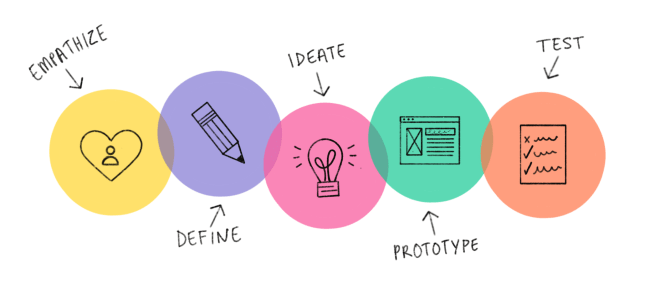
However, Design Thinking designers approach users with the goal of understanding their wants and needs, which might make their life easier and more enjoyable and how technology can be useful for them. Empathic design transcends physical ergonomics to include understanding the psychological and emotional needs of people—the way they do things, why and how they think and feel about the world, and what is meaningful to them. Design thinking does not need to be complicated.
It can be easily applied to work. We simplified the approach to design thinking and called it “creativity@work.ph” or Creativity at Work in the Philippines.
The approach can be applied to an important new service of product development. It can also be applied to simple things like turning six recruitment processes into a one page easy to understand process. It’s so easy to understand that our new recruitment officers are able to do their talent acquisition job very well from day 1.
However; designing and piloting a new product, service or solution is only half the battle. The other half is having a simple process for rolling out the idea. Your innovation is good only on paper unless properly executed.
We connected our effective execution (template-driven) approach to design thinking. Design thinking and effective execution complement each other. Hundreds of employees from dozens of companies are already using our template driven project management made simple tools.
Do you want to know more? We want to hear from you. We want to understand your goals for putting more creativity at work. We want to add value to you and your company.
Reach out and we are more than happy to talk.

Paying attention – the starting point of design thinking

Design Thinking

Great innovation does not come from focus groups. It does not come from surveys. It does not come from interviews. It does not come from looking at months and years of statistical data. It does not come from guesstimates. It does not come from past successes.
Great innovation comes from paying attention to people. Yes, you read it correctly. Great ideas and innovation come from paying attention to people and empathizing with them.
In Design Thinking, empathy is, as explained in IDEO’s Human-Centred Design Toolkit, a “deep understanding of the problems and realities of the people you are designing for”.
Great ideas come about when you gain a deep understanding of people’s emotional and physical needs.
The power of simply using ‘numbers’ has caused about 17 plane crashes a day in the 1940’s. The leadership of the US Air Force attributed these to the ‘fact’ that planes were getting faster and more sophisticated. The Air Force leadership were baffled by the real reason for the crashes until one day the real reason was observed. The cause of the crashes was the cockpit equipment dimension. The cockpits were supposed to have been designed for the ‘average’ sized pilots. It was then observed that none of the 4,000 Air Force pilots fit the bill of the ‘average’ size pilot.
It became clear that the discomfort had been causing all the crashes. The problem was resolved when the Air Force designed adjustable equipment to fit the pilot’s body.
Just recently, I had been observing our HR recruitment people. They were clearly at a loss and inconsistent with the way they were managing their workload. I brought in a consultant to interview our HR Recruitment officers and document their processes. The resulting work was six different processes done by the Recruitment officers.
Weeks later, I still noticed that they were at a loss. They could not come back to me with simple things like how many applicants did we get for a certain position? How many candidates came from different sourcing channels. Why are some positions more difficult to fill than others? Actually, since they were clearly at a loss, they would simply not reply. One time, I walked over from my office and asked them why they had not replied to a particularly important inquiry from a hiring manager. I saw the ladies gazing at their laptop seemingly lost in thought. I asked them about the inquiry and they said that we have over a hundred job openings and they were trying to pull together the answer to my question. Long story short, they spent an hour on the inquiry only to come up with nothing.
Having observed this, I then gave a challenge to the same consultant that documented the Recruitment process. I asked him to pull all six processes spanning multiple pages into a one-page Recruitment process. I said that the process must be partially an image and links to the necessary tracking sheets and templates. The consultant was given a day. After the one-page process was drafted, I then walked two new HR recruitment officers through the process and invited their inputs. The process was tuned on the spot based on their feedback. We piloted the final version.
The ultimate test of compliance and a clear understanding of what’s happening in recruitment were the digital folders that are supposed to contain the CV’s of applicants. As applicants are being processed, their personal folders (containing their CVs, recruiters’ notes, employment requirements, etc.) move from one status to another. A master tracking list should also be capturing who is applying for what position along with their status.
I checked these digital tools a few days early and they are being properly and accurately populated. I asked the new recruiters questions about the process and they were able to answer properly.
We did not hold surveys or statistical analysis. We simply observed the recipients of a core HR process.
If you want your company, department or team to come up with meaningful innovation or ideas, start with paying attention to people. Pay attention with empathy and you will get to the heart of their problem and issues. Only then will you come up with sensible solutions.
20190421_105358_0000

The Power of a positive mindset

person doing thumbs up
Photo by Donald Tong on Pexels.com
Are you an optimist? A Stanford research shows that students perform better in math exams when they have a positive attitude towards math. The researchers showed data linking positive attitude to performance. The researchers said that “Having a positive attitude acts directly on your memory and learning system.”
In my life, I have never encountered a truly successful pessimist. Some pessimists may seem to be successful but if you dig deep down, their success was not a result of their effort. It could have been a result of DNA (inheritance) or luck (married to wealth). If you have the chance to watch Bill Gates, Steve Jobs or any other great leader speak you will notice that they are literally oozing with positive energy. They look at problems as challenges to conquer. They do not allow failure to take over their minds. They do not bicker or complain.
How do you foster a positive mindset? Well, you can start with the following:
1. Foster a strong relationship with God. A strong relationship with our maker always produces hope. There is always hope that there is nothing impossible with God.
2. Stay away from negative people. They tend to ‘drain’ your positive energy. They dump their woes of the world on you. They would complain about everything from their boss to the traffic situation, spouse and neighbor. Well ‘misery loves company.’ They want others to be as miserable as them.
3. Read biographies of successful people. There are few things as inspirational and positive than a successful life that started in adversity.
4. Always keep your eye on the benefits or value of what you are doing. Does your work glorify the provider of your blessings? Does your work glorify God?
5. Keep your mind occupied with learning new things. Do not dwell on negative news from nay-sayers. News sells by sensationalizing and scaring its readers.
Do you want to make the best out of your life? Do you want to share the resulting blessings with your love ones, family, friends, and colleagues? Start with having a positive mind.

Living our work Values

adult african american woman business businessmen
Photo by rawpixel.com on Pexels.com

For the last few months, we had been encouraging our team members to seek our APEX (be authentic, be purpose driven and be excellent) values being exhibited by our colleagues. Values are useless unless they are lived by people. Values are useless unless it is rooted into a culture.

Every weekly meeting, we encourage sharing stories of colleagues having lived one of the three values in the past week. We entice this behavior, in the beginning, with prizes hoping that one day the values become a norm in the company.

This week, after three of our colleagues sharing their story, it struck on me that I had witnessed a colleague from HR exhibiting all three values. Let me share her story.

Last weekend, our team members went to EK for a day of de-stressing in our local theme park. On the drive home, my colleague from HR shared something interesting. Apparently, she is an avid learner. She enjoys jotting down tips every Monday, during our team meetings. She was so enthused with her learning opportunity at work that she could not contain it to herself. On every opportunity that arises, she would energetically share her learnings with her friends.

She believes deep in her heart that learning is an opportunity that should be visibly celebrated through sharing knowledge with others. It is not enough that we learn something new. The true values come from sharing knowledge with others. She does not need to share. However, she is always compelled by her conviction to share her learnings for the week.

Veng is authentic, she cannot contain her passion to share her learnings with others.

Veng has a clear purpose to help others.

Veng is excellent as she purposefully learns new things in order to get better in life and at work.

Veng has shown us one way of living all three values. Thank you, Veng.