Leaders Build their peoples Self-Confidence

Leaders help build confidence. They do not just demand it.

Corporate life is a team sport. As a team sport, we need to trust one another. We need to be able to sleep at night knowing that someone has our back. We are not worried that someone from the team will stab you in the back. We are not concerned that a team member will sneak into the office of an executive and bad-mouth you. We are not worried that the friend you have lunch with will not run over to the boss to announce a completed project and take the credit from you.

Team members, from any sport, need to be able to trust each other completely. They should also be able to help out each other when needed. Having the confidence that the team will help you when times get rough is so amazing. You also know that when you struggle, your colleagues will not throw you under the bus. It goes both ways. There is great satisfaction in helping others in the team.

However, you cannot lend a helping hand if you do not have the confidence to help. You cannot help others if you are uncertain about your skills and knowledge. You cannot fake confidence. You will find it hard to reach out if you are not confident that you can pull your team member to safety.

It is the responsibility of our leadership to make sure that our teams are confident about themselves and their abilities. How can leaders help build their team’s confidence? Leaders need to invest in developing their team members’ competencies.

Good leadership sets up development programs for their team. They make sure that their team’s skills are regularly honed. An extra step that good leadership takes is systematically mentoring the future leaders of the company. They don’t leave the mentorship to chance. It is not only done as a reflex or as needed. Mentoring is not just lip service. They have a clear leadership development goal for each high potential they have under their wing.

It will result in a combination of structured and unstructured approaches to their mentee’s leadership development. Structured, meaning they have a specific competency goal to achieve. This goal is supported by a clear development program and review mechanism. Unstructured, meaning they provide carefully crafted feedback as needed. This productive feedback is discussed on a personal basis. New assignments given to these high potential mentees are also supported by a development program. Leaders provide resources for the learning curve.

I had a senior manager in Far East Bank from my previous career that practiced this approach. Every time one of his direct reports got a new assignment, Mr. Rick San Juan would assign them two tasks.

The first task is an eight-week technical learning program. This allowed his direct report to understand the processes of the new function. They were also able to understand the current situation of the department.

The second task, parallel to the first one, is an eight-week coaching program with him. He would set a fixed date/time for 90 minutes a week every week. This would go on for the next eight weeks. At the end of the eight weeks, his direct reports are confident and able to perform their new assignment.

Only when employees are confident about their skills will they be able to voluntarily reach out to struggling team members. They also understand their capabilities and limitations. Their self-confidence is so high that they are not bothered when they seek help.

Only when you have a group of people bonding together as a team and glued by self-confidence will they perform at higher levels of performance.

Building confidence in your team goes a long way.

Stay safe,

Jordan Imutan
www.servantleadersph.com
jordanimutan.medium.com
Let us build a Nation of Servant Leaders from all walks of life.

9 Lessons I picked up along the way to my 50’s

My knowledge of the world and life has gradually changed. The world as I saw it in my 20’s, 30’s, 40’s are now more insightful. Growing up was not a walk in the park for me. Dozens of curveballs were thrown my way and I did not even have a proper glove to catch them.

This second lock-down has given me time to assess how I view life. I wrote down the lessons I learned along the way. I hope that these lessons are similar to yours if you are around my age. I hope that these lessons help the millennial readers in their quest for a meaningful life. I hope that my children also benefit from this and recalibrate the way they live their life.

The following lessons are not listed in any particular order.

1. Opportunities come from God through the people around you.
Growing up without a proper college degree was a challenge only to a certain degree. As I look back, a pattern emerges as I assessed the opportunities that opened up on my road to maturity.

When my dad left us and my mom kicked me out of our home at 18, it was a friend who took me in at 2 am. It was not easy for my friend to convince his controller father. Butch had to plead with his father to allow me to stay with them even for just a short while.

A few months later, a generous lawyer by the name of Atty. Antonio V. Agcaoili created a job for me even if he did not have an opening in his prestigious law firm. Atty. Agcaoili paid me to photocopy legal documents for the other lawyers in his firm. There was no job opening since it was the lawyer’s secretary’s job to do the copying. Atty. Agcaoili graciously created a job for someone he just met.

Years later, working for a Bank abroad, I was regularly promoted to a position where I did not know anything about. My direct manager and COO David Jones would always say I can always learn the technicalities of the work. He also gave me the time and resources to learn the ropes of my new role. He personally walked me through the major processes of the new function I am managing. He also advised me whom to reach out to for more technical details.

The CEO of a diversified retail company in the country gave me the opportunity to do my training and consulting work for one of his companies after meeting him twice. He is a remarkable Christian who grew his company from one to over a dozen businesses in less than 18 years.

There are still dozens of instances of opportunities presented by God through the people around me. The lesson? Be transparent and kind to the people around you. Who knows? They may be the source of your next opportunity.

2. Count your blessings.
Growing up I was allergic to nay-sayers or negative-minded people. They would always rant and complain about life. If you ask them what they are doing about it, the answer is ‘nothing.’ Life is already very challenging for me growing up. I did not want to get burdened by the negative thinking of these people. As the saying goes misery loves company.

When faced with difficulties, we always have two choices. Do we complain about it? Do we count our blessings and take it that it’s another blessing in disguise?

We do not have full control over the events of our lives. However, we have full control of how we will respond to it.

3. Value true friends.
I often hear others bragging that they have a lot of friends. It’s an interesting point of view. Do you really want to have a lot of friends? Do they really consider you as a friend? Friendship is an unwritten agreement from both parties to be there for each other through thick and thin.

I may not be as lucky as these people with lots of friends. In fact, I am lucky because I have a lot of acquaintances and a few really great friends. Friends that stick with me through the best and worst of times. Friends that I can count on. Friends drop by just to hand you a BFF Shake Shake fries from McDonald’s. Friends pray with you in times of challenges. Friends that laugh and have meals with you. Friends that reply to your messages.

For the rest. Well, they are acquaintances. Some of my good acquaintances show up now and then. Other acquaintances, you meet once and never see or hear from again.

4. Stay optimistic.
Optimism is not the denial of reality. It is okay to acknowledge that times are hard. However, believe that the future will be better. Optimism is anchored in hope. Hope for a better future. Hope chosen over fear is optimism.

The source of hope is faith. It is our faith in our God that He will never forsake us.

Be optimistic regardless of your situation. Stay hopeful and have faith in God.

5. Always be kind.
Huge egos and pride are the enemies of kindness. Sometimes, we allow our egos to get the better of us. Sometimes, in order for us to prove we are right, we run over others to prove they are wrong. At times, it’s even done publicly. In our quest to be right, the public has to see that someone else was wrong.

What we don’t see is the repercussion of our actions. The humiliated victim will start to fear expressing ideas and suggestions. They begin fearing the possibility of being publicly ridiculed for a question or a mistake. Respect is unfortunately replaced by fear.

Others who witnessed the event or even heard about it will start fearing for their reputations as well. After all, who wants to be at the center of a public verbal beating.

God has given us the ability to chose. Do we chose to be right and show others that someone else was wrong? Do we chose to be kind and possibly correct the situation in private. The correction can be done in a private setting. A gentle tone and a clear intention for development will go a long way. Respect is not replaced by fear. Actually, respect grows exponentially. Ideas are also shared more freely next time

Being kind is a choice.

6. Create memories.
After hitting my 50’s I came to realize that as we grow older the memories I have become more important. Recalling them makes my heart smile.

When I see Facebook memories popping-up in my timeline, I recall the day the picture was taken. I get a sensation of what I felt that day. I get to go back in time, if only for a few seconds. A photo of my family in Thailand, a photo of my son taking up archery six years ago, a photo of my son dancing while eating his Ramen.

Sometimes, I get a LinkedIn message from colleagues in my past corporate life. They would reminisce about the old days when we worked together for the same department. When I see my photos in a suit with the other executives of NCB, it makes me recall my discomfort. I was never comfortable in a suit. I also got a bit nervous talking to our CEO and CFO in those days.

7. Share your story.
Our lives are made up of stories. We are made up of good stories and the lessons we learned from not-so-good stories. It is in our DNA to share and listen to stories. Stories were the only way of passing on historical events and knowledge in the old days. This eventually became hardwired in us through the years.

It is our duty to share our stores with others. We need to pass on the lessons we learned so they would benefit from it as well. There is nothing more powerful than a lesson shared in the form of a story. Lessons that are embedded in a story have a tendency to stick. They are recalled even after years pass by.

I always make sure to wrap my workshop lessons in stories. The participants may not recall everything I talked about but they will definitely recall the stories.


Share your stories with your loved ones and your friends. That’s our simple way of leaving behind bits and pieces of our legacy.


8. Build up, people.
It does not matter if you are a leader, a manager, a husband, wife, colleague, father, child. It is our duty to build up others. The wider our influence, the more meaningful this responsibility gets.

Going back to Atty. Agcaoili. I tried to look for him upon returning to the Philippines after working 20 years abroad. I searched for him on LinkedIn. I did not find him. I found his son Atty. Agcaoili Jr. instead. I copied the office phone number and called his son.

It was unfortunate that lung cancer has taken his Dad in his 50’s. I shared with his son what his dad has done for me. I told him that I was truly grateful for his father’s kindness. His father was instrumental in helping me build my life. Atty. Agcaoili Jr was thankful.

His son was surprised that hundreds of people called in or visited their office after his father died. Literally, hundreds of people owe his father a debt of gratitude for the kindness he extended to them. His father made sure to build up the lives of his employees. He even went to the extent of helping build up the lives of people outside the firm. That is a legacy that his family will always remember him for.

9. Ask questions if you don’t know the answer.
A brief video clip of the famous author Simon Sinek was hilariously compelling. It’s titled ‘Be the idiot’. I recommend that you search and watch it on YouTube.

The lesson is that it’s okay not to know everything. It is okay to ask questions. It is okay to be an idiot. If people put you down for asking, do not mind them. You were silly only for 30 seconds. If you had not asked, you would have been silly for the rest of your life. You would not have known the answer to your question.

The former CEO of NCB hails from Harvard. He was the youngest CEO of the Bank. I was at a Microsoft presentation with him years ago. We also had several other Vice Presidents in the same room. Half an hour into the technical presentation of Microsoft executives, Abdulkarim our CEO, stood up. He politely asked a question to the Microsoft executive leading the presentation.

“What do you mean by Domain Server?” Abdulkarim asked. The Microsoft executive, sporting a blue suit, paused his slides. It took him a few seconds to process the question of our CEO. He then proceeded to explain what a Domain Server is in layman’s terms. As I glanced around the room, it was clear that most of the VP’s had the same question in mind. However, none of them took the risk of looking silly by asking a question. They all nodded throughout the presentation pretending they understood every single detail that came out of the presenter’s mouth.

After the workshop, I thanked Abdulkarim in private for asking the question. I mentioned that clearly, it was a question in everyone’s mind that nobody dared to ask.

Abdulkarim, in his steady slow voice, said that while he was studying at Harvard one thing he learned was that nobody knows everything. There was no shame in asking a question. Before you ask a question, you are silly for not knowing the answer. After you get the answer, you are not silly anymore. If you do not ask a question because your pride prohibits you then you are silly for the rest of your life.

Go ahead. Ask questions for things you don’t know. It does not matter what people think.

If you have questions regarding anything I shared here, go ahead and feel free to reach out to me.

Have a great day and stay safe.


Jordan Imutan
www.servantleadrsph.com
jordan@imutan.com
+63.917.518-3554

Can you recall your favorite high school teacher?

Image from: The National Education Association

Do you recall the name of your favorite high-school teacher? Of course, you do. Mine is Ms. Bautista, our high school Filipino teacher in Colegio San Agustin. I had the privilege of taking her class.

I was first enrolled in Colegio San Agustin or CSA at grade one. My grade school and high school memories are fleeting. This comes with age. As years go by, I can remember only bits and pieces of my school days. The names of some of my classmates already elude me. I also forgot how some of them look like.

However, two teachers stand-out. They are Ms. Bautista and Mrs. Tolentino. Both teachers stood out from the rest because they believed in my potential. They believe that all students have great potentials. I was not the brightest student in my class. I would even position myself at the lower half of the class in terms of average grades.

Despite my lackluster grades, these two teachers believed that I can do better. They saw potentiality rather than problems. They kept encouraging me instead of putting me down. Other teachers would take a stand that if you are less than average then they leave you at that. A few teachers only care about their pay and benefits.

Ms. Bautista and Mrs. Tolentino would find ways to encourage me and others to try to perform better. We were encouraged to be better. They took the time to explain again the lessons we did not understand.

Fast forward to corporate life. Similarly, the leaders I recall with respect and admiration are those that showed confidence in my abilities. Whenever I or my colleagues made a mistake, these leaders would talk about why the mistake happened. We would then discuss how to resolve the problem and prevent a recurrence.

These leaders also took the time to develop us. Our development was intentional and planned. They know that a great part of their responsibility is to develop their direct reports and their people. I recall these leaders from the lessons I learned from them. This is very similar to the teachers I recall.

On the other hand, countless times, I witnessed various leaders that immediately attack employees for mistakes rather than figure out the cause of the problem. They start looking for who to blame instead of helping resolve and prevent a recurrence. The default decision is guitly based on the grapevine. Guilty, based on other people’s opinions. Guilty even before hearing out the concerned employee.

I had the opportunity to work with over two dozen leaders in my corporate life. However, very few of them I can recall by name. The ones I can recall are leaders that raise up their teams rather than bring them down. They stand out so clearly that they are easily recalled. They stand out because I try to emulate their leadership style and be like them. They stand out because they are servant leaders.

Teachers are like leaders. They have hundreds, if not thousands, of followers throughout their careers. The ones that stand out are the ones that believe in and take the time to develop their students. The ones that stand out are the ones that make a difference in their student’s life. They stand out because just thinking about them puts a smile on my face. They stand out because they are servant leaders to their students.

Great teachers improve their student’s life.

How about you? Who are your favorite teachers and why? If they are still around, I strongly suggest that you reach out and thank them.

Stay Safe everyone,

Jordan Imutan
www.servantleadersph.com

Decisions of a Servant Leader

“It is important for us to have leaders with the Fear and the Love of God.”
Major Vico Sotto

Our Victory Pastor Marc Constantino shared a story about our Mayor Vico Sotto in todays 9 am service. Pastor Marc had a friend that was working on-site at a public works program. It happened that Mayor Vico Sotto dropped by to check how the program was coming along.

Pastor Marc’s friend was able to have a brief conversation with the Mayor. After a few minutes, Mayor Vico Sotto was asked why he did not have a big banner on the site saying “A project of Mayor Vico Sotto.” I am certain that you have seen such banners in different cities. The former Mayors of Pasig used to love having such banners all over the city.

Mayor Vico Sotto politely smiled and said that he could not do that. He cannot put up a banner saying that it was his project. This project is funded by the people of Pasig. It was not right to claim that it was his project.

This is a far cry from the other mayors who blatantly claim credit over the public works in the city as their project. They dare to claim this even when the funding is coming from the taxpayers of the city.

People seated in positions of power want to hold on to power. That’s where the problem begins. It’s no longer about serving their people. It’s not about servant leadership. It is now about self-serving leadership. This is when greed creeps in. This is when decisions are no longer beneficial for the people they serve. Decisions are now swayed by personal interest.

Pastor Marc wonderfully stated a question to ask ourselves when making decisions – “Does my decision glorify God or does it glorify me?”

Leaders from organizations, corporations, governments fall into the same trap. Do their decisions honor God and the people they lead? Are their decisions wise with the guidance of the Holy Spirit? Are their decisions based on just knowledge on how they can better their lives?

It’s unfortunate to see them claim that what they are doing is for the common good. They would show themselves as sacrificing for the people they lead. Are they? Do their decisions glorify God?

The fear of the Lord is the beginning of wisdom, and knowledge of the Holy One is understanding.
Proverbs 9:10

For as long as leaders do not have the humility to fear and lean on the Lord for wisdom then their intentions are questionable. Their decisions are questionable no matter what they claim. 

For as long as leaders do not serve the people they lead then they are quietly serving themselves.

Let me leave you with two points:

  1. Leaders, fear the Lord and you will be able to decide wisely.
  2. Leaders, your decisions should glorify the Lord.

This is one of the pillars of true servant leadership.

Why do we promote leaders to fail?

Why is it that most companies neglect to train leaders before promoting them? Why is it that after promoting leaders to fail, we are the first to point fingers and say that they are no good? Why is it that training leaders are not a priority?

As I watched one of Simon Sinek’s talk on ‘the long game’, a realization dawned on me. I saw only two companies that understand the importance of training leaders. That is not a lot compared to over 30 years of corporate experience. All employees in line for promotion (or new leaders hired from outside the company) have to undergo this three-month program.

I can still recall this quote I saw hanging on the wall of the HR Division of a huge Commercial Bank in Saudi. It’s a quote from management guru Peter Drucker. It says “If you think training is expensive, try ignorance.”

Try ignorance. You will see leaders waiting for instructions instead of leading. You will see leaders mimicking bad leadership practices because they don’t know better. You will see leaders taking credit for the work that their teams accomplished. You will see leaders shunning accountability for the failure of their team. They are quick to point fingers at their people. Some of them even do so in public. As expected, this leaves a bad feeling for the rest of the employees.

Not developing your people and your leadership rank is very short-sighted. Companies are so focused on making a quick profit. They set aside the long-term financial gains of developing great leaders. It’s a long game, my friends. You may win now, but poor leadership will harm the organization a few years down the line.

Why are Japanese companies so successful with decades of market dominance? For one thing, they understand the importance of investing in people development. The other is that they play the long game. They look at how their decisions today will benefit the company years from now and not just for the next quarter.

It’s such a logical decision to develop your people and leaders. Yet, not a lot of companies have such development plans. The former CEO of the National Commercial Bank doubles the training budget in difficult times. Other companies are slashing away.

Why double? Because developing our leaders and our people is more important in difficult times. We need them to perform better. It’s easy to be a good leader when times are great. It’s easy to take credit for a strong market. It’s easy to claim the success of a strong and respected brand. It’s easy to bask in your ego.

But, how does this same under-developed leader perform in challenging times? He will not know what he does not know. They have to know and learn strong leadership practices. They have to learn it now.

A similar mistake happens when promoting employees to leadership roles. They assume that a strong subject matter expert is a great leader. Newsflash! The skills needed to be a great subject matter expert and a strong leader are different.

Promoting a great sales executive into a sales management role is bound to fail without a development plan. By doing this, we destroyed the role he left behind. We took out a strong sales executive from the sales force. We also destroyed the role of the sales manager. We placed someone who was not provided the right tools into the leadership role. After a few months in the job, the sales manager quits because he was not happy with his new role. He will be struggling to motivate, empower and develop his team. There is also the possibility that he will boss them around. Worse, the higher-ups get rid of him and label him as an incompetent leader.

I have been around in the corporate world long enough to see the damage of these decisions. Such decisions impact the promoted leader, the people around him, and the company.

The quality of leadership in a company is very important. The quality of leadership determines the success or failure of the organization. Let’s equip our leaders, let’s invest in them, let’s mentor them, let’s grow them to be great leaders. There are a few things more important than this.Jordan Imutan

Coaching in the New Normal

In today’s new normal; leaders, managers, and staff are facing ever challenging times. This holds for both their personal and professional life.

At times, we go through our internal crisis alone not having anyone to reach out to. Firefighting and making tough decisions can take their toll. We sometimes feel that going to our superiors or peers is a show of weakness.

Even if we reach out to our colleagues, being in the same boat results in the same understanding of the situation and the same advice.

As a member of Victory Christian Fellowship or VCF, we have what we call a fellowship group. We help each other in our Christian walk. We help each other understand scripture. When one of us is facing difficulties, we all try to help.

There is always a need to reach out to an unbiased individual who can listen in confidence. Someone with enough experience to help navigate the current situation by asking the right questions. Someone with enough credibility and knowledge to tell you exactly what you need to hear and not just what you want to hear. Someone who has coached a wide variety of positions and nationalities. Someone who has coached company Presidents to middle managers.

We cannot know everything. We are not designed to shoulder all of life’s challenges alone.

Go reach out to a professional coach.

Leadership in 2021

Dear Leaders, let us be honest enough to accept that the pandemic will not go away as fast as it came. Eradicating the virus will take time even if an antivirus is made available today. The manufacturing and deployment of the anti-virus is a massive undertaking. We need to take into account the population of the world.

After the virus has been eradicated, it will take time also for businesses to recover their former glory. Business processes would have changed or will have to change given the new way of work. Consumer consumption will not automatically switch back to pre-pandemic values.

Given the business climate for the following years, our Leadership competencies have become even more important than before.

Great organizations do not run under singular leadership. Under the new normal stress and challenges, the quality of the second and third line of leaders becomes more important. Their competencies play a role. Their ability to set aside their differences and work as a cohesive leadership team is even more important.

Empathy for employees is another critical value. We have to remember that rank and file employees are already barely making enough in pre-pandemic times. Reduced pay and getting safely to work has added an extra layer of burden in their minds.

We need to accept the fact that we cannot know everything no matter how smart we are. We cannot anticipate everything no matter how much we plan. We need to learn to get input from others who are smarter than us in particular areas of our business.

We also need to understand that given the volatility of the economy, we cannot always get the result we planned for. We need to be agile enough to accept the result and adjust accordingly. We need to be more innovative than before.

Extreme stress can also push us to blame others. It’s normal to delegate work. However, we need to remember that accountability is still ours and ours alone. The people around us may be trying their very best to deliver for their love of the company. However, they may not get the results they planned for. There is so much indecisiveness out there because of uncertainty.

We have a great responsibility to our customers and employees.

That is why we are here. That is why we are leaders.

Why influence is a key to Leadership

Source image

Our house burned down when my siblings and I were still very little. It was late at night when my mom woke up from a loud commotion coming from our second-floor window. Barely awake, she stumbled towards the window. As soon as she opened her eyes, most of our neighbors were running up and down the street carrying their items. Parents had their children in tow. The little ones could hardly keep their eyes open, embracing their pillows trying to keep up with their parent’s rapid strides.

My mom shouts to the frantic crowd asking ‘what’s the matter?’ An elderly man in his boxing shorts and plain white shirt points up towards the direction of our roof shouting ‘fire’. My mom shakes my dad so hard that he falls off the bed. With a loud ‘thud’, he angrily wakes up. In less than five minutes, we were all out of the house.

As we watched from the street, we witnessed the fire from the neighbor’s rooftop slowly crawl to our rooftop. Out of the blue, our Iranian neighbor appears in front of us. Masood, a dental student, living with his wife two blocks away from us. As soon as he heard about the fire, he rushes over to see if we were okay.

Watching the fear and concern on our faces, Masood talks to three bystanders. The second time I turned to look at them, Masood and the group was running towards our home. The group braved the fire. By now, our roof was on fire. One by one they hauled our appliances and furniture out of our home. One of the by-standers stood to watch over our things. In less than thirty minutes, they brought out as many things as they can. By now, the fire traveled down to the first floor. There was no way anyone can enter our house.

Looking back years later, I share this testimony as proof that anyone can lead. Masood was not your typical textbook ‘leader’ with a great job title. He was a foreign student who influenced three Filipinos to join him save as much of our belongings as possible.

If you influence others, then you are a leader. I am not talking about dictatorship or leading using fear. These people are not influencing. People follow them simply because they have no other choice. People are following them until they find a new job. People are following them because they need their pay. People are following them thinking they have no choice.

Real leaders can influence others to follow them onward toward their vision. This ability can be inborn or developed. Leadership is primarily about effectively influencing others. You don’t need a fancy job title to be a true leader. All you need is the skill to influence others.

#anyonecanlead

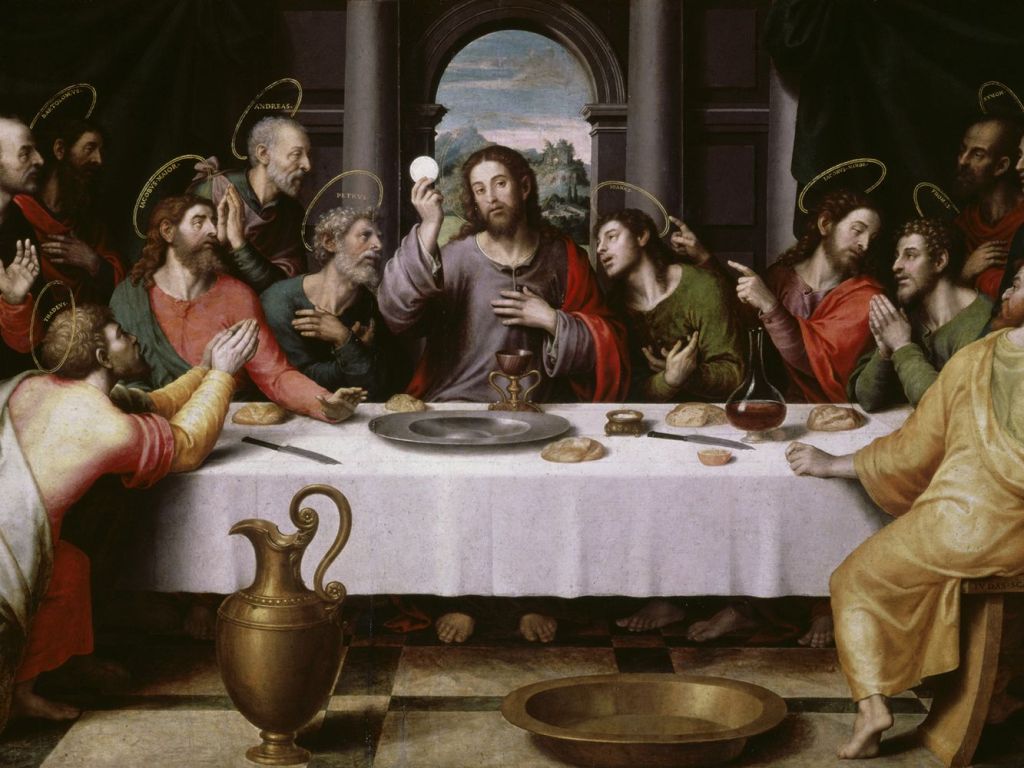
From 12 unlikely leaders come 2.3 billion believers and growing

Since I was a young supervisor, I hear about this common misconception that leaders are born or went to the best schools. So goes the theory that you are either born a leader or not. From my experience, I beg to differ.

Yes, there are people who are born leaders. However, that far and few in between. The rest of the great leaders of our time had to learn it. Of course, you have to want to learn and practice the right leadership principles. Allow me share a story that supports why I think that leadership can be learned.

August 15, 2020 7pm started as a normal fellowship for our Victory Group. That Saturday was a little different than our previous Zoom fellowship. That night, our Bible Study group discussed a brief lesson from a very interesting topic – Lead Like Jesus.

The members of our Victory group comes from all walks of life. For everyone in the group, we are all equal. We are all leaders in our own way. Some of us are leaders by designation in our jobs. All of us are leaders by the roles we play in our family structure. Some of us are leader Dads, leader elder brothers, leader uncles, leader cousins and so on. Our role leadership is something we are born into. We cannot easily turn our backs on our role leadership.

In the course of our 90 minute fellowship we touched upon two kinds of leaders that began over 2,000 years ago. On one corner, you have the powerful Roman empire led by Emperor Augustus all the way to Emperor Marcus Aurelius. On the other corner you have a carpenters son leading twelve disciples. If I  could time travel back to those days, I would have imagined that the Roman Empire’s leadership would have carried the empires dominion all the way to present day.

Ironically today, the Roman Empire no longer controls the 50 countries it did before.

On the other side; Christianity, under the leadership of Jesus and the twelve disciples has ballooned into 2.3 billion believers or 31.2% of the worlds population. Talk about successful and sustainable leadership.

Let’s see what the disciples were doing before they were called and trained by Jesus. Thomas and Bartholomew were possibly fishermen. Philip, James (the son of Alphaeus), and Judas (Thaddaeus) were tradesmen. Andrew and Peter were fishermen. James and John were possibly businessmen. Matthew was a tax collector. Simon was a zealot or someone that was passionately against the Jews.

These twelve disciples learned important leadership principles from Jesus in the years prior to the great commission. This Great Commission, lead by the Jesus disciples, has transformed the lives of billions of people for over 2,000 year and is still continuous to grow.

If these unlikely twelve was able to lead, so can you. Anyone can lead provided you understand the leadership principles the disciples learned (and practiced) from Jesus.

So here my friend is proof that anyone can lead.

What are you doing differently to make you or your company relevant in todays world?

Dan Saelinger

It has been almost four years since I last spoke to my friend B.B. I reached out to him a few weeks ago and we finally touched base last week. He has an interesting job as the University Director of a large Telecommunications company. I walked him through what I am currently doing as well. He unselfishly asked me to send him an email about the different services/products we provide. He is happy to forward the email to the right person within his company.

B.B. also walked me through his companies approach to leadership learning and development. Their primary focus is Leadership development and leadership wellness. Leaders cannot give what they don’t have. The current focus is their ‘Inventiveness’ competency.

Inventiveness, as he defines it, is a leaders ability to get their teams to come-up with solutions to todays challenges using whatever resource they have in hand. However, as they ran these program across the company the result was not very promising. Leaders where not able to raise the level of inventiveness of their respective functions. The company then had a foreign consulting firm design and run a survey to get to the root of the problem.

The results finally came out after a short time and they found it strange that their creative abilities or inventiveness was quite high. Apparently, the issue was with their teams. Even more specifically, the issue was with the teams low phycological safety. Even though some of the teams have been worked together for a while now, they had not yet normalized. Most of the teams were stuck between the forming and storming stages of team maturity. After getting to the root of the issue. the company then ran a program to help teams normalize and thrive in the new normal. The program proved to be successful after a couple of runs.

After we concluded our reunion, I got to think more about inventiveness. It seemed like the younger brother of the powerful framework used by organizations to reposition their products and services in todays new normal. There are slightly different approaches to the model but they carry the same principle. There is Design Thinking, Design Sprint and so on.

Let’s go back to the definition from my friend. Solving todays challenges with whatever resource you have at hand. We laughed when he used the former hit show ‘MacGyver’ as an analogy. MacGyver would always get out of his predicament using his Swiss Army Knife and whatever he had at hand. This important ‘inventiveness’ competency again resonated with me when I reached out the next day to an old friend who owns a ‘medrep’ outsource company.

Cathy had a dilemma when the pandemic hit. Her employees could not go to supermarkets, doctors and hospitals due to the lockdown. She started thinking of her situation and instead of complaining, she did a quick inventory of what resources she had. She has people on float that she can call back, she had medrep training rooms that was not being used, she had access to pre-paid SIM cards and pre-paid load.

She then assigned outbound and inbound call agents. She is not in the BPO industry. She is also not an expert on the topic. However, the businesswoman in her would not let her sit still. She had to reposition some of her services to adopt to the new normal.

With ten (seven outbound and three inbound) call agents they started calling the people listed in their huge database. They grew their database through the years. They started putting together templates or scripts for both types of calls. They also created scripts for handling complaints. Lately, they purchased a proper telephone system that can record calls for quality control, route inbound calls and so on.

For me. this is a perfect example of ‘inventiveness’ competency in action.

How about you? How about your company? Are you repositioning your products and services to be relevant in todays new normal? Are you repositioning your skills for the same reason? Are you stubbornly doing business the same way you did? Are you thinking that your current business model got you to where you are. However, it may be best to remember that what got you there will not be the same business model that will get you to the next level. What got Blockbuster to their sheer size and success as a business was the same business model that caused them to close shop when Netflix got into the market.

What are you doing differently to make you or your company relevant in todays world?