Attention, attention, attention! Always the first step when crafting an ad. So many ads are out there, so how do you make sure yours stands out?
Well, it all starts with getting the attention of your target audience. And there’s no better way to do that than by tapping into what interests them. Then, whether through eye-catching visuals or an interesting hook, you need to find a way to stand out from the crowd.
Once you’ve got their attention, it’s essential to keep it by delivering a clear and concise message. Make sure your ad speaks to the customer’s wants and needs, and show them how you can solve their problems.
With the right approach, you can create an ad that stands out and delivers results. Get creative and start grabbing attention today!
What about you? How are you grabbing the attention of your target market?
We believe that learning does not end with training. Instead, learning should begin after the training ends. Education is about using and retaining knowledge. Learning beyond Training at pocph.com
Leadership is about taking action, not just occupying a position of authority. Yet, a recent study showed that 95% of successful leaders don’t even have a position title!
What does it take to be a successful leader? Action. Determination. Persistence. And most importantly, the willingness to put others before yourself. These are the qualities that set great leaders apart from the rest.
What about you? If you’re looking to become a leader, don’t worry about your position–focus on being the best you can be. The rest will take care of itself.
We believe that learning does not end with training. Instead, learning should begin after the training ends. Education is about using and retaining knowledge. Learning beyond Training at pocph.com
We pay hard-earned money to attend training. At times it’s our employers that invest in our training. There are even free ones that trainers provide to the public out of goodwill. Notes are rigorously taken during the training. Sometimes, we make new acquaintances. Why is it then that a vast majority of people attending training do not apply most, if any, of what they learned? Time and money are spent, yet the true value is not realized. What about you? Do you apply what you learn from training?
Leading a business can be very hard. It can be easier. Our Bizsprout community of small and medium-sized business leaders helps each other. Join our community now. Let’s learn and grow our business together. BizSproutPH.com http://www.imutan.com
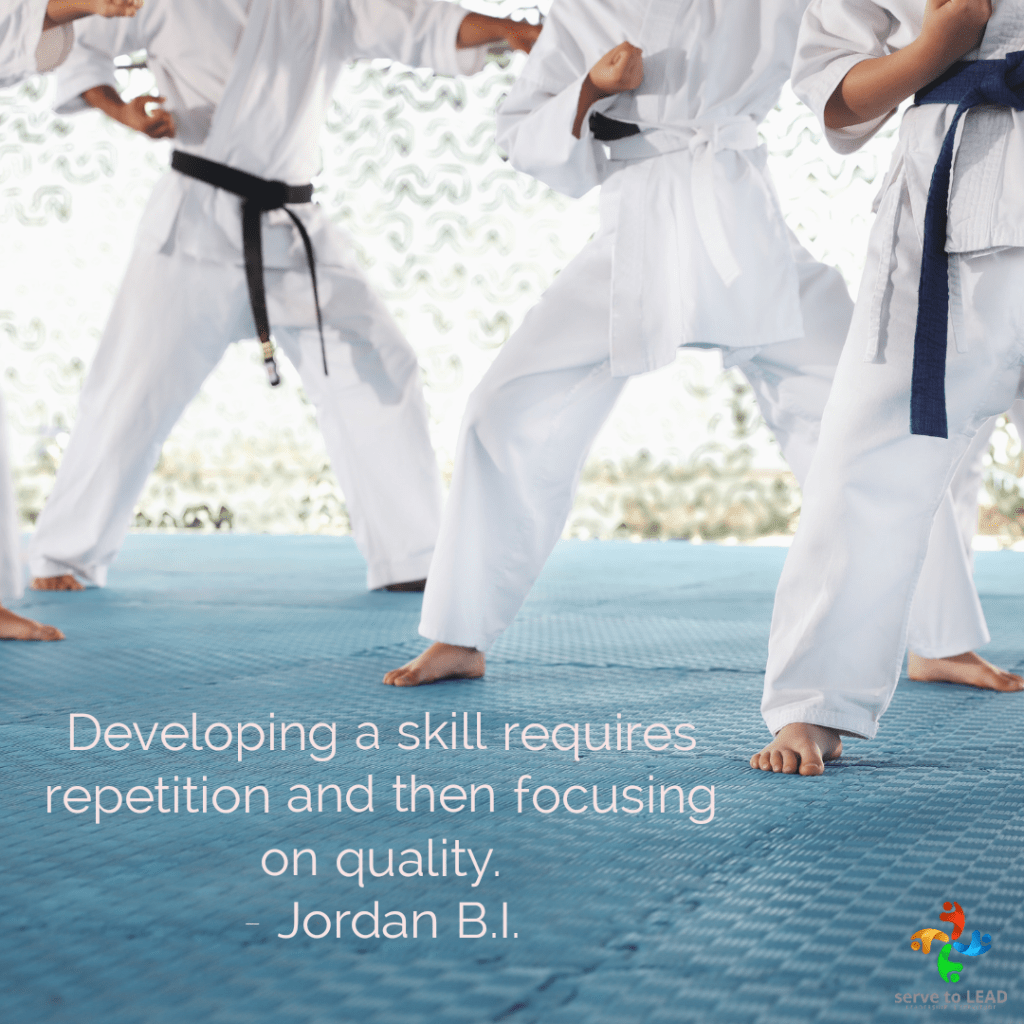
Humans develop habits to conserve brain energy. We build muscle memory to reduce the effort and energy required to think. Developing a habit is not easy. Replacing a habit is even more challenging. The better approach is two-step. First, get into the habit through endless repetition. After getting the habit done and dusted, focus on the quality of the habit you are forming. It’s often tough to do both at the same time. What about you? What habit would you want to develop, and what’s stopping you?
Leading a business can be very hard. It can be easier. Our Bizsprout community of small and medium-sized business leaders helps each other. Join our community now. Let’s learn and grow our business together. BizSproutPH.com http://www.imutan.com
If you are genuinely great at marketing, you must ensure that your product or service is fantastic. Successfully marketing a terrible product or service means that your customers will quickly think you are a fraud. The better the marketing, the faster the truth will surface. Companies like Apple ensure they have great products with their fantastic marketing. What about you? How great are your products and services?
Leading a business can be very hard. It can be easier. Our Bizsprout community of small and medium-sized business leaders helps each other. Join our community now. Let’s learn and grow our business together. BizSproutPH.com http://www.imutan.com
Humans are designed to worry about the future. We worry about possible issues and problems before they can even materialize. Thinking about future risks and coming up with preventive or mitigative action is a worthwhile activity. However, worrying too much is not healthy. When you worry too much, you allow yourself to suffer before something happens. What about you? Do you manage risks, or are you a worrywart?
Leading a business can be very hard. It can be easier. Our Bizsprout community of small and medium-sized business leaders helps each other. Join our community now. Let’s learn and grow our business together. BizSproutPH.com http://www.imutan.com
According to studies, the first idea to solve a problem is not always the best idea. We need to be comfortable coming up with many ideas.
We habitually stick to one idea that we automatically discount other ideas.
Let’s take juggling as an analogy. The first lesson in juggling is dropping the ball a hundred times. The juggler needs to get desensitized to drop the ball.
To come up with good ideas, we need to break out of the habit of just coming up with one idea.
Practice coming up with at least ten ideas for a problem every day. It does not matter if the idea is good or bad. We are building our idea generation muscle.
Inputs matter. If you have the same inputs or information, then your ideas will be limited. Expose yourself to different inputs.
When in a meeting, debating over a problem using the same set of data is fruitless. You will still come up with the same set of ideas.
An idea is a connection between the different things we know. The more the input variety, the more ideas you can come up with.
According to studies, the first idea to solve a problem is not always the best idea. We need to be comfortable coming up with many ideas.
We habitually stick to one idea that we automatically discount other ideas.
Let’s take juggling as an analogy. The first lesson in juggling is dropping the ball a hundred times. The juggler needs to get desensitized to drop the ball.
To come up with good ideas, we need to break out of the habit of just coming up with one idea.
Practice coming up with at least ten ideas for a problem every day. It does not matter if the idea is good or bad. We are building our idea generation muscle.
Inputs matter. If you have the same inputs or information, then your ideas will be limited. Expose yourself to different inputs.
When in a meeting, debating over a problem using the same set of data is fruitless. You will still come up with the same set of ideas.
An idea is a connection between the different things we know. The more the input variety, the more ideas you can come up with.
You may have heard the saying, “learning is like the growth of plants: it takes time, effort, and patience.” Well, that saying is especially true when learning new things.
In today’s world, there’s a lot of pressure to be good at what we do. We’re constantly told that we need to succeed in our careers, relationships, and personal lives. And if we’re not good at something, we’re made to feel like failures.
But learning is a process – it doesn’t happen overnight. It takes time, effort, and patience to learn and succeed. So don’t be discouraged if you don’t know everything right away. Instead, keep practicing and learning, and you’ll get there in no time.
Learning Is Like the Growth of Plants
When it comes to learning, you must think of yourself as a delicate little plant. Just like plants need time, water, and sunlight to grow and thrive, you need time, effort, and patience to learn and grow.
You cannot expect to plop in front of a textbook for a few hours and emerge as a genius. It doesn’t work that way. Instead, learning takes time, dedication, and hard work. But if you put in the effort, you will eventually see results.
So remember, don’t be discouraged if you don’t learn everything overnight. Learning is like the growth of plants – it takes time, effort, and patience.
The Process of Learning Is Similar to the Growth of Plants
Learning something new can feel like you’re stuck in the dark, wondering when the light will come on. It’s a process that takes time, effort, and patience. But, just like plants need water, light, and soil to grow, you need the same things to learn and grow.
To learn something, you need to be exposed to it repeatedly. You also need to give it time and effort – and don’t forget your patience! Sound like too much work? It is, but it’s worth it in the end. When you finally see that light turn on.
Application
Let’s look at the screen and use the analogy of driving. When you are challenged to learn something new, you will be at the first pillar, where you are unconsciously unskilled. The first pillar means that you are not skilled in driving and cannot perform the skill unconsciously. For example, you attend driving lessons for a few days.
You will now gain insight into what driving is all about and the skills needed to be a safe driver. You now move to the second pillar. You are now consciously skilled. You know the skills required. However, you need to be very conscious or aware of every move you make in driving. The skills still need to be burned to muscle memory at this stage.
At this point, you have a choice. You can practice the driving skill you learned or choose public transportation. You now have an option to either master what you learned or disregard it. With practice, the level of your skill improves. You are now consciously skilled.
You now have a choice. You can continue practicing the skill to achieve mastery or stay where you are. If you continue practicing the craft and reach an expert’s proficiency, you move to the last pillar. This is because you are now unconsciously skilled. Your skill is so high from practice that it becomes second nature to you. You no longer need to be conscious about using what you learned.
Your facilitators, like myself, are responsible for getting you to the first two pillars. It is your responsibility to reach the last two pillars. Your teachers and facilitators can teach you all the best practices in the world. However, it is purely your responsibility to use it consistently. It is you who will primarily benefit from the skill. The other beneficiary of the benefits is your team members, your department, and your management. However, that’s on you.
Summary
Learning is like the growth of plants. Learning something new, like plants, takes time, effort, and patience. But unlike plants, you can’t just sit there and wait for learning to happen – you must actively seek it out. Therefore, we must continuously practice what we know.
Question:
Have you ever tried to learn something new and totally from scratch in the past? How was your experience?









 Too many companies have untrained leaders that fail.