Leadership is not always about grand gestures. It’s not about mega-deals. It is not even about trying to be the hero of the day. Authentic leadership is about the little things as well as the big things. It’s the small yet consistent altruism. The keyword being “small” and “altruism.”
After years of observing leaders of different nationalities and ages, daily servant leadership gestures create a great work environment. Of course, the opposite holds as well. Self-serving, egotistical leaderships make for a fearful and toxic work environment.
Allow me to list a few small behaviors that the great leaders I had the privilege of working with exhibit every day.
1. Be generous with your “thank you.” This simple act of gratefulness goes a long way. Martin, a former department head of development I know, is an excellent example of a grateful leader. He would never forget to give thanks even for the smallest of things. On the flip side, I met leaders who would only show gratitude when they are in a good mood. True servant leaders are consistent.
2. Ask for people’s opinions and LISTEN. Have you ever had this uncomfortable feeling with leaders you worked with that would ask for your views and dismiss them? If your opinion is similar to theirs, they get hyped and excited. If your idea goes against the grain of their views, then it’s ignored or dismissed. These leaders are simply trying to validate their ideas. True servant leaders have a genuine ear for others. When they ask for your opinion, they listen.
3. Be true to your word. Matthew 5:37 of the English Standard Version Bible states, “Let what you say be simply ‘Yes’ or ‘No’; anything more than this comes from evil.” Some leaders would tell you something to keep you in your place. They do not mean what they say. There was this manager I worked for in my early 30’s who goes around professing that he has an open-door policy. That was the leadership buzzword in the ’90s. I tried walking into his office on five different occasions to seek his opinion; his response is “I am a bit busy. can we have this discussion tomorrow?” After five failed attempts, I decided not to bother. All that talk about having an open door was lip service. It was just for show.
4. Stay true to the vision. Without a vision for the better good of society, where is your organization headed? How do you rally your team? What direction are you pointing to when you are rallying them? I had a client claiming to have a great vision. After a few weeks of insightful personnel interviews, it became clear that 99% of their employees do not know the company vision. Let me correct that. They do not recall their company vision because the owners used difficult words in crafting it. The Vision Statement became a display piece in boardrooms and hallways.
5. Stay true to the core values. Funny how leaders have an ironic set of values. Core Values apply to everyone except the executives or chosen few. Of course, this is never said in public. The funny thing is that the executives think they are getting away with it. Of course, people will notice. There was this company I know that has equality as a core value. The funny thing is – the executives have their own “restaurant” type area on the corporate top floor for their lunch breaks. Lunch was catered daily by a famous restaurant nearby. Food was free. Only C-Level and VP’s are allowed to dine there. We would usually share a big round table with the CEO. The rest of the 2,000 employees in the building goes to the 2nd-floor cafeteria. Food was paid for by employees. Where is the equality in that?
6. Catch people doing right and not just doing wrong. Have you ever noticed managers that are so quick in finding faules in you? These managers are always on the lookout to catch you violating a company policy. Why not try and catch people doing that right thing? The corporate world would be a better place.
7. Do not sacrifice your employee over an abusive client. When your leaders quickly side with a harsh and disrespectful client, it’s time to seek employment elsewhere. When leaders shout, “our people are our most important asset.” and put arrogant clients first, then employees will know they are not “first.”
8. Smile. A leader’s mood determines the work environment temperature. A visible foul mood puts employees in a “flight, fight or freeze” state of mind. People would be checking on the Leader’s “mood” coming into work before planning what to do for the day. “Is it a good time to speak to him?” “Should I raise this idea now?”. “Is it a good time to request for my vacation leave?” This is such a waste of time and energy. Instead of channeling energy to productive endeavors, employees channel their energy to protect themselves. Smile when things go your way. Smile when things do not go your way. The need to smile is more important in times of challenges. The list above does not require tremendous effort. These are small things leaders can do to create a great culture. All it takes from servant leaders is humility and a mindset of servitude.
“The biggest concern for any organization should be when their most passionate people become quiet.” Bridgette Hyacinth
Back in the day when Fast Bank and Trust (FEBTC) was one of the best banks to work for, I mustered up the courage to apply for a job in their IT Division. Four sets of interviews, and a month after, I received a list of hiring requirements. I was ecstatic about the opportunity. Only about 20% of the applicants got in.
There are numerous things to learn in the field of Information Technology. Before joining FEBTC, I gathered a good number of years of experience as a developer. I was gradually moving into IT support. The primary goal of my function is to maintain and support the software and hardware requirements of the Bank employees. I had a dozen support engineers who perform scheduled maintenance of the hardware and software in the Head office and the different branches across the country.
I was pumped up with passion, reporting to work on the first day. The team I was managing was also excited about their work. They clearly understood the value they bring into the Bank. We cannot afford to have our IT infrastructure fail us, especially during banking hours.
As expected from a new hire working for my dream company, my first few months were full of new learnings. I reported to their IT facility, eager to work and serve the Bank and the employees.
The first impression of my new manager was great. He said all the right things like, “We are all one team here,” “You can always come to me for questions, I have an open-door policy,” “We welcome new ideas in our department.”
As the months go by, I started noticing that his words did not match his actions. Every time I requested a bit of coaching, he would always politely say that his calendar is already full for the week. We can try next week. He would be quick to shoot down ideas raised by the team in several brainstorming exercises for essential projects. Not only were the suggestions shot down, but it was also unfortunate that the person presenting got a bit of scolding.
In several meetings, he claimed that the successful idea was from him. He seemed to forget to give credit to the people who took his ideas and execute them.
Six months later, I noticed that the team stopped suggesting ideas in meetings. People also started to fear raising bad news. The team stressed that the messenger of bad news would get shot. Unfortunately, this feeling also got to me. I started keeping quiet in meetings. We just allowed our manager to run it the way he wishes. We kept silent for another reason. Keeping quiet allowed us to gather information from the ensuing discussions, so it was not so bad.
You can feel the energy level of the team drop to the ground. Our manager managed to extinguish our passion for our work. Some of the team members started reaching out to head hunters.
Fortunately, our manager was promoted. Yes, he was promoted to another function away from us. His successor was a true blue leader. Our new manager walks the talk. In a few short months, our passion returned, our motivational levels went through the roof.
Leaders! Let us not push our people to stop caring for our organizations. As the old saying goes, “Employees join companies. They do not leave companies. They leave their managers.”
I never knew how to articulate the connection between servant leadership and coaching until I came across an article from Ken Blanchard.
Come to think of it; coaching is indeed an integral part of servant leadership. Christ himself, the model for servant leadership, coached the twelve disciplines for a few years before giving them the “Great Commission” written in Matthew 28:19-20a
“Therefore go and make disciples of all nations, baptizing them in the name of the Father and of the Son and of the Holy Spirit, and teaching them to obey everything I have commanded you.”
The twelve disciples then continued to use servant leadership in the development of other disciples. Over 2,000 years later, Christianity has 32% of the world’s population. On the other hand, the authoritarian leadership of the Roman Empire no longer has a stronghold of the world. The once-great Roman Empire ceased to exist in the 5th Century AD.
Leadership needs to prepare new servant leaders. Having a sense of the long game is the only way any organization can survive the test of time. Authoritarian leadership, on the other hand, will eventually destroy the organization. Worse, an organization collapses after the autocratic leader leaves because the remaining leaders are not prepared to grow the organization.
I will keep saying that leaders do not build organizations. Great leaders develop great people and fellow leaders. Great people create great organizations.
A powerfully embedded coaching program wrapped in a servant leadership culture can ensure organizational longevity in the long game of what we call “business.”
I encourage everyone to read Ken Blanchard’s article by clicking HERE:
Thank you and stay safe,
Jordan Imutan jordan@imutan.com (email) @jordanimutan (social media)
A chair will not stand if one or more legs are missing. A Servant leader will not lead effectively if one or more of the legs are missing.
Leg 1: The Heart of a Leader
Genuine Servant leadership starts from the heart. “Above all else, guard your heart, for everything you do flows from it.” Proverbs 4:23 NIV. Everything we do flows from our hearts. The way we treat others is a reflection of our hearts. Our empathy flows from our hearts.
Leaders that have fallen in history are leaders without a heart. These are leaders driven by greed, self-centeredness, arrogance. These eventually lead to their downfall. The bigger the ego, the higher the fall.
Protect your heart from pride and fear. Pride blinds leaders into thinking that they know everything. It makes them stop listening to outside views and advice. Prideful leaders end up judging an idea based on the person saying it instead of its merit. Prideful leaders don’t even bother asking for the views of people several layers below them. That is unfortunate since these people are the ones closest to the ground. Our rank and file better understand clients and markets than the corporate suits sitting in their executive offices.
Fear, on the other hand, distorts the reality of the leader. Fear of losing his seat will cause a leader to make the wrong decisions. Fear of looking silly in the public’s eyes will make a leader please the people instead of doing what is right. Fear fuels arrogance.
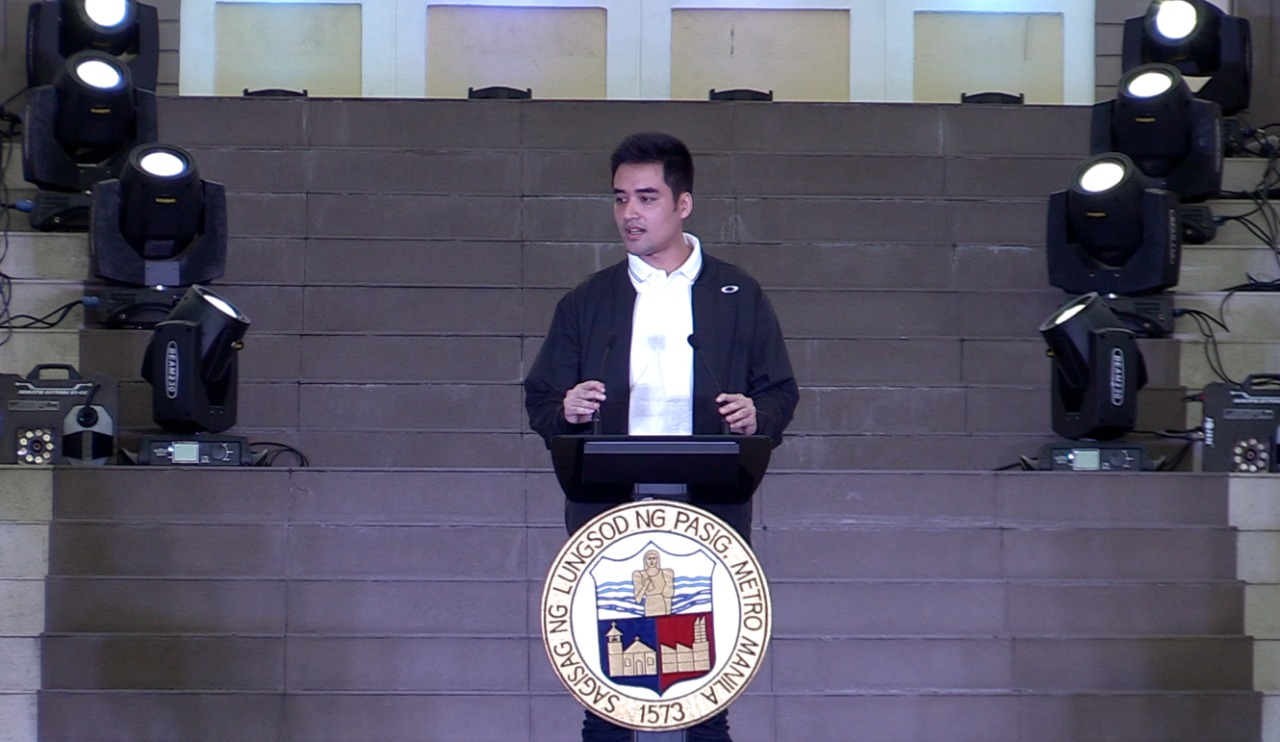
I am not ashamed to say that I admire our Pasig City Major Vico Sotto. Ask any of Pasig’s residents; they will attest that he is a Leader with a heart. Mayor Vico is a walking, talking example of a true Servant Leader. A Leader with a big heart to serve his followers.
Leg 2: The Mind of a Leader
Servant leadership has a cerebral aspect to it. A great leader can craft a clear, concise vision that is bigger than the company they lead. They draw an image that paints a picture of a better society. The company they are responsible for is only a player in the mission for this greater good.
In this mission, the Servant leaders identify the values their employees need to exhibit. The leadership of the company then exemplifies these values. These values are part of the screening process for new hires. These values are part of the leadership appraisal process.
Servant Leaders are clear about their purpose, their reason for being. They embrace their purpose and live up to it. They also understand that employees also have a reason for being.
Leg 3: The Behavior of a Leader
Psychological safety is a significant concern of a Servant leader. They understand that their behavior affects the way people behave. Establishing psychological safety in the workplace encourages others to voice out their ideas. People are not afraid to make a mistake. Employees have the confidence to debate topics with higher-ups without fear of reprisal.
It does not matter what a leader says; it’s his behavior that counts. You hear stories of leaders saying that their people are their most important asset yet fail to behave accordingly. When times get tough, the first budget they cut is the training budget. Stories about loyal employees devoting years of their life to the company but not recognized or rewarded are commonplace. Instead, it’s the employees that suck up to management that climbs the corporate ladder.
Servant leaders spend 80% of their time developing people, selecting the right people, providing constructive feedback. They don’t spend 80% of their time criticizing their staff, micromanaging their leaders. They don’t bring down people; they bring out the best in them. Servant leaders do not pass or fail people. Servant leaders help people excel.
Servant leaders understand that they cannot build great companies on their own. It’s arrogance for a leader to say he drove a company to success. A great leader develops great people. It’s great people that build great companies.
Leg 4: The Habits of a Leader
Servant leaders make a consistent, courageous decision. They have the habit of sticking to what’s right and not what’s popular. A Servant leader has formed the correct habits from the first three legs. They don’t have to think about being empathetic or not; They are automatically empathetic. It’s second nature to them.
It is typical for them to ask questions when they do not understand something. They don’t have to hesitate for fear of looking fooling. Servant leaders are fueled with humility day-in, day-out.
Servant leaders are the same at home, in the office, with friends, with strangers. They are genuine. Their values do not change even in the heat of problems. The Vision of a Servant Leader is always top of mind.
A Servant leader’s gaze is always on the greater good. They are reliable. They are consistent.
“Success is indeed a team sport. Failure, you can pretty much do it on your own.” as one of my favorite quotations goes. Great Leaders know this by heart more than mediocre ones.
Yes, a leader sometimes claims that the success of the company was from their leadership. Yes, there may be merit in some of this. However, they cannot steer a company to succeed without a crew to support them. Even their executive assistant helps in this quest. A good EA would be guarding the time of the leader with tenacity. They make sure that the leader maximizes the use of their time. They keep out distractions and time-wasting people.
You would need a great marketing team to execute your vision and brand message. A good finance team helps manage funds in good times and bad. A good sales team brings in revenue to fuel growth. Even the driver plays a key role. He ensures you arrive safely at your meetings on time.
The biggest lie about success is the self-proclaimed self-made millionaires. There is no such thing as a self-made man or woman. We are social beings, and we need people around us. We need people to support our goals. We need people to rally behind us.
Another danger of self-professed self-made people is the outcome of their retirement. Through the years, they lead from a center of power. The center being themselves. The company is likely to collapse after they leave. A void will be left behind. No one was groomed to take over the helm.
Great leaders, on the other hand, understand that business is a long game. They look at business far beyond their tenure in the company. Japanese businessmen have this view of their companies. They understand that not taking the time to develop other leaders in the organization will have a detrimental effect when they leave.
Great leaders understand that there are no real winners or losers in the business. Companies are either ahead or behind in the long game. New players will come join the game. Other companies may leave the game. Even the most established companies fall behind without good leadership. Take IBM, once an unstoppable force in front of the pack, whose leader turned arrogant. Today they are behind in their game.
Great leaders like Bill Gates early in his career made sure that employee and leadership development is at the core of their business. I had the opportunity to work with managers of Microsoft Middle-East. It was fascinating to know that they even have metrics on learning. Knowledge sharing was also part of the culture. Team members need to write a ‘white paper’ of projects they complete and share it in a central knowledge base repository.
Contrary to the claims of some leaders, leaders don’t build great companies. I beg to disagree. If you observe companies that have succeeded through generations of leadership succession, they had one very important thing going for them. They understand that great leaders develop great people. Great people build great companies. There is no other way to truly thrive in the long game of what we call ‘business.’
One, of many admirable traits of our Pasig City Mayor, is that he is not afraid to go against traditional political decision-making. Mayor Vico Sotto dares to push through on decisions that he feels are for the good of his Pasiguenos.
There were instances where he was criticized for his stand. He was criticized for being the first City to implement the Universal Healthcare law. Many of his peers were afraid of the repercussions of supporting such a law. All his colleagues are still undecided or are against the law. Mayor Vico pushed through for Pasig City. He is working to make medical services affordable for Pasiguenos.
He also aligned the City budget to accommodate a record 13,000 scholars. He required traffic enforcers to attend professional development programs. He is fighting to clean the deeply rooted corruption in the local government.
The City of Pasig was popular for its corruption. You can trace this back to the previous leadership. Corruption was instituted as a family business by the previous city Mayor. Mayor Vico dared to run against a 27-year political dynasty.
Leaders must choose between what is right and what is popular. Leaders must choose between what is legal and what is ethical. Leaders must choose between personal gain and service to others. Leaders must choose between short-term gains and long-term benefits. Leaders must choose between pushing their ideas and listening to others. Leaders much choose between dictatorship and meritocracy. Leaders must choose between talking and listening to others. Leaders must choose between ego and humility.
We all know what good leaders need to chose. However, decisions are difficult to make most of the time. However, leaders are placed in a position of influence to make those tough decisions. Leaders are placed in their position to make the right decisions.
The decisions they make will establish the legacy they leave behind. The decisions they make will clarify how people will see them. The people they are leading will see them as servant leaders or not.
It is not up to the leaders to say that they made the correct decisions or not. It’s the people around them that make that judgment.
It takes courage to do the right thing. When you do the right thing, it inspires others to do the right thing. It’s hard to stand up against outside pressures, from internal politics. You can get in trouble. It takes relationships we foster that give us the courage to do the right thing. Courage is external and comes from the support we feel from others. Courage sparks courage.
Hundreds of work environments are what the millennials call “toxic”. It has been baffling me for over twenty years. I have experienced this personally as I consulted with several companies. Of course, these come in varying degrees of toxicity depending on the leadership of the function. Depending on where it starts, the toxicity can cover the entire company or just an isolated department.
I spent a few days thinking about this topic. I came up with at least five pitfalls that result from a toxic work environment. This article is not to blame the source of the toxicity. Chances are, most leaders are not aware of the culture they are creating. Of course, there are a few of them that are aware but don’t care. These leaders are driven by numbers no matter what the cost. They want to shine in front of their superiors.
Most of the time employees are placed in a position of leadership but are not properly equipped. It’s like promoting your best salesperson to be a sales manager. A few months into the job, he starts failing to be a good manager. A few months later, we start criticizing him for not being a good manager. A year later, he quits.
We failed to provide him the tool to be a great leader. We lost a good salesman, and we damaged the position of the sales manager. If we do not learn from our mistakes then we are bound to repeat them. We will continue promoting people to leadership roles and not equip them. We may get a few naturally talented leaders now and then. However, in most cases, they will not know how to lead their team. They do not know what they do not know.
The following are potential results of a toxic work environment.
Fearful employees instead of respectful team members
We create a work environment driven by fear. It’s not a healthy and sustainable environment. Leaders need to earn respect. Employees that respect their leaders would do anything for the company even without being asked.
There was an instance years ago when this particular company had a demanding CFO. He would shout and embarrass his staff resulting in a very high department turnover. He would go further and demean employees from other departments. He acted like he was higher than the CEO. He acted like he had power across the entire organization.
One day, an employee from another department was walking into their gorgeous office in BGC. As she usually does, she had her bag in her left hand, and the other hand was holding her favorite coffee tumbler.
That day would be different from the previous days she reported to work. As she walked past the main entrance to the office, the CFO met her in the hallway. On each side of the hallway were cubicles of employees. They had an open space set-up.
Even before she could greet him with a gentle ‘good morning’, the CFO shouted at the top of his voice. They were earshot of every single one of the eighty-four employees. The CFO was blaming her for an inaccurate report submitted to their regional office. The employee stood in shock as the CFO continued to verbally attack her. The CFO even went to the extent of attacking her character. A few minutes after the unrelenting attack, the CFO left and stormed into his office.
The office staff rushed over and tried to console the victimized employee. She was devastated and embarrassed. She was in tears. A few minutes later, they all realized that she was in shock and could not move. They called the office nurse to take a look at her. The office nurse accompanied her to a nearby hospital. She was in such a shock that the hospital nurse had to gently pry off her fingers from the tumbler she was holding.
The next day, the truth came out. She was not at fault for the report. She was blamed unfairly and humiliated. As we expected, she resigned after a few days.
2. Employees feel like they toil instead of enjoying their work
I worked briefly for the IT function of a manufacturer of local electric fans early in my career. I was still very new in the field at the time. At first, I did not notice that most of the employees were waiting for 5 pm and salary days. It went on every single working day.
One day, over lunch, I got into talking with a Systems Analyst that joined the company a year before I did. I was less than three months at the time. I was still all fired up to work. Joel, the systems analyst, seemed happier on break times than on his actual working hours. It was common in most of the other departments.
I asked him how his work was. He said that it was okay and it pays for the bills. That sentence got stuck in my mind for a few months. As time went by, I started to understand why Joel said what he said.
Managerial positions went to employees favored by the executives. The people they promoted were not great leaders. They were just great at sucking up to the executives. A few were placed in management roles based on their relationship. If they had the skills of a good leader, that would not have been too bad.
Since these leaders did not get their posts because of their leadership skills, they imitated what they saw from other leaders going up the ladder. They also placed people they favored into management positions. The cycle never ends. It’s the employees that suffer because the senior executives did not correctly select nor train their leaders.
It’s the employees that suffer due to poor leadership. At the end of the day, they feel that their work is simply a toil they have to get through. Employees were not trained. Training was viewed as an optional expense. Employees felt no sense of purpose nor fulfillment. The attrition rate was about 70% a year.
3. Employees are lost instead of driven by a Vision
People need a purpose to drive them. They need a vision to rally behind. In the absence of purpose, the job just seems like another boring job. Employees do not feel that their job is a means to a greater good. They do not feel that their job is helping the company reach its Vision. There is simply no purpose for their job and the company.
There is this family-owned retail company I know of that has a vague Vision. The business was started as an idea by the founder and gradually grew to a reasonable size. However, as it kept growing, the attrition rate was holding steady at a high percentage.
When you ask them about their vision, it’s to be the biggest company in their industry. That’s it. It’s not even a unique and compelling vision. For one, it’s self-serving. Visions are bigger than the company. Visions are designed for the greater good. The company only plays a role in achieving that greater good.
Since their vision is self-serving, the employees could care less about the Vision. They would quietly say, it’s not their company anyway. They cannot link their personal purpose to the vision of the company. Often, they would say, ‘So what if the company is growing. Only the owners are benefiting’ The Vision has no meaning to them. The company might as well not have a vision statement.
4. Compliance instead of loyalty
I had the opportunity to become the Quality Manager for a Bank. One of the functions of the Quality Manager is to audit functions and employees. Together with a team of five other process auditors, we would schedule the audit of various functions of the Bank.
It was interesting to note that employees comply with company processes not because they know it’s the right thing to do. They would comply simply because the company expects them to. Their leaders remind them to comply with policies.
Their leaders do not take the time to explain that adhering to the policies benefits them and the customers. The policy is there to protect them. The policy is showing them the boundaries that should not be crossed. It’s much easier for an untrained leader to just bark ‘follow the rules or else.’
What they don’t realize is that loyal employees will not intentionally break policies. They know it’s for their protection and the customers. They don’t break or bend policies out of loyalty to the organization.
5. Selfishness instead of teamwork
Back when I was in the IT field for a large bank, I was assigned to an important project. We were in charge of migrating the Bank systems at the branches. We can only do this after banking hours. Since branches cannot go down during working hours, we need to plan this well. The hardware and software were delivered to the branch in the late afternoon. We would unpack them and remove all existing hardware.
Our team then positions the new hardware, test runs the new Banking system, connects to the mainframe at head office, and tests everything. After the hardware is ready, a second-team comes in to train the users.
By midnight, when everything was re-tested, we would pack up the old hardware. We label them properly and send them to our warehouse for storage.
We were converting 4–5 branches a night every night for the next few months. This was hard work. The coordination needs to be impeccable.
Right after the last branch was migrated, the team took a rest and reported to work around noontime the following day. As we reported to work, our Division head congratulated us. One of our team members decided to report to work early. He personally reported the accomplishment to our VP. The interesting part was that he exaggerated his contribution to the project. Since there was nobody else in the room with him, nobody corrected his story.
Throughout the project, this particular team member had the least contribution. He would not deliver his tasks and we ended up reassigning them to someone else. He was simply a bystander. However, he was smart and quick enough to take more credit than was due to him.
It’s unfortunate that in those days, our leaders only listened to the first messenger of the news. They had not given enough thought and insight to what he heard. The VP did not bother to validate the story. As expected, this demotivated the people who worked hard for the project. Credit was sucked by someone else simply because he could get away with it. Our VP, not knowing better, allowed him to get away with it.
Let’s not allow ‘toxic’ work environments to kill the motivation and drive of our loyal employees. Let’s make sure we develop the people we put in leadership roles. Let’s make sure that they understand that true leadership is not about lording others. True leadership is about leading, serving, and developing our people. We need to provide them the tools necessary to grow the business and service our customers.
Going back to our cause. Let us build a nation of servant leaders from all walks of life. If we can accomplish this then our companies, our organizations, our society, our government would be in better hands.
Stay safe,
Jordan Imutan “Let us build a Nation of Servant Leaders from all walks of life.” www.servantleadersph.com jordan@imutan.com +63.917.5183554
Leaders help build confidence. They do not just demand it.
Corporate life is a team sport. As a team sport, we need to trust one another. We need to be able to sleep at night knowing that someone has our back. We are not worried that someone from the team will stab you in the back. We are not concerned that a team member will sneak into the office of an executive and bad-mouth you. We are not worried that the friend you have lunch with will not run over to the boss to announce a completed project and take the credit from you.
Team members, from any sport, need to be able to trust each other completely. They should also be able to help out each other when needed. Having the confidence that the team will help you when times get rough is so amazing. You also know that when you struggle, your colleagues will not throw you under the bus. It goes both ways. There is great satisfaction in helping others in the team.
However, you cannot lend a helping hand if you do not have the confidence to help. You cannot help others if you are uncertain about your skills and knowledge. You cannot fake confidence. You will find it hard to reach out if you are not confident that you can pull your team member to safety.
It is the responsibility of our leadership to make sure that our teams are confident about themselves and their abilities. How can leaders help build their team’s confidence? Leaders need to invest in developing their team members’ competencies.
Good leadership sets up development programs for their team. They make sure that their team’s skills are regularly honed. An extra step that good leadership takes is systematically mentoring the future leaders of the company. They don’t leave the mentorship to chance. It is not only done as a reflex or as needed. Mentoring is not just lip service. They have a clear leadership development goal for each high potential they have under their wing.
It will result in a combination of structured and unstructured approaches to their mentee’s leadership development. Structured, meaning they have a specific competency goal to achieve. This goal is supported by a clear development program and review mechanism. Unstructured, meaning they provide carefully crafted feedback as needed. This productive feedback is discussed on a personal basis. New assignments given to these high potential mentees are also supported by a development program. Leaders provide resources for the learning curve.
I had a senior manager in Far East Bank from my previous career that practiced this approach. Every time one of his direct reports got a new assignment, Mr. Rick San Juan would assign them two tasks.
The first task is an eight-week technical learning program. This allowed his direct report to understand the processes of the new function. They were also able to understand the current situation of the department.
The second task, parallel to the first one, is an eight-week coaching program with him. He would set a fixed date/time for 90 minutes a week every week. This would go on for the next eight weeks. At the end of the eight weeks, his direct reports are confident and able to perform their new assignment.
Only when employees are confident about their skills will they be able to voluntarily reach out to struggling team members. They also understand their capabilities and limitations. Their self-confidence is so high that they are not bothered when they seek help.
Only when you have a group of people bonding together as a team and glued by self-confidence will they perform at higher levels of performance.
Do you recall the name of your favorite high-school teacher? Of course, you do. Mine is Ms. Bautista, our high school Filipino teacher in Colegio San Agustin. I had the privilege of taking her class.
I was first enrolled in Colegio San Agustin or CSA at grade one. My grade school and high school memories are fleeting. This comes with age. As years go by, I can remember only bits and pieces of my school days. The names of some of my classmates already elude me. I also forgot how some of them look like.
However, two teachers stand-out. They are Ms. Bautista and Mrs. Tolentino. Both teachers stood out from the rest because they believed in my potential. They believe that all students have great potentials. I was not the brightest student in my class. I would even position myself at the lower half of the class in terms of average grades.
Despite my lackluster grades, these two teachers believed that I can do better. They saw potentiality rather than problems. They kept encouraging me instead of putting me down. Other teachers would take a stand that if you are less than average then they leave you at that. A few teachers only care about their pay and benefits.
Ms. Bautista and Mrs. Tolentino would find ways to encourage me and others to try to perform better. We were encouraged to be better. They took the time to explain again the lessons we did not understand.
Fast forward to corporate life. Similarly, the leaders I recall with respect and admiration are those that showed confidence in my abilities. Whenever I or my colleagues made a mistake, these leaders would talk about why the mistake happened. We would then discuss how to resolve the problem and prevent a recurrence.
These leaders also took the time to develop us. Our development was intentional and planned. They know that a great part of their responsibility is to develop their direct reports and their people. I recall these leaders from the lessons I learned from them. This is very similar to the teachers I recall.
On the other hand, countless times, I witnessed various leaders that immediately attack employees for mistakes rather than figure out the cause of the problem. They start looking for who to blame instead of helping resolve and prevent a recurrence. The default decision is guitly based on the grapevine. Guilty, based on other people’s opinions. Guilty even before hearing out the concerned employee.
I had the opportunity to work with over two dozen leaders in my corporate life. However, very few of them I can recall by name. The ones I can recall are leaders that raise up their teams rather than bring them down. They stand out so clearly that they are easily recalled. They stand out because I try to emulate their leadership style and be like them. They stand out because they are servant leaders.
Teachers are like leaders. They have hundreds, if not thousands, of followers throughout their careers. The ones that stand out are the ones that believe in and take the time to develop their students. The ones that stand out are the ones that make a difference in their student’s life. They stand out because just thinking about them puts a smile on my face. They stand out because they are servant leaders to their students.
Great teachers improve their student’s life.
How about you? Who are your favorite teachers and why? If they are still around, I strongly suggest that you reach out and thank them.
“It is important for us to have leaders with the Fear and the Love of God.” Major Vico Sotto
Our Victory Pastor Marc Constantino shared a story about our Mayor Vico Sotto in todays 9 am service. Pastor Marc had a friend that was working on-site at a public works program. It happened that Mayor Vico Sotto dropped by to check how the program was coming along.
Pastor Marc’s friend was able to have a brief conversation with the Mayor. After a few minutes, Mayor Vico Sotto was asked why he did not have a big banner on the site saying “A project of Mayor Vico Sotto.” I am certain that you have seen such banners in different cities. The former Mayors of Pasig used to love having such banners all over the city.
Mayor Vico Sotto politely smiled and said that he could not do that. He cannot put up a banner saying that it was his project. This project is funded by the people of Pasig. It was not right to claim that it was his project.
This is a far cry from the other mayors who blatantly claim credit over the public works in the city as their project. They dare to claim this even when the funding is coming from the taxpayers of the city.
People seated in positions of power want to hold on to power. That’s where the problem begins. It’s no longer about serving their people. It’s not about servant leadership. It is now about self-serving leadership. This is when greed creeps in. This is when decisions are no longer beneficial for the people they serve. Decisions are now swayed by personal interest.
Pastor Marc wonderfully stated a question to ask ourselves when making decisions – “Does my decision glorify God or does it glorify me?”
Leaders from organizations, corporations, governments fall into the same trap. Do their decisions honor God and the people they lead? Are their decisions wise with the guidance of the Holy Spirit? Are their decisions based on just knowledge on how they can better their lives?
It’s unfortunate to see them claim that what they are doing is for the common good. They would show themselves as sacrificing for the people they lead. Are they? Do their decisions glorify God?
The fear of the Lord is the beginning of wisdom, and knowledge of the Holy One is understanding. Proverbs 9:10
For as long as leaders do not have the humility to fear and lean on the Lord for wisdom then their intentions are questionable. Their decisions are questionable no matter what they claim.
For as long as leaders do not serve the people they lead then they are quietly serving themselves.
Let me leave you with two points:
Leaders, fear the Lord and you will be able to decide wisely.
Leaders, your decisions should glorify the Lord.
This is one of the pillars of true servant leadership.







 Too many companies have untrained leaders that fail.