Great leaders are purpose driven.

Purpose-driven leadership is the practice of leading with a clear sense of purpose and direction, and using this purpose to inspire and guide the actions of oneself and others. This type of leadership is based on the belief that organizations and individuals are more successful and fulfilled when they have a clear sense of purpose and are aligned with their values and goals.

Purpose-driven leadership can have a number of benefits, including:

Increased motivation and engagement: When individuals and teams are clear on their purpose and how their work contributes to it, they are more likely to be motivated and engaged in their work.

Improved decision-making: A clear sense of purpose can help leaders make more informed and aligned decisions that are in line with their values and goals.

Greater innovation: A sense of purpose can inspire individuals and teams to think creatively and come up with innovative solutions to challenges.

Stronger culture: A shared sense of purpose can help build a strong, positive culture within an organization.

To be an effective purpose-driven leader, it is important to be clear on your own purpose and values, and to communicate this clearly to your team. It is also important to regularly reflect on whether your actions and decisions are aligned with your purpose, and to make adjustments as needed.

What about you?

What’s your purpose?

We hope you enjoyed our bite-sized lesson for the day.

At POC, we help improve lives by pushing Learning Beyond Training.

We believe that learning begins after the last day of training. Education is about using and retaining knowledge. #learning #lifelonglearning #beyondtraining #training #leadershipdevelopment #leadership #leaders #jordan #pocph #learningbeyondtraining #dayone #everydayisdayone #learnandgroweveryday

What’s your Lead generation strategy? A campaign focused on attracting potential customers to your business.

– A Marketing Campaign Series

Lead generation is the process of attracting and converting strangers into leads, or potential customers. It is an essential part of the sales and marketing process, as it helps businesses build their customer base and generate revenue.

There are many ways to generate leads, including social media marketing, content marketing, email marketing, and paid advertising. However, it is important to choose the right tactics for your business and target audience.

One effective lead generation strategy is to create a landing page on your website specifically designed to convert visitors into leads. This page should have a clear and compelling call-to-action (CTA), such as a form to sign up for a newsletter or a demo of your product. It should also have information about the value that your business offers and why it is worth considering.

Another tactic is to use social media to connect with potential customers. By regularly posting relevant and valuable content, you can attract a following of interested users. You can then use social media advertising to target specific demographics and interests, and use custom audiences to retarget users who have visited your website or interacted with your content.

Email marketing can also be a powerful tool for lead generation. By collecting email addresses from website visitors and customers, you can send targeted campaigns to nurture leads and move them through the sales funnel.

Lead generation is not a one-time effort, but rather an ongoing process that requires consistent effort and testing to identify what works best for your business. By regularly generating leads and converting them into customers, you can build a strong and sustainable customer base.

#questionforgroup

What about you? What’s your lead generation strategy? We hope you like our bite-sized marketing tip for the day.

Effectively leaders can navigate the age of disruption.

Leadership in the age of disruption refers to the ability to effectively lead and navigate through periods of significant change and uncertainty. This is especially important in today’s business environment, where technological advancements, global competition, and economic shifts can create disruptions that impact organizations of all sizes.

Effective leaders in the age of disruption are able to adapt to change, think strategically, and inspire their team to embrace new challenges and opportunities. They are also able to navigate through uncertainty and ambiguity, and make sound decisions despite incomplete information.

To lead effectively in the age of disruption, leaders need to possess a number of key skills and attributes, including:

Adaptability: The ability to quickly adapt to new situations and changing circumstances is essential for leaders in the age of disruption.

Strategic thinking: Leaders must be able to think ahead and anticipate potential disruptions, as well as develop strategies to navigate through them.

Innovation: In a rapidly changing world, leaders must be able to foster a culture of innovation and encourage their team to think creatively and come up with new solutions to challenges.

Emotional intelligence: The ability to recognize and understand emotions, and to use this awareness to manage behavior and relationships effectively, is crucial for leaders in the age of disruption.

Collaboration: Collaborating with other stakeholders, including customers, partners, and employees, can help leaders navigate through disruption and find new opportunities for growth.

What about you?

How are you navigating disruptions?

We hope you enjoyed our bite-sized lesson for the day.

At POC, we help improve lives by pushing Learning Beyond Training.

We believe that learning begins after the last day of training. Education is about using and retaining knowledge.

#learning #lifelonglearning #beyondtraining #training #leadershipdevelopment #leadership #leaders #jordan #pocph #learningbeyondtraining #dayone #everydayisdayone #learnandgroweveryday

Great leadership calls for great emotional intelligence

Emotional intelligence is the ability to recognize and understand your own emotions and the emotions of others, and to use this awareness to manage your behavior and relationships effectively. It is an important factor in successful leadership because it enables leaders to connect with their team members on a deeper level, build trust, and create a positive and collaborative work environment.

Leaders with high emotional intelligence are able to effectively communicate with their team, resolve conflicts, and provide support and guidance. They are also able to adapt to changing situations and make sound decisions under pressure.

Developing emotional intelligence requires self-awareness, self-regulation, motivation, empathy, and social skills. These skills can be learned and improved upon over time, and are essential for effective leadership in today’s fast-paced and constantly changing business landscape.

What about you?

How is your emotional intelligence?

We hope you enjoyed our bite-sized lesson for the day.

At POC, we help improve lives by pushing Learning Beyond Training.

We believe that learning begins after the last day of training. Education is about using and retaining knowledge.

#learning #lifelonglearning #beyondtraining #training #leadershipdevelopment #leadership #leaders #jordan #pocph #learningbeyondtraining #dayone #everydayisdayone #learnandgroweveryday

Life is what happens when you’re busy making other plans. -John Lennon

Life is what happens when you’re busy making other plans. You may have a carefully crafted plan for your life, but things don’t always go as planned. That’s okay! It’s important to be flexible and enjoy the journey.

It’s also important to remember that life is unpredictable. You may have a great plan, but something unexpected can always happen. That’s why it’s important to roll with the punches and take things as they come.

So don’t stress if things don’t go according to plan. Just enjoy the ride and be ready for anything!

What about you?

How are you reacting to your life’s speedbumps and detours?

At POC, we help improve lives by pushing Learning Beyond Training.

We believe that learning begins after the last day of training. Education is about using and retaining knowledge. #learning #lifelonglearning #beyondtraining #training #leadershipdevelopment #leadership #leaders #jordan #pocph #learningbeyondtraining #dayone #everydayisdayone #learnandgroweveryday

If you set your goals ridiculously high and it’s a failure, you will fail above everyone else’s success. -James Cameron

A lot of people are afraid to set high goals because they’re afraid of failure. But what if I told you that if you don’t set your goals ridiculously high, you will fail above everyone else’s success?

Sounds crazy, right? But it’s true. If you want to be the best, you have to shoot for the stars. And yes, you will probably fail a few times along the way. But that’s okay! Because as long as you learn from your mistakes and keep trying, you will eventually reach your goals.

So don’t be afraid to set big, audacious goals. Just make sure that you’re prepared to work hard and put in the time and effort necessary to achieve them. Failure is not an option–only success awaits you!

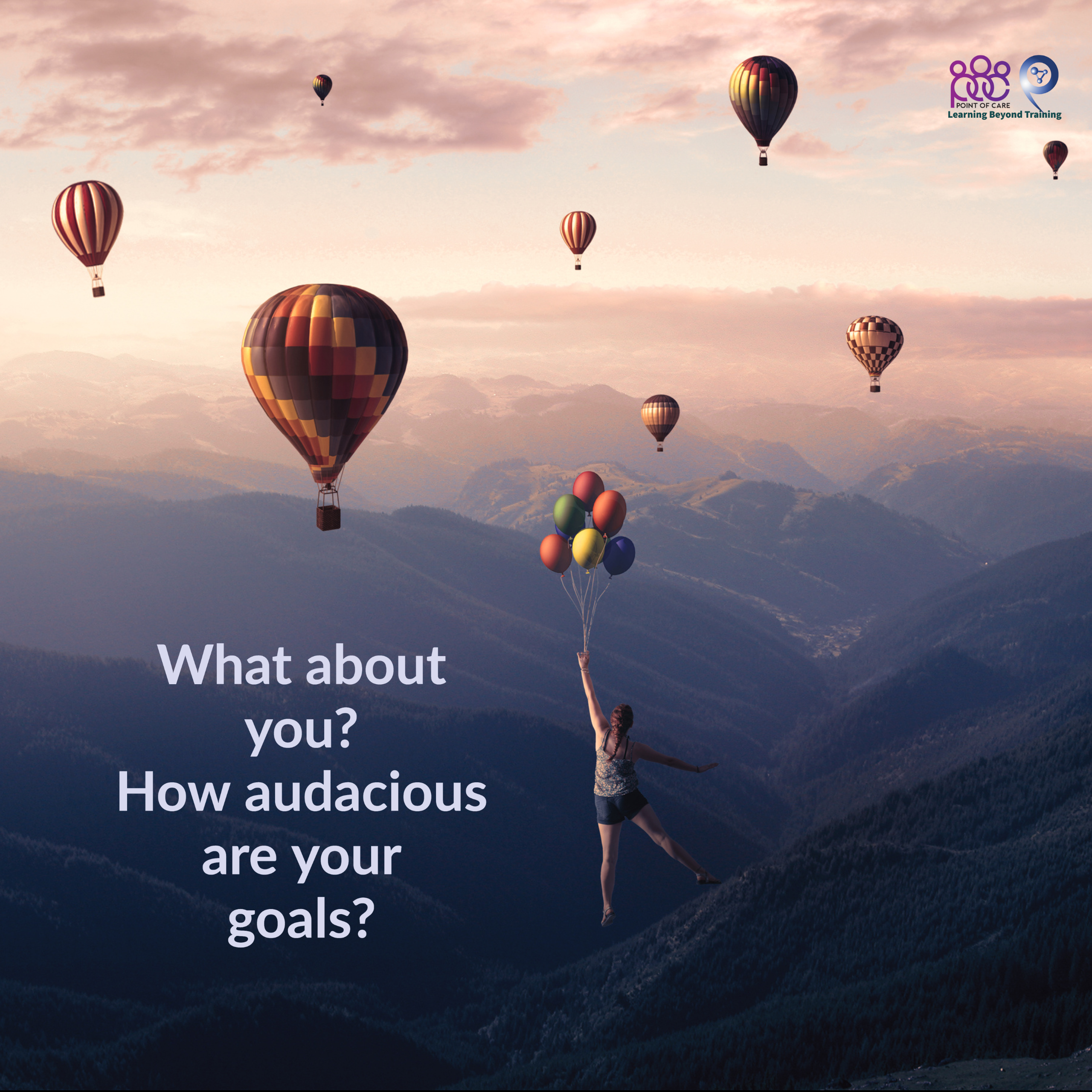
What about you?

How audacious are your goals?

At POC, we help improve lives by pushing Learning Beyond Training.

We believe that learning begins after the last day of training. Education is about using and retaining knowledge. #learning #lifelonglearning #beyondtraining #training #leadershipdevelopment #leadership #leaders #jordan #pocph #learningbeyondtraining #dayone #everydayisdayone #learnandgroweveryday