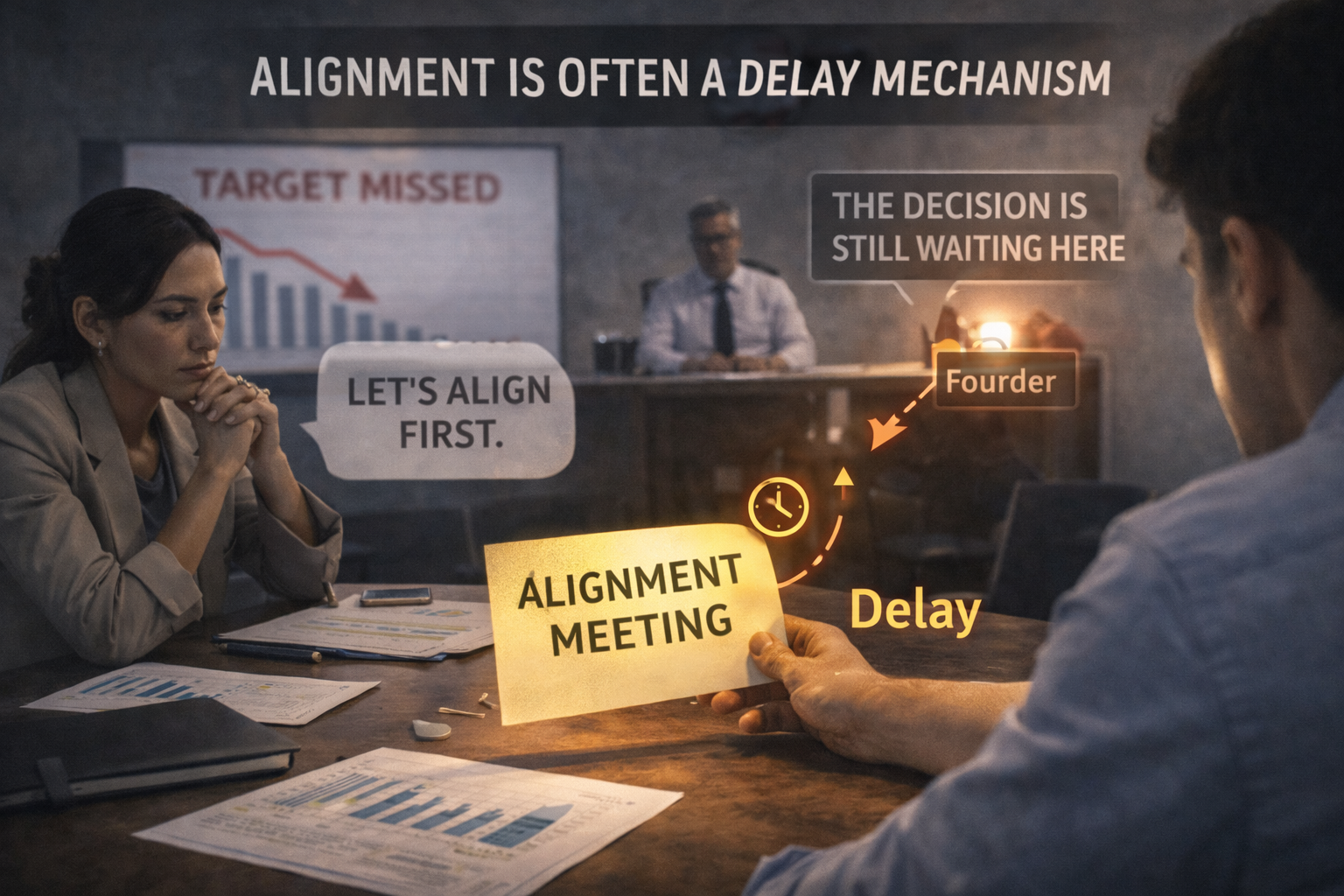
“Let’s align first.”
Few phrases sound more responsible in a meeting.
It signals professionalism. Collaboration. Thoughtfulness. No one wants to move forward without making sure everyone understands the direction.
Alignment feels mature.
But in many organizations, alignment quietly becomes something else.
A delay mechanism.
Here’s how it usually starts.
A manager sees an issue early. Maybe a project is drifting. Maybe a campaign isn’t performing. Maybe a key hire needs to be made quickly to protect a target.
The manager knows a decision is needed.
But instead of deciding, they pause.
“Let’s align with leadership.”
That phrase sounds harmless. But alignment often means the decision is leaving the level where it should have landed.
When ownership is unclear, alignment becomes the safer alternative to commitment.
Managers gather opinions. Meetings get scheduled. Documents circulate. The conversation expands. More people get involved.
The decision doesn’t get stronger.
It gets slower.
And slowness compounds.
A decision that could have been made in an afternoon now takes a week. A correction that should have happened early now happens after the problem is visible. Execution continues, but it moves cautiously because the direction hasn’t fully hardened.
Eventually the issue reaches leadership.
The founder gets pulled in.
A quick call is made. Everyone agrees. Movement resumes.
But something important just happened.
The system learned that final clarity lives at the top.
So next time, alignment happens earlier.
Managers hesitate sooner. Decisions travel faster upward. Authority concentrates quietly. Founder bottlenecks begin to form—not because the founder demanded control, but because no one else felt fully authorized to absorb the risk.
Meanwhile, targets begin drifting.
Not dramatically. Not immediately.
Just slowly enough that no one panics until the quarter is almost over.
That’s when alignment meetings become more urgent. Reviews increase. Conversations intensify. Everyone is now trying to correct what could have been fixed weeks earlier by a single decision.
This is the paradox of alignment.
The more organizations rely on it, the slower they move.
Real alignment doesn’t happen before decisions.
It happens after ownership is clear.
When someone knows, “This outcome belongs to me,” alignment becomes informational—not procedural. The leader listens, gathers context, and decides. The system moves.
But when ownership is blurred, alignment replaces authority.
And authority is what actually creates momentum.
Alignment feels collaborative.
Authority feels uncomfortable.
So many companies choose alignment.
Then they wonder why decisions take so long—and why the founder keeps getting pulled into calls that should have never reached the top.
Alignment is valuable.
But when it replaces ownership, it stops being collaboration.
It becomes delay with better language.

 Too many companies have untrained leaders that fail.