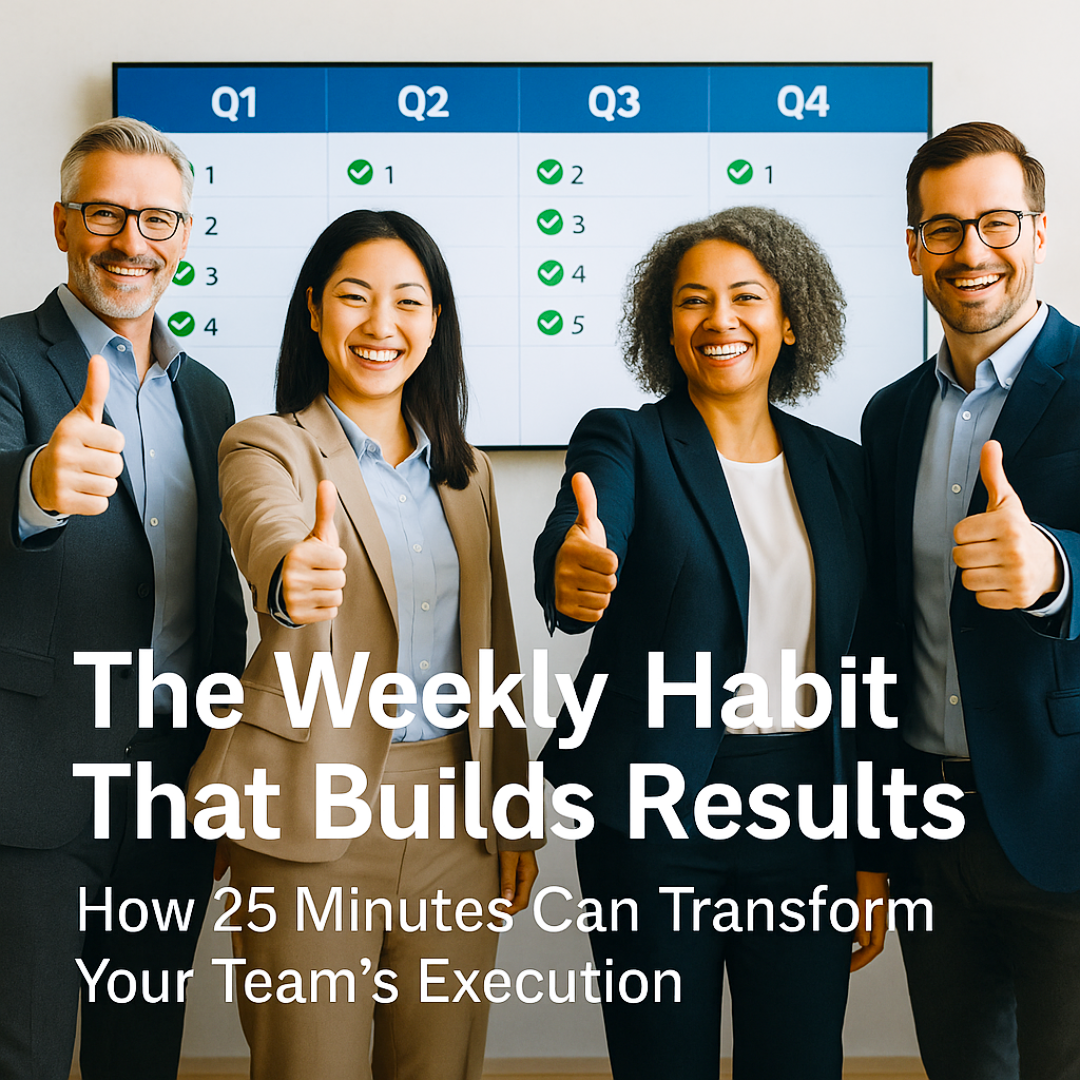
By Jordan Imutan
Consultant | Creator of STRIDES™ Framework
We Used to Think the Problem Was the Strategy
When projects stalled and goals were missed, we thought the issue was the plan. Maybe it wasn’t ambitious enough. Maybe we missed something during the strategy workshop. Maybe we just needed a better deck.
But over time, we noticed something deeper:
The issue wasn’t strategy. It was follow-through.
We saw companies with brilliant ideas and clearly defined goals—but those goals never turned into results. Why?
Because people got busy.
Because teams didn’t check in.
Because no one was tracking progress consistently.
That’s when we realized the secret to success wasn’t just what we planned, but how often we followed through.
And that’s how the Weekly Execution Rhythm was born.
Why Strategy Dies Without Rhythm
We’ve seen this across industries—from startups to multinationals.
Teams come out of a strategy session fired up. Everyone is aligned and ready. But two weeks later, the buzz fades. A month later, no one remembers the action items.
Here’s what typically happens:
- People get overwhelmed by day-to-day work
- There’s no accountability until the next big review
- Small issues become big blockers because no one addresses them early
- Leaders assume things are moving, but they’re not
According to a study by Harvard Business Review, 61% of senior leaders say their organizations struggle to bridge strategy and execution. And in our experience, the missing link is a simple, repeatable rhythm.
What Is a Weekly Execution Rhythm?
It’s not a fancy system. It’s not a 2-hour meeting.
It’s just a focused, 25-minute habit that happens every week.
In this short check-in, your team does three things:
- Reviews progress on 90-day goals
- Identifies what’s off-track or stuck
- Commits to clear next steps
This meeting keeps your strategy visible, your team aligned, and your projects moving.
We’ve taught this rhythm to dozens of companies—and it works whether you’re 5 people or 500.
Why Weekly Is the Perfect Rhythm
Why not daily? Too frequent. Why not monthly? Too far apart.
Weekly is the sweet spot.
✅ It’s fast enough to catch problems early
When something is off-track, you can solve it before it grows into a bigger issue.
✅ It’s spaced enough to show real progress
A week gives teams time to accomplish something meaningful. Every check-in feels like a checkpoint, not a chore.
✅ It builds consistency
The habit of meeting weekly creates momentum. It becomes part of the culture—not something “extra.”
How We Structure the Weekly Execution Check-In
This is the exact format we use in the STRIDES™ Framework:
🔸 First 5 Minutes: Celebrate Progress
Each team member shares one win or completed milestone. We keep it fast and positive. It reminds everyone that we are moving forward.
🔸 Next 10 Minutes: Status Update
We go through our 90-day execution board and check each item. Is it on track? Off-track? Delayed?
We don’t discuss the “why” here—just a status snapshot. If something is off, we flag it for the next part.
🔸 Final 10 Minutes: Unblock and Align
This is where we solve problems. We ask:
- What do you need to get back on track?
- Who can help?
- What will you commit to before next week?
By the end, every team member knows what they’re responsible for—and what success looks like.
Why It Works
At first, some teams are skeptical.
“Do we really need another meeting?”
But after 3 weeks, the tone changes.
People start saying things like:
“I finally know what’s going on with other teams.”
“I like knowing what I need to deliver before next Friday.”
“This meeting keeps me accountable.”
And the biggest benefit?
Progress becomes visible.
You start to see stalled initiatives moving again. Priorities become clearer. People stop hiding behind busywork and start delivering real results.
Real Client Example: A Retail Chain in Metro Manila
One of our clients had a familiar challenge: lots of plans, little progress.
They had a 5-year strategy with 10 major goals. But 6 months in, only one had moved—and barely.
We helped them define a 90-day execution plan with 4 core priorities. Then we introduced the Weekly Execution Rhythm.
What changed?
- Department heads started owning projects, not just attending meetings
- Problems got solved in days, not months
- Teams that never collaborated started working together weekly
- By Week 9, they had delivered 70% of their 90-day milestones
And it wasn’t just the numbers that improved.
“The team feels energized again,” their HR Director told us.
“We’re finally moving in the same direction.”
How to Start This Habit in Your Team
You don’t need a consultant to begin. Just follow this basic guide:
Step 1: Schedule a Weekly 25-Minute Check-In
Pick a fixed day and time. Don’t skip weeks. Consistency matters more than perfection.
Step 2: Use a Shared Board or Tracker
This could be a whiteboard, Trello, Asana, Excel—anything visual. List your top priorities, milestones, and owners.
Step 3: Follow the 5-10-10 Format
Keep it simple:
- First 5 mins: Wins
- Next 10 mins: Status
- Final 10 mins: Unblock and commit
Step 4: Track Next Steps
At the end of each check-in, write down what each person committed to. Review it the next week.
Step 5: Celebrate Wins
Don’t underestimate the power of momentum. When something gets done—acknowledge it. Loudly.
What STRIDES™ Adds to the Equation
In our STRIDES™ program, we don’t just teach the weekly rhythm—we help teams install it.
We provide:
- A Weekly Execution Board template
- Custom check-in scripts and training
- Coaching for leaders to facilitate with confidence
- Accountability tools and dashboards
- On-call support for when things get off-track
The goal isn’t just to run meetings—it’s to build a culture of execution that lasts.
We often stay with clients for 6 to 12 months to guide and support the rhythm until it becomes second nature.
What Happens After 12 Weeks of This Habit?
If your team commits to this rhythm for just three months, here’s what you’ll likely see:
- Less confusion
- Shorter meetings with clearer outcomes
- Projects that used to take months now move in weeks
- A stronger sense of ownership and urgency
- Strategy that doesn’t sit in the cloud—it happens on the ground
That’s not wishful thinking. That’s what we’ve seen again and again.
Why Most Leaders Miss This
Many leaders assume strategy will “trickle down” on its own. Others think their teams are aligned—until they discover that no one actually knows who’s doing what.
Some avoid weekly meetings because they’re afraid it’ll feel like micromanagement.
We get it. We used to think the same.
But here’s the truth:
A 25-minute weekly habit is the difference between motion and momentum. Between intention and impact.
When teams meet weekly with purpose, everything changes.
Let’s Build This Rhythm Together
If you’re tired of strategy stalling out…
If you want your team to feel focused again…
If you’re looking for one leadership habit to start this quarter right…
Let it be this one.
We’d love to help you build it.
📩 Email Carl: carl@axelgabmc.com
📞 Call or Text: 0966.507-9136
One Week. One Rhythm. One Habit That Builds Results.
The question is:
What would your team look like 12 weeks from now… if you started meeting this week?
#STRIDESFramework
#WeeklyRhythm
#LeadershipHabit
#ExecutionDiscipline
#JordanImutanConsulting
#TeamAlignment
#FollowThrough
#BusinessMomentum
#StrategyToAction
#ConsultingPhilippines

 Too many companies have untrained leaders that fail.