The Chief HR officer (CHR) role in the company is a standalone function. The position does not have anyone directly reporting to her at the central or corporate level.
However, two HR managers are looking after the human resource operations of the three companies in the group. We also have a compensation and benefits function looking after the payroll of all employees.
Even though our CHR person does not have a direct line employee reporting to her, she still manages to get her assignments done. More so, if the work requires cooperation from other functions in the company. I was discerning her a few times as she took on new tasks.
She manages to get things done through others because she positively influences the people around her. It’s her influence on others. The following set of behaviors surfaces with her.
1. Humility. She is never rude or disrespectful when dealing with others.
2: Curious. She will ask questions about her assignment regardless of how it makes her look.
3. Inclusive. She makes sure that all relevant stakeholders are part of the discussion.
4. Helpful. When she notices someone struggling with an assignment, she is quick to lend a helping hand.
These are four simple behaviors I have noticed with our CHR that provide electricity for her magnet of influence in the company. She can get things done regardless of how big or small the challenge is.
How about you? How is your influence on your workmates? How strong is your influence in your organization?
Several companies claim that their employees are their most significant assets. In addition, many companies claim that they have a family culture. However, what does a company centered on family culture look like?
Let me share with you how it looks like.
These companies will do everything to avoid laying off employees during the pandemic lockdown.
They physically check on their employees when a calamity strikes. Their leaders call on employees that live around the area of a catastrophe. They check up on their employees to see how they are doing.
They put learning and development at the center of their plans.
They systematically identify high potential employees, future leaders and put them on a leadership development track.
They hold monthly get-togethers to inform their 1,400 employees what is happening in the companies.
The individual companies hold engaging townhalls on a consistently regular basis.
The leadership openly shares leadership quotes and Biblical verses.
They are courageous enough to have 360-degree appraisals.
They are open to new ideas regardless of what level in the organization it is coming from.
Anyone may politely provide an alternate view to any leader, and it is not taken personally.
They emphasize the importance of work-life balance.
They help employees put their children through a scholarship program.
They provide scholarship programs to key employees.
The leadership is truly a group of servant leaders.
Even after their impressive growth, the leadership is still open to new ideas and ways of doing things.
The leadership is not afraid to challenge the status quo.
I can keep going on, but I hope that you get the point. Family culture helped catapult this company from a 30 employee workforce to a 1,400 strong organization.
Yes, actual companies out there walk the talk when it comes to having a family culture.
I want to honor these companies for genuinely recognizing the value of their people. So here, let us celebrate a particular company I used as an example. They have a strong family culture and core values of Respect, Integrity, Service, and Excellence. So may you continue to R.I.S.E. in the coming years. God bless you!
“Don’t underestimate the power of kindness in the workplace” is another genuinely insightful study from Harvard Business Review.
The article drives the point home that everybody wants to be happy. It’s a basic human instinct. The context of the article is todays new normal. A regular ‘Thank you, Garry’ or ‘Great Job’ recognition in the hallway is no longer the norm. It now seems like a practice from a distant era.
HBR’s study explains that showing kindness brightens the recipient’s day and brings happiness to the giver. Acts of kindness bring meaning to our life because we are investing in something much bigger than ourselves. Studies show that people giving compliments get more benefit from it than the recipient of the praise.
Kindness is like a boomerang. According to HBR research, kindness is paid back. Kindness is also paid forward—an act of kindness breed kindness. I read a story about the effect of a kind gesture a few months ago.
These two friends were walking in the streets of New York, catching up on old times. As they were chatting, the person in front of them had his backpack open. The person did not realize that some of the documents had fallen off his backpack. Without missing a beat, one of the two friends picked up the pieces of paper that had fallen on the street.
They reached the guy at a pedestrian crossing. The crossing light was red. As the guy stood waiting, the two friends tapped him on the shoulder. He looked back, and he was handed his documents. After the guy thanked them, he crossed the street. A bystander, who witnessed the entire incident, walked up to the two friends. He complimented them on their act of kindness.
Let’s see who benefited from this act? The backpack guy undoubtedly felt good that someone took the time to pick up his documents. The two friends felt good that they had a good deed for the day. The witness felt good after witnessing the good deed. All of them will probably find an opportunity to perform an act of kindness in the coming days.
At work, kindness fosters collaboration and teamwork. No matter the size of the gesture, big or small, people appreciate it. It helps create psychological safety in the organization.
If kindness has such great benefits to oneself and the organization, why don’t more people act accordingly? Why do we hesitate to show kindness to others?
I observe that, at times, people feel awkward to show kindness. We are more critical in the workplace. A toxic work environment promotes a culture of individuality. We are quick to find faults in others, but we are hesitant to find a good deed. At times, we dismiss good work as part of their job, so there is no need to show a kind gesture.
Sometimes, pride gets in the way. A gesture of kindness can be seen as a weakness by traditional managers. Some find it difficult to say a kind word, especially in public. Sending a private “thank you” email would be more comfortable for them.
Leaders, let’s set an example. The world is already challenging enough. Let’s not allow pride or awkwardness to get in the way of building an environment of kindness in the workplace.
It has always been a dream of many to wake up excited to come to work. A culture of kindness can help bring us closer to that dream. Let’s do our part and start now. Show kindness to the person next to you.
I am fortunate enough to witness several kinds of leaders through the ’80s, 90’s until today. Leaders I had the privilege to work for comes in different colors, sizes, and shapes. They come from diverse backgrounds, education, and temperament.
For over 30 years in the workforce, I have witnessed how the different leadership styles affected employee morale, productivity, and the organization’s success.
I started work during the Theory X era. Theory X states that “employees require heightened supervision, external rewards, and penalties.” A few elderly leaders would even go to the extent to say the employees are generally lazy. If their boss does not drive them, they will not work. They claim that employees only work if someone is watching over them.
It’s incredible to watch time go by and see many leaders in todays world still having that old Theory X mindset. It’s like they never moved forward with the times. In the past, most works were labor-related. In todays work, jobs require “knowledge” workers.
Stuck in the past, I call them. However, it’s not only the “seasoned” leaders that think this way. Younger Gen-X and the more experienced Gen-Y also carry the notion that employees are simply company tools. These tools will not work correctly if not closely supervised. Employees need supervisors looming over them.
From an employee’s perspective, this is a living hell. Employees are not propertly managed. Meaning they are not developed for their potentiality. They are the first to be blamed when something wrong happens, even if it was a leadership shortcoming. Employees are required to work at all times despite their struggles. Employees are not properly compensated. In the confines of meeting rooms, leaders sometimes talk about them like they are disposable commodities. In public, employees are heralded as the companies most important asset.
You will see employees waiting for the highly paid leaders to leave before they can call it a day. They fear that the bosses will think they are not busy. They will wait for an extra hour or two before heading off home and missing the chance to play with this child before bedtime. They miss tutoring their children because it was already traffic when the leaders go home in their expensive cars. The employees will have to fall in line to take the public transport going home.
They hold back on properly paying their best people. They will wait until a high-potential employee submits their resignation before offering them higher pay or better benefits. Employees put up with this simply because most of them think they do not have options.
I am not generalizing. Do not get me wrong. However, it is unfortunate that this is the situation in most companies. A great workplace should be the rule and not the exception. As Simon Sinek said, “people have the right to love coming to work.”
The sad workplace environment sparked my obsession to study great leaders I came across in my career. It is my mission to learn, apply then teach others the best leadership styles. It is why I am writing articles about great leadership. This is why I run leadership workshops.
I believe that most terrible leader is bad at leadership because they do not know better. It was something they learned or observed from previous bad leaders they had. A former manager used to say, “Monkey see, monkey do.”
Terrible leadership is like a genetic disease that is passed down from one generation to another. Of course, there are still a few genuinely evil leaders in the mix. However, most of them do not know better.
I have witnessed in so many instances employees promoted to leadership positions that are not properly equipped. Newly minted leaders are expected to “magically” morph from a great employee to a great leader. Really? Is it that simple? Come on, guys!
Almost everyone can list several excellent leadership competencies; having a clear and communicated vision, focus on their people agenda, developing direct reports, recognizing outstanding work in public, reprimanding in private, and so on. Yet, very few leaders behave this way.
I know that mentoring future leaders, educating them on leadership competencies, writing articles and books, blogging may not make much of a dent. However, I am at peace that I am trying to do my part.
I will always say that Great Leaders develop people. Great people build great organizations. Only with this can we have great workplaces. I would love to see this one day.
Stay safe,
Jordan Imutan Visit my website for more articles www.servantleadersph.com jordan@imutan.com (email) @jordanimutan (social media)
There are two types of leaders when it comes to dealing with their subordinate’s erroneous decisions. On the one hand, you have leaders quick to punish direct reports that make the wrong decision. On the other hand, there are the leaders that genuinely care for the learning of the direct report. The servant-leader is the second one.
When I worked as the head of Banking Operations a few years ago in Saudi Arabia, I made an erroneous decision. Actually, I made several but different wrong choices in my career. However, I also experienced different ways of processing by my direct manager.
Back then, I was reporting to a British direct supervisor. One of the departments reporting to me was payment processing. The responsibility included fund transfers both local and abroad. It also carried the responsibility of payroll processing for our corporate and government clients.
When I took on the new role, I was utterly dependent on my direct reports to walk me through the critical processes of their function. I depended on my manager in charge of payroll processing.
The department was in charge of processing over 700 entities. The payroll we processed was a combination of corporate and government payroll. It was a sensitive process. We could not afford a single mistake.
When we started offering the service, we only had about 20-30 payroll clients. The process involved the client preparing and sending a payroll file in a physical CD. The CD was delivered three days before the actual payroll run.
As the number of clients grew, I should have questioned the manual process that the department was following. Manually processing payroll for 700 entities is different from processing 30. I had a feeling that the process might blow up one day. However, I decided to rely on the current manual process. I asked my payroll manager about the scalability of the process. He said that it still works.
One payroll day, we got a call from an angry CEO of one of the biggest companies in Saudi Arabia. He accused us of debiting his payroll fund twice. After the CEO investigated, he found out that his 18,000 employees received their payroll TWICE. Yes, twice. Everyone thought that they were given a bonus on that payroll run. We are talking about millions of Saudi Riyals in duplicate payment.
We quickly tried to resolve the issue by debiting their employees’ accounts. We can only do this with employees who had their payroll account with our bank. If the funds were already withdrawn, the system would automatically transfer any income fund to our bank account until the amount was fully recovered.
The problem was with employees with accounts from another bank. We do not have control over their system. The only thing we can do is practically beg the payment operations of the other bank to retrieve our funds.
In the end, it took us a grueling three months to recover 95% of the overdrawn funds. The bank took the hit for the 5%. We needed to pay back our corporate client.
Through this entire ordeal, my direct manager was calm. The priority is to come up with a recovery plan. As we implemented the recovery plan, he talked to me in private. We spoke calmly through the series of events. As expected, I took responsibility for what happened. I decided to trust my payroll manager and stay with the status quo. My British manager highlighted the flaws in the decision-making process and the lessons learned. We also agreed on preventive measures. The incident did not happen again.
The beauty of all this is that my manager did not look at my performance from a single event. He used the event as a learning opportunity to show me how to make better decisions. I respected him more after that incident.
Let me compare that to another event. This friend of mine was slowly rising in his company. He was getting more assignments. However, instead of deciding to push back when the load was too much, he decided to keep accepting them. The challenge was that he was expected to excel in his additional assignments quickly. Years of experience from the previous manager must be rapidly learned in a week or two.
One day, the load was too much, and he made a mistake with two decisions. His direct manager was a very successful entrepreneur that he looked up to. My friend also wished that one day he could be like his manager. He learned a lot from his direct manager with the time he worked with him. He was ever so grateful for everything.
The decision to keep accepting new assignments was flawed. My friend should have requested a gap between appointments to have the time to assimilate the added responsibility. The resulting two erroneous decisions have stripped him of his additional responsibilities. My friend was fine witb the reduction of responsibilities. He understood his limitations. The sad part was that the fault sidelined him. He no longer has a bright future in the company. All the potentiality he previously showed does not matter anymore.
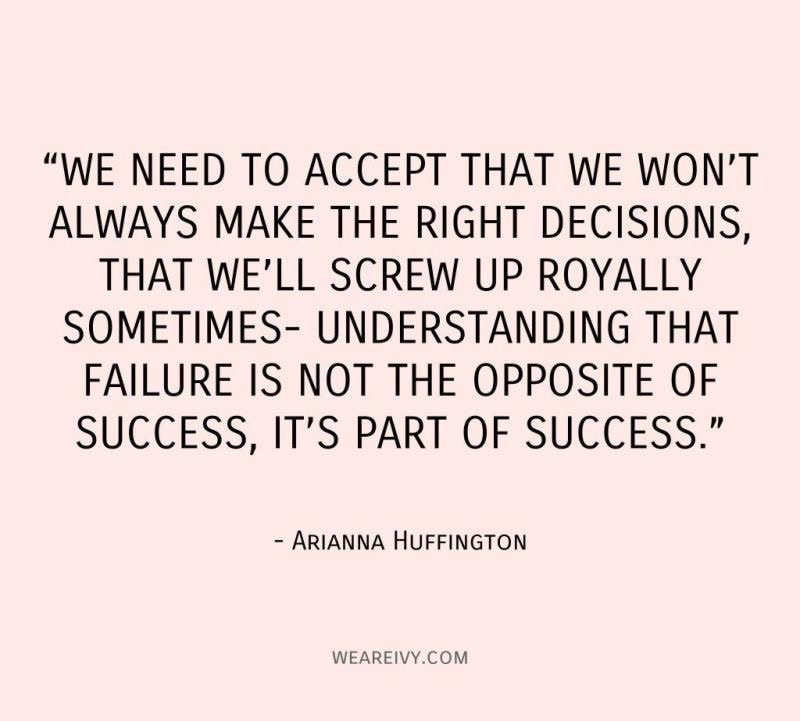
These are two different approaches to processing wrong decisions. Indeed, failure is part of success.
If I may add, a failure correctly processed is part of success. Not only do we learn from it, but we also build others with it.
The beauty of Simon Sinek’s quotes or lessons is that deep inside; we already know most of the lessons he shares. If you watch his brief talks and read his books, you will think, “Hey, I already know this.” The value Simon brings is articulating the insight.
This particular insight has already been at the back of my mind for a long time. Every time I witness someone trying to take credit for the companies or departments’ best ideas, I get this nagging sensation. I feel that something is off, but I cannot put my finger on it. Simon finally helped me put into words this thing that has been bothering me.
Walt Disney is a shining example of this quote. He created an environment where the best ideas would trickle upward. The leadership created an environment where no one person holds the monopoly of great ideas
If you step back and observe what a leader needs to do to set up such an environment, it’s not that complicated. The only speedbump is willingness and humility. Is the leader comfortable allowing others to come up with great ideas?
Ashley Head, the former Systems and Operations Director I used to report to, would keep quiet in all meetings he attends. He would encourage everyone to participate. Ashley would seek a quiet person in the room and ask him what he thinks. He has this knack for getting people to share.
I asked him one day why he was so quiet in these meetings. “If I speak first, chances are, the people in the room may not put forth their ideas. It is a typical organizational dynamic. People are shy to suggest after the highest-ranking person in the room speaks.” Ashey replied. “I always recommend my leadership team to speak last in meetings. Another advantage I realized is that I get to learn from others.” he continued to say.
The lesson I learned from Ashey is quite profound. Allowing others to voice their ideas and suggestions is a powerful way of getting the best out of our team. It’s also an excellent way for leaders to learn new things. It’s a win-win situation. Ashley then joked in closing that leaders who like to dominate discussions should write a book instead of overpowering everyone from sharing their thoughts. Some leaders love the sound of their own voice.
Never attack any idea brought to the table. If you do, the person you embarrassed will no longer suggest anything again. Think about it, who wants to be shamed for presenting an idea? Unfortunately, I witnessed such events where the leader even goes further. After attacking the idea in public, he attacks the person who suggested the idea. There is never a justification for this. Everyone in the room stopped offering ideas for fear that they might be next on the hit list.
How do you create such an environment? Simple, leaders should have the humility to speak last and encourage others to speak up. That’s it.
Leadership is not always about grand gestures. It’s not about mega-deals. It is not even about trying to be the hero of the day. Authentic leadership is about the little things as well as the big things. It’s the small yet consistent altruism. The keyword being “small” and “altruism.”
After years of observing leaders of different nationalities and ages, daily servant leadership gestures create a great work environment. Of course, the opposite holds as well. Self-serving, egotistical leaderships make for a fearful and toxic work environment.
Allow me to list a few small behaviors that the great leaders I had the privilege of working with exhibit every day.
1. Be generous with your “thank you.” This simple act of gratefulness goes a long way. Martin, a former department head of development I know, is an excellent example of a grateful leader. He would never forget to give thanks even for the smallest of things. On the flip side, I met leaders who would only show gratitude when they are in a good mood. True servant leaders are consistent.
2. Ask for people’s opinions and LISTEN. Have you ever had this uncomfortable feeling with leaders you worked with that would ask for your views and dismiss them? If your opinion is similar to theirs, they get hyped and excited. If your idea goes against the grain of their views, then it’s ignored or dismissed. These leaders are simply trying to validate their ideas. True servant leaders have a genuine ear for others. When they ask for your opinion, they listen.
3. Be true to your word. Matthew 5:37 of the English Standard Version Bible states, “Let what you say be simply ‘Yes’ or ‘No’; anything more than this comes from evil.” Some leaders would tell you something to keep you in your place. They do not mean what they say. There was this manager I worked for in my early 30’s who goes around professing that he has an open-door policy. That was the leadership buzzword in the ’90s. I tried walking into his office on five different occasions to seek his opinion; his response is “I am a bit busy. can we have this discussion tomorrow?” After five failed attempts, I decided not to bother. All that talk about having an open door was lip service. It was just for show.
4. Stay true to the vision. Without a vision for the better good of society, where is your organization headed? How do you rally your team? What direction are you pointing to when you are rallying them? I had a client claiming to have a great vision. After a few weeks of insightful personnel interviews, it became clear that 99% of their employees do not know the company vision. Let me correct that. They do not recall their company vision because the owners used difficult words in crafting it. The Vision Statement became a display piece in boardrooms and hallways.
5. Stay true to the core values. Funny how leaders have an ironic set of values. Core Values apply to everyone except the executives or chosen few. Of course, this is never said in public. The funny thing is that the executives think they are getting away with it. Of course, people will notice. There was this company I know that has equality as a core value. The funny thing is – the executives have their own “restaurant” type area on the corporate top floor for their lunch breaks. Lunch was catered daily by a famous restaurant nearby. Food was free. Only C-Level and VP’s are allowed to dine there. We would usually share a big round table with the CEO. The rest of the 2,000 employees in the building goes to the 2nd-floor cafeteria. Food was paid for by employees. Where is the equality in that?
6. Catch people doing right and not just doing wrong. Have you ever noticed managers that are so quick in finding faules in you? These managers are always on the lookout to catch you violating a company policy. Why not try and catch people doing that right thing? The corporate world would be a better place.
7. Do not sacrifice your employee over an abusive client. When your leaders quickly side with a harsh and disrespectful client, it’s time to seek employment elsewhere. When leaders shout, “our people are our most important asset.” and put arrogant clients first, then employees will know they are not “first.”
8. Smile. A leader’s mood determines the work environment temperature. A visible foul mood puts employees in a “flight, fight or freeze” state of mind. People would be checking on the Leader’s “mood” coming into work before planning what to do for the day. “Is it a good time to speak to him?” “Should I raise this idea now?”. “Is it a good time to request for my vacation leave?” This is such a waste of time and energy. Instead of channeling energy to productive endeavors, employees channel their energy to protect themselves. Smile when things go your way. Smile when things do not go your way. The need to smile is more important in times of challenges. The list above does not require tremendous effort. These are small things leaders can do to create a great culture. All it takes from servant leaders is humility and a mindset of servitude.
“The biggest concern for any organization should be when their most passionate people become quiet.” Bridgette Hyacinth
Back in the day when Fast Bank and Trust (FEBTC) was one of the best banks to work for, I mustered up the courage to apply for a job in their IT Division. Four sets of interviews, and a month after, I received a list of hiring requirements. I was ecstatic about the opportunity. Only about 20% of the applicants got in.
There are numerous things to learn in the field of Information Technology. Before joining FEBTC, I gathered a good number of years of experience as a developer. I was gradually moving into IT support. The primary goal of my function is to maintain and support the software and hardware requirements of the Bank employees. I had a dozen support engineers who perform scheduled maintenance of the hardware and software in the Head office and the different branches across the country.
I was pumped up with passion, reporting to work on the first day. The team I was managing was also excited about their work. They clearly understood the value they bring into the Bank. We cannot afford to have our IT infrastructure fail us, especially during banking hours.
As expected from a new hire working for my dream company, my first few months were full of new learnings. I reported to their IT facility, eager to work and serve the Bank and the employees.
The first impression of my new manager was great. He said all the right things like, “We are all one team here,” “You can always come to me for questions, I have an open-door policy,” “We welcome new ideas in our department.”
As the months go by, I started noticing that his words did not match his actions. Every time I requested a bit of coaching, he would always politely say that his calendar is already full for the week. We can try next week. He would be quick to shoot down ideas raised by the team in several brainstorming exercises for essential projects. Not only were the suggestions shot down, but it was also unfortunate that the person presenting got a bit of scolding.
In several meetings, he claimed that the successful idea was from him. He seemed to forget to give credit to the people who took his ideas and execute them.
Six months later, I noticed that the team stopped suggesting ideas in meetings. People also started to fear raising bad news. The team stressed that the messenger of bad news would get shot. Unfortunately, this feeling also got to me. I started keeping quiet in meetings. We just allowed our manager to run it the way he wishes. We kept silent for another reason. Keeping quiet allowed us to gather information from the ensuing discussions, so it was not so bad.
You can feel the energy level of the team drop to the ground. Our manager managed to extinguish our passion for our work. Some of the team members started reaching out to head hunters.
Fortunately, our manager was promoted. Yes, he was promoted to another function away from us. His successor was a true blue leader. Our new manager walks the talk. In a few short months, our passion returned, our motivational levels went through the roof.
Leaders! Let us not push our people to stop caring for our organizations. As the old saying goes, “Employees join companies. They do not leave companies. They leave their managers.”
I never knew how to articulate the connection between servant leadership and coaching until I came across an article from Ken Blanchard.
Come to think of it; coaching is indeed an integral part of servant leadership. Christ himself, the model for servant leadership, coached the twelve disciplines for a few years before giving them the “Great Commission” written in Matthew 28:19-20a
“Therefore go and make disciples of all nations, baptizing them in the name of the Father and of the Son and of the Holy Spirit, and teaching them to obey everything I have commanded you.”
The twelve disciples then continued to use servant leadership in the development of other disciples. Over 2,000 years later, Christianity has 32% of the world’s population. On the other hand, the authoritarian leadership of the Roman Empire no longer has a stronghold of the world. The once-great Roman Empire ceased to exist in the 5th Century AD.
Leadership needs to prepare new servant leaders. Having a sense of the long game is the only way any organization can survive the test of time. Authoritarian leadership, on the other hand, will eventually destroy the organization. Worse, an organization collapses after the autocratic leader leaves because the remaining leaders are not prepared to grow the organization.
I will keep saying that leaders do not build organizations. Great leaders develop great people and fellow leaders. Great people create great organizations.
A powerfully embedded coaching program wrapped in a servant leadership culture can ensure organizational longevity in the long game of what we call “business.”
I encourage everyone to read Ken Blanchard’s article by clicking HERE:
Thank you and stay safe,
Jordan Imutan jordan@imutan.com (email) @jordanimutan (social media)
A chair will not stand if one or more legs are missing. A Servant leader will not lead effectively if one or more of the legs are missing.
Leg 1: The Heart of a Leader
Genuine Servant leadership starts from the heart. “Above all else, guard your heart, for everything you do flows from it.” Proverbs 4:23 NIV. Everything we do flows from our hearts. The way we treat others is a reflection of our hearts. Our empathy flows from our hearts.
Leaders that have fallen in history are leaders without a heart. These are leaders driven by greed, self-centeredness, arrogance. These eventually lead to their downfall. The bigger the ego, the higher the fall.
Protect your heart from pride and fear. Pride blinds leaders into thinking that they know everything. It makes them stop listening to outside views and advice. Prideful leaders end up judging an idea based on the person saying it instead of its merit. Prideful leaders don’t even bother asking for the views of people several layers below them. That is unfortunate since these people are the ones closest to the ground. Our rank and file better understand clients and markets than the corporate suits sitting in their executive offices.
Fear, on the other hand, distorts the reality of the leader. Fear of losing his seat will cause a leader to make the wrong decisions. Fear of looking silly in the public’s eyes will make a leader please the people instead of doing what is right. Fear fuels arrogance.
I am not ashamed to say that I admire our Pasig City Major Vico Sotto. Ask any of Pasig’s residents; they will attest that he is a Leader with a heart. Mayor Vico is a walking, talking example of a true Servant Leader. A Leader with a big heart to serve his followers.
Leg 2: The Mind of a Leader
Servant leadership has a cerebral aspect to it. A great leader can craft a clear, concise vision that is bigger than the company they lead. They draw an image that paints a picture of a better society. The company they are responsible for is only a player in the mission for this greater good.
In this mission, the Servant leaders identify the values their employees need to exhibit. The leadership of the company then exemplifies these values. These values are part of the screening process for new hires. These values are part of the leadership appraisal process.
Servant Leaders are clear about their purpose, their reason for being. They embrace their purpose and live up to it. They also understand that employees also have a reason for being.
Leg 3: The Behavior of a Leader
Psychological safety is a significant concern of a Servant leader. They understand that their behavior affects the way people behave. Establishing psychological safety in the workplace encourages others to voice out their ideas. People are not afraid to make a mistake. Employees have the confidence to debate topics with higher-ups without fear of reprisal.
It does not matter what a leader says; it’s his behavior that counts. You hear stories of leaders saying that their people are their most important asset yet fail to behave accordingly. When times get tough, the first budget they cut is the training budget. Stories about loyal employees devoting years of their life to the company but not recognized or rewarded are commonplace. Instead, it’s the employees that suck up to management that climbs the corporate ladder.
Servant leaders spend 80% of their time developing people, selecting the right people, providing constructive feedback. They don’t spend 80% of their time criticizing their staff, micromanaging their leaders. They don’t bring down people; they bring out the best in them. Servant leaders do not pass or fail people. Servant leaders help people excel.
Servant leaders understand that they cannot build great companies on their own. It’s arrogance for a leader to say he drove a company to success. A great leader develops great people. It’s great people that build great companies.
Leg 4: The Habits of a Leader
Servant leaders make a consistent, courageous decision. They have the habit of sticking to what’s right and not what’s popular. A Servant leader has formed the correct habits from the first three legs. They don’t have to think about being empathetic or not; They are automatically empathetic. It’s second nature to them.
It is typical for them to ask questions when they do not understand something. They don’t have to hesitate for fear of looking fooling. Servant leaders are fueled with humility day-in, day-out.
Servant leaders are the same at home, in the office, with friends, with strangers. They are genuine. Their values do not change even in the heat of problems. The Vision of a Servant Leader is always top of mind.
A Servant leader’s gaze is always on the greater good. They are reliable. They are consistent.







 Too many companies have untrained leaders that fail.