
At first, nothing seems wrong.
The meetings still happen.
The reports still circulate.
The teams still work hard.
From the outside, the organization looks active and professional. Everyone is busy. Everyone is responsive. Everyone is participating.
But something subtle has changed.
Managers have stopped deciding.
Not completely. Not obviously. But gradually enough that no one notices the moment it happens.
Instead of deciding, they start coordinating.
Instead of committing, they start consulting.
Instead of landing decisions, they move them.
It usually begins with good intentions.
A manager faces a decision that touches another department. Maybe it affects marketing, or operations, or hiring. Instead of deciding independently, the manager wants to be careful.
“Let’s align with the team first.”
Alignment feels responsible. No one objects to it. Collaboration is a good thing.
But alignment slowly replaces authority.
Another decision comes up.
“Let’s check with leadership.”
Then another.
“Let’s escalate this.”
Each step feels safe. Each step spreads risk. Each step protects the manager from making a decision that might be questioned later.
And slowly, the system learns a new pattern.
Managers gather information.
Leadership makes decisions.
Once that pattern takes hold, the middle layer of the organization begins to change its role. Managers are no longer decision-makers. They become translators.
They translate problems upward.
They translate decisions downward.
Execution still happens, but ownership has shifted.
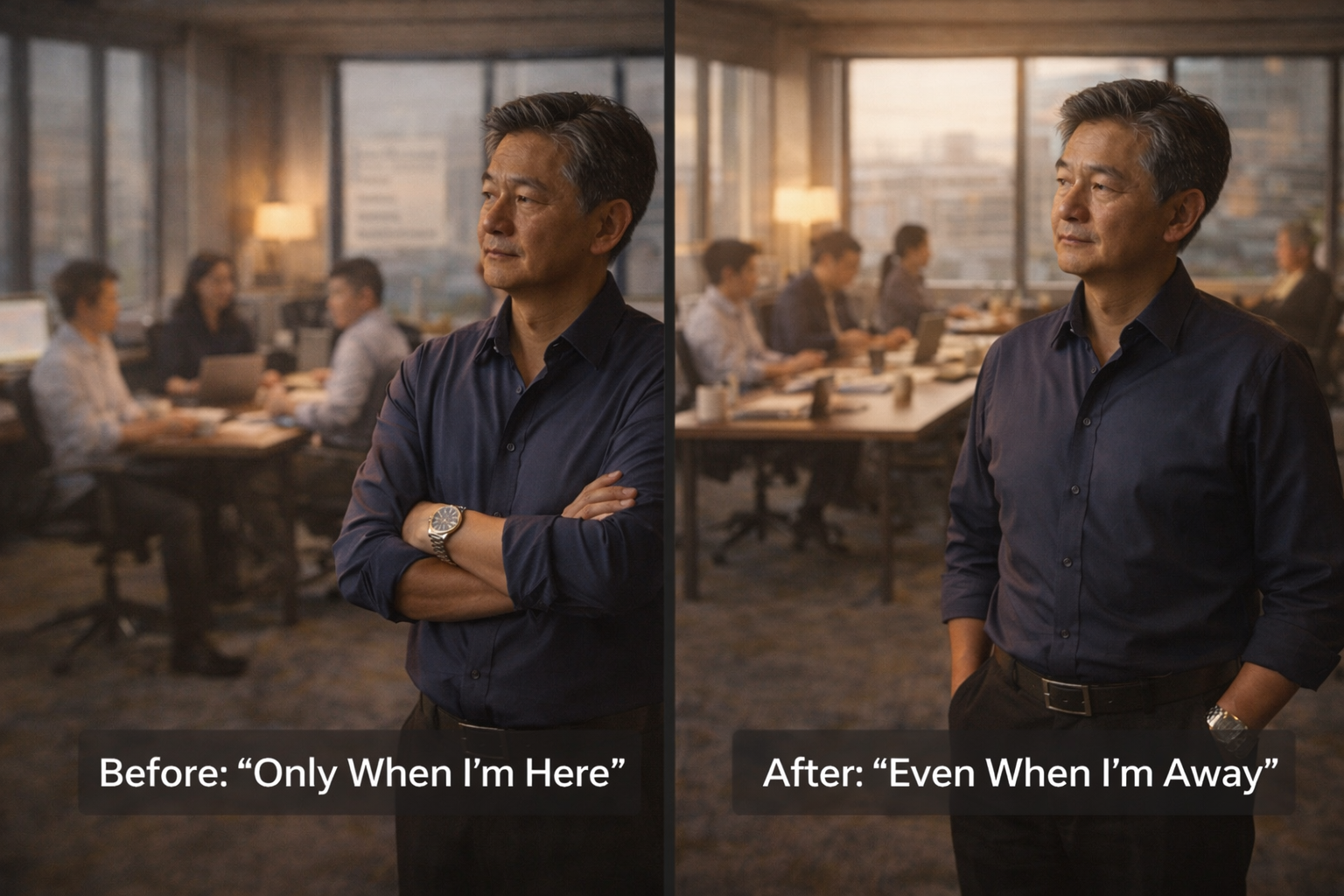
This is where founder bottlenecks begin.
Not because founders want control.
Because the system routes decisions toward the place where they consistently land.
The founder or senior leader becomes the final filter. Hiring decisions. Pricing adjustments. operational trade-offs. Strategic priorities.
Each one arrives at the top because the layer below it stopped absorbing risk.
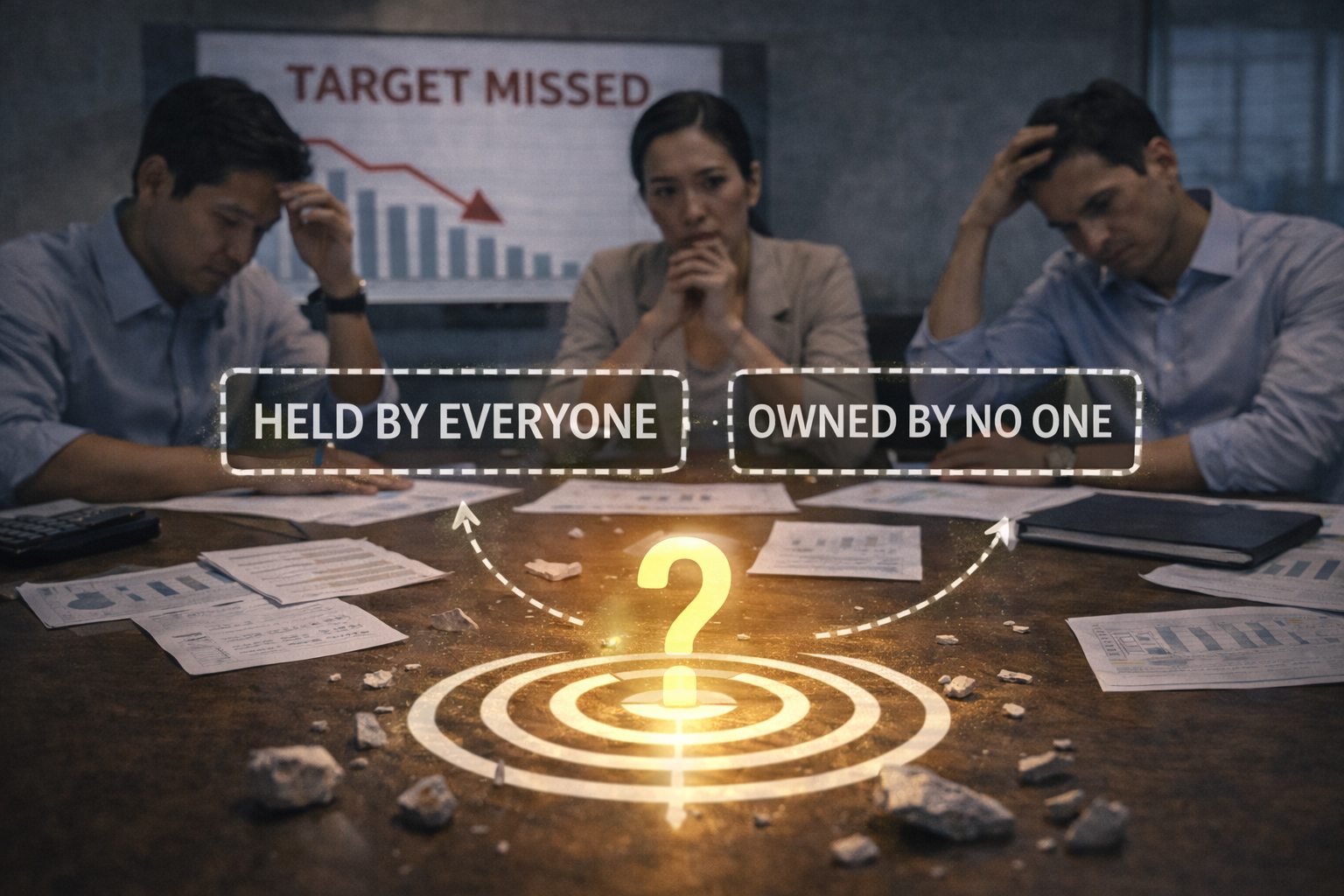
Meanwhile, targets start slipping.
Not because people stopped working.
But because the system slowed down.
Decisions that once took hours now take days. Decisions that once belonged to managers now require leadership meetings. Adjustments that should have happened early happen late.
And the organization begins drifting.
This is the quiet danger of decision escalation.
It feels professional in the moment. It protects individuals from exposure. It avoids conflict. It maintains harmony.
But it gradually removes the very thing organizations rely on to move quickly.
Ownership.
If managers stop deciding, the organization loses its engine. The founder becomes the bottleneck. The middle layer becomes informational instead of operational.
And every target becomes harder to reach.
Because execution depends on one simple thing:
Decisions landing where the work happens.
When they stop landing there, momentum disappears.
And the organization slowly learns to move only as fast as the top of the structure can decide.






 Too many companies have untrained leaders that fail.