The targets didn’t move. The plan didn’t change. The effort stayed high.
So leaders start asking the usual questions: Why is execution so hard? Why are teams hesitant? Why does everything take longer than it should?
Most people assume execution broke first. It didn’t.
What broke was decision rights.
In many companies, decision rights are never clearly designed. They’re implied. Assumed. Inherited from old org charts and outdated job descriptions. People know they’re “responsible,” but they’re not sure what they’re allowed to decide without asking first.
So they play it safe.
They gather more input. They seek more alignment. They escalate “just to be sure.”
Not because they’re weak—but because the system punishes wrong decisions more than slow ones.
This is the quiet beginning of missed targets.
When decision rights are unclear, managers stop making calls and start managing optics. They don’t want to be the one who decided too early, too boldly, or without enough buy-in. So decisions stretch. Work continues. Time passes.
From the outside, it looks like diligence. From the inside, it’s hesitation wrapped in professionalism.
Eventually, the founder steps in.
They decide quickly. They unblock things. They move the company forward. And in that moment, everyone feels relief. Progress resumes. The issue is “handled.”
But the system just learned something dangerous.
It learned that decisions don’t need to land where the work is. They just need to survive long enough to reach the top.
That’s how founder bottlenecks form—not through control, but through default. When decision rights are vague, authority concentrates upward. Everything unresolved flows to the same place.
And when everything flows upward, execution slows everywhere else.
Leadership teams usually respond by pushing accountability harder. More KPIs. More follow-ups. More reminders to “own the outcome.” But accountability without decision rights is just pressure with no release valve.
You can’t hold someone accountable for something they weren’t allowed to decide.
That’s the part most organizations miss.
Decision rights are the foundation of execution. They determine speed, confidence, and ownership long before effort ever matters. If decision rights are unclear, people hesitate. If people hesitate, escalation becomes normal. If escalation becomes normal, founders get buried.
And when founders are buried, strategy dies quietly under operational noise.
The fix is rarely motivational. It’s structural.
Who decides this—without asking? Which decisions should never reach the founder? What happens if a manager decides and it doesn’t work?
Until those answers are clear, execution will always feel harder than it needs to be.
Because execution doesn’t fail when people stop working.
It fails when no one knows who’s allowed to decide.
At some point, every founder asks the same question—usually with a mix of confusion and irritation: “Why can’t my managers just decide?”
The meetings are done. The data is there. The options are clear. And still—nothing moves. Deadlines slip. Targets wobble. Decisions feel permanently “in progress.”
It’s tempting to conclude that the managers are the problem. Too cautious. Too passive. Not leadership material.
That conclusion is convenient. It’s also wrong.
Most managers aren’t slow by nature. They’re waiting—because the system trained them to.
Let’s look at what actually happens inside many organizations.
Early on, founders make decisions fast. That’s how companies survive. Speed is survival. As the company grows, managers are hired to help distribute the load. Roles are defined. Titles are given. Authority is implied—but rarely made explicit.
So managers start working. They plan. They analyze. They raise issues. But when it’s time to decide, something subtle kicks in: hesitation.
Not because they don’t know what to do—but because they’re not sure what they’re allowed to do.
Ownership is unclear. Boundaries are fuzzy. And past behavior taught them an important lesson: big decisions tend to get overridden, revisited, or escalated anyway.
So they adapt.
They prepare decks instead of decisions. They ask for alignment instead of acting. They escalate instead of owning the risk.
Decision escalation becomes self-protection. If the call goes wrong, at least it wasn’t their call.
Meanwhile, founders step in—not to control, but to keep things moving. A delayed decision gets resolved in five minutes at the top. A stuck issue finally moves once the founder weighs in. From the founder’s perspective, this feels efficient.
From the system’s perspective, it sends a powerful signal: “Wait long enough, and this will come back up here.”
That signal spreads fast.
Managers stop deciding because deciding doesn’t stick. Teams slow down because approval feels safer than action. And the founder—ironically—becomes the bottleneck they never wanted to be.
This is where missed company targets quietly enter the picture.
Not through dramatic failure. Through hesitation.
Projects don’t derail—they stall. Opportunities aren’t lost—they expire. Execution doesn’t collapse—it drags. The company stays busy but oddly unproductive. Everyone is working. Very few things are landing.
Leadership often responds by pushing urgency. More check-ins. More follow-ups. More reminders to “take ownership.”
But urgency without permission just increases anxiety. It doesn’t create speed.
Here’s the uncomfortable truth: speed is not a personality trait. It’s a design outcome.
Managers move fast when ownership is clear. They decide when authority is explicit. They lead when decisions don’t boomerang back to the top.
If every decision is second-guessed, escalated, or reclaimed, managers learn the safest move is to wait. And waiting, in that system, is not incompetence—it’s intelligence.
Founder bottlenecks are not caused by weak managers. They’re created when founders unintentionally centralize trust while decentralizing responsibility.
When that happens, managers don’t stop caring. They stop committing.
And when commitment disappears, targets don’t stand a chance.
So if your organization feels slow, the question isn’t “Why won’t they decide?” It’s “What happens when they do?”
Because until deciding is safe, respected, and final—your managers aren’t slow.
And just like every other quarter, the room filled with familiar questions: What went wrong? Why didn’t the team execute? Where did we lose momentum?
As if the result was some kind of accident.
Here’s the truth most leaders avoid because it’s deeply inconvenient: Your company didn’t miss its targets by surprise. It did exactly what it was designed to do.
Missed targets are rarely the result of sudden incompetence. They’re the natural output of unclear ownership, chronic decision escalation, and founders acting as the final safety net for everything.
Let’s break that down.
In many organizations, goals are ambitious but responsibility is abstract. Everyone agrees on what needs to happen. Fewer people are clear on who owns the outcome. Management roles exist, but authority is vague. Decisions are discussed, debated, and reviewed—but rarely owned cleanly.
So the system adapts.
Managers learn that deciding is risky. Escalating feels safer. Waiting feels professional.
Before long, decision escalation isn’t an exception—it’s the operating model.
Every unresolved issue floats upward. What starts as a small decision becomes a leadership conversation. What should have been resolved in a day becomes a meeting. What should have stayed in one department ends up with the founder.
And the founder, being responsible, steps in.
This is where leaders often misread the situation. They think the founder is being helpful. In reality, the organization is signaling a design flaw. When founders consistently catch what falls through the cracks, the system learns not to fix the cracks.
Founder bottlenecks don’t happen because founders want control. They happen because the organization quietly outsourced clarity to the top.
Over time, the consequences show up in the numbers.
Targets slip—not dramatically, but predictably. Projects slow—not visibly, but steadily. Teams stay busy—but not effective.
And leadership keeps asking why without noticing how consistent the outcome has become.
That consistency is the clue.
If managers hesitate, it’s because ownership isn’t explicit. If decisions escalate, it’s because authority is unclear. If everything lands on the founder, it’s because the system rewards waiting.
This isn’t a people problem. It’s a design problem.
Most organizations don’t need more motivation, more meetings, or stronger reminders about accountability. They need fewer gray areas. Fewer shared responsibilities. Fewer decisions without names attached to them.
Because systems don’t drift randomly. They behave exactly as structured.
If responsibility is shared, accountability dissolves. If decisions are optional, hesitation wins. If founders always catch the fall, the fall never stops.
So when targets are missed, the real question isn’t “Who failed?” It’s “What behavior did the system reward?”
Because once you see the pattern, the outcome stops being surprising.
And if the same results keep repeating quarter after quarter, it’s not bad luck.
Missed company targets rarely happen because people don’t care or aren’t working hard enough. If effort alone paid the bills, most companies would be crushing it by Q2. The real problem usually shows up much earlier, quietly, and without fireworks: unclear ownership in management.
Let’s talk about what actually happens inside growing companies.
Goals are announced with confidence. Numbers look ambitious but achievable. Everyone nods. Slides are approved. Then execution begins—and suddenly no one is fully sure who owns what.
Marketing assumes Sales will decide. Sales waits for Operations. Operations asks for approval. Managers escalate instead of deciding. And eventually, everything—everything—lands on the founder’s plate.
Not because the founder wants control. Because someone has to decide.
When ownership isn’t explicit, accountability becomes fuzzy. People stay “involved” but not responsible. Tasks move forward, but outcomes don’t. Everyone contributes, but no one owns the final result. And when targets are missed, the post-mortem sounds like a group therapy session instead of a business review.
This is usually the moment leadership asks, “Why didn’t anyone flag this earlier?”
They probably did. It just went up three layers. Then sideways. Then back up again. By the time it reached the top, the window to act was already closed.
Decision escalation becomes the default behavior in many organizations—not because people are lazy, but because they’re unclear about authority. Managers stop deciding and start forwarding. It feels safer. No decision means no risk. No risk means no blame.
Until everything slows down.
And when everything slows down, the founder steps in.
That’s how founder bottlenecks are created—not from ego, but from structural gaps. When managers aren’t clearly empowered to decide, the founder becomes the safety valve. Pricing questions, hiring calls, strategy tweaks, operational issues—one by one, they pile up.
The company learns an unspoken rule: “If it’s important, wait for the founder.”
At that point, leadership teams often demand more urgency, more accountability, more “ownership mindset.” But mindset doesn’t fix a broken system. Clarity does.
Clarity on who owns which outcomes. Clarity on which decisions should never be escalated. Clarity on where responsibility truly sits when things go wrong.
Without that, missed targets will keep happening—and every quarter will feel like déjà vu.
The irony is most teams don’t fail because they lack talent. They fail because the system quietly trained them not to own, not to decide, and not to lead without permission.
When ownership is clear, decisions move faster. When decisions move faster, founders step back. When founders step back, leaders finally step forward.
And suddenly, missed targets stop being mysteries—and start becoming solvable problems.
If you can’t point to exactly where responsibility broke, you can’t fix it.
Decisions get made. Questions get answered. Problems get fixed.
People come to you, you respond, and the day keeps flowing.
But the moment you step away—even briefly—things change.
Questions pile up. Decisions wait. Work slows down “until you’re back.”
Nothing breaks dramatically. It just… pauses.
At first, this feels like leadership. You’re involved. You’re available. You’re hands-on.
But over time, a quiet realization sets in: the business works because you’re there—not because it’s designed to work.
This is the problem many leaders don’t talk about openly: everything runs smoothly—until you’re not around.
And it’s unsettling.
Because you didn’t plan to become the glue holding everything together. It just happened.
Let’s talk about how.
In the early days, your involvement made sense. You were close to everything. Decisions were quick. People needed direction, and you provided it. Your presence was an advantage.
Then the business grew.
More people joined. Work spread across teams. Decisions became less obvious.
And without anyone realizing it, your presence turned into a dependency.
People started checking in “just to be safe.” Small decisions came to you because it felt faster. Questions were held back until you were available.
You became the bridge between teams. The final checkpoint. The place where uncertainty went to rest.
Not because people weren’t capable—but because the rules weren’t clear.
From your seat, it felt like responsibility.
From the system’s point of view, it was fragility.
One leader described it honestly after taking a short leave:
“I thought I was keeping things moving. Turns out, I was the thing things waited for.”
That moment is uncomfortable. But it’s also powerful—because it points to the real issue.
A business that only works when the leader is present doesn’t have a people problem. It has a design problem.
Work depends on memory instead of rules. Decisions depend on availability instead of clarity. Progress depends on presence instead of process.
So when you’re gone, the system hesitates.
Leaders often respond by becoming even more involved.
They stay online. They respond faster. They avoid stepping away.
It feels responsible—but it makes the problem worse.
The goal isn’t to remove the leader. The goal is to remove the need for the leader to be everywhere.
The shift happens when leaders stop asking, “Why do they need me?” and start asking, “Why does this require me at all?”
That question changes how work is designed.
Instead of being the decision-maker, the leader defines decision rules. Instead of being the checker, the leader sets clear standards. Instead of being the bridge, the leader removes the gaps.
This doesn’t happen overnight. It starts small.
Clear limits on what teams can decide on their own. Clear signals for what needs escalation—and what doesn’t. Clear outcomes so people don’t guess what “done” means.
At first, people feel unsure.
“Are you sure I can decide this?” “What if I get it wrong?”
That hesitation is normal. It means people are adjusting from dependence to ownership.
The key is consistency.
When leaders stop stepping in “just this once,” people step up. When leaders don’t rescue work mid-way, confidence grows. When rules stay clear, waiting disappears.
Over time, something changes.
The leader steps away—and work continues.
Not perfectly. Not silently. But steadily.
Decisions are made. Problems are handled. Progress holds.
The business doesn’t need constant supervision anymore.
This is the “after” state most leaders don’t realize they want until they experience it.
Presence becomes optional—not required.
Leaders finally get space to think, plan, and lead instead of react. Teams grow into responsibility instead of avoiding it. Growth stops feeling risky because absence no longer breaks flow.
The irony is that letting go doesn’t weaken leadership. It strengthens it.
Because real leadership isn’t about being everywhere. It’s about building something that works even when you’re not.
So if your business only runs smoothly when you’re around, don’t assume your team isn’t ready.
Chances are, the system just needs clarity.
Fix that, and something powerful happens.
The business keeps moving—even when you step away.
Now here’s the question worth ending on:
If you were unavailable for a week, would the business pause—or would it prove you’ve built it right?
Deadlines slip. Quality is inconsistent. Decisions take too long. Work keeps coming back for revision.
And it’s confusing—because the team is good.
They’re smart. They’re capable. They care about the business.
So why does growth still feel blocked?
This is one of the most common and most misunderstood problems in growing companies: leaders think growth is being held back by people, when it’s really being held back by the system around them.
Let’s start with a familiar scene.
A leader sits in a meeting reviewing missed targets. They feel frustrated—not angry, just tired. They’ve explained expectations. They’ve hired carefully. They’ve invested time in coaching.
Yet the same issues keep showing up.
Work isn’t owned cleanly. People hesitate. Accountability feels uneven.
The quiet thought creeps in: “Do I have the right people?”
That thought is dangerous—not because it’s always wrong, but because it’s often incomplete.
In most cases, the people aren’t the problem. They’re reacting to an unclear environment.
Here’s what usually happens as companies grow.
In the early days, roles are loose. Everyone does a bit of everything. Decisions happen quickly because people talk directly. There’s little confusion because everyone is close to the work.
Then growth kicks in.
More people are hired. Roles are created. Work gets divided. And without anyone really noticing, clarity starts to fade.
Who owns what becomes blurry. What matters most isn’t always obvious. Decisions move up because no one wants to overstep.
People start guessing.
Some step back to avoid mistakes. Some work harder to compensate. Some escalate everything to be safe.
From the leader’s seat, this looks like a people issue.
“Why aren’t they taking ownership?” “Why do I have to keep checking?” “Why does everything need my approval?”
But from the team’s seat, it feels different.
“I’m not sure if this is mine.” “I don’t want to decide the wrong thing.” “I don’t know what matters most right now.”
Good people don’t become unreliable overnight. They become cautious in unclear systems.
This is the part many leaders miss: behavior follows clarity.
When ownership is clear, people step up. When priorities are clear, people focus. When success is clear, people deliver.
When those things aren’t clear, people protect themselves.
That protection shows up as hesitation, inconsistency, and dependence.
And the leader, trying to keep things moving, steps in.
You review more. You approve more. You correct more.
Not because you don’t trust your team—but because the system doesn’t support them.
Over time, this creates a painful loop.
Leaders feel burdened. Teams feel micromanaged. Both sides feel misunderstood.
The leader believes the team isn’t stepping up. The team believes the leader doesn’t trust them.
The real issue sits quietly in the middle: unclear design of work.
One leader I worked with said it honestly:
“I kept saying we had people problems. What we really had was confusion everywhere.”
That realization changed how they approached growth.
Instead of pushing the team harder, they started cleaning up how work was set up.
They clarified who owns what—and stuck to it. They defined what decisions people could make on their own. They simplified priorities so teams knew what mattered most.
Nothing fancy. Just clarity.
The impact was immediate.
People stopped waiting. Decisions moved faster. Quality became more consistent.
Not because the people changed—but because the environment did.
This is the “after” state leaders rarely connect back to system design.
When systems are clear, people look capable. When systems are messy, people look unreliable.
The same team. Two very different outcomes.
This is why hiring more people rarely fixes “people problems.” It often makes them worse. More people in an unclear system means more confusion, more handoffs, and more waiting.
The smarter move is to fix clarity first.
Ask different questions.
Instead of “Why didn’t this get done right?” Ask, “Was ownership clear?”
Instead of “Why did this come back to me?” Ask, “Did they know what they could decide?”
Instead of “Why is the team slow?” Ask, “Do they know what matters most this week?”
When leaders ask these questions honestly, the blame dissolves—and progress begins.
The biggest shift is emotional.
Leaders stop feeling like they’re carrying everyone. Teams stop feeling like they’re walking on eggshells.
Trust grows—not because of speeches, but because the system finally makes sense.
Growth starts moving again.
So if your business feels stuck because of “people problems,” pause before changing the people.
There’s a good chance you already have the right team.
What they need isn’t pressure. It’s clarity.
And once clarity is in place, the same people you worried about often surprise you.
Now here’s the question worth ending on:
If the system made ownership and priorities clear, how differently would your team show up tomorrow?
And yet, when a decision needs to be made, something strange happens.
Leaders hesitate. Questions pile up. Another meeting is called.
Despite all the information, clarity still feels missing.
This is the problem many company leaders quietly struggle with: the business keeps asking for more reports—but still feels unclear.
And it’s frustrating, because everyone is trying to do the right thing.
Let’s look at how this usually unfolds.
In the early days, reporting is simple. The leader knows what’s going on because they’re close to the work. They talk to people directly. Decisions are made quickly. Reports are informal—if they exist at all.
Then the business grows.
More people join. Work gets divided. Leaders are no longer in every conversation. So reports become the substitute for closeness.
Someone creates a report to explain what happened. Someone else adds more details “just to be safe.” Another team creates their own version “in case leadership asks.”
Over time, reporting becomes protection.
People don’t create reports because they love reporting. They create them because they don’t want to be blamed for missing something.
Leaders, on the other hand, ask for reports because they don’t fully trust what they can’t see.
Both sides mean well.
But together, they create noise.
Here’s the uncomfortable truth most leaders eventually realize: more information does not automatically create more clarity.
In fact, it often does the opposite.
When reports pile up, leaders spend more time reviewing than deciding. They see the same numbers presented in different ways. They hear different explanations for the same issue. Instead of confidence, they feel doubt.
So they ask for more detail.
And the cycle continues.
This is where many leaders make a common mistake. They assume the problem is the quality of the report.
“Let’s improve the format.” “Let’s add more context.” “Let’s standardize the slides.”
But the real problem isn’t how the report looks.
The real problem is why the report exists at all.
Most reports exist because the flow of work is unclear.
When leaders can’t see what’s happening as it happens, they rely on summaries after the fact. When decisions aren’t clearly defined, people report everything “just in case.” When systems don’t talk to each other, humans bridge the gaps with reports.
Reports become a crutch.
And like most crutches, they slow things down when used too long.
One leader described it perfectly:
“I read reports all week, but I still don’t feel confident when I decide.”
That’s the signal something deeper is wrong.
Clarity doesn’t come from volume. It comes from focus.
Clear businesses don’t try to see everything. They decide what actually matters—and ignore the rest.
They don’t ask, “Can we get more data?” They ask, “What decision is this meant to support?”
When leaders can’t answer that question, reports multiply without purpose.
The shift happens when leaders stop asking for reports and start fixing flow.
Instead of asking for updates, they make work visible as it happens. Instead of reviewing everything, they define what requires attention. Instead of reading summaries, they trust simple signals.
This doesn’t require complicated tools or fancy systems. Often, it’s just removing unnecessary steps.
Reports that no longer change decisions are removed. Updates that repeat the same information are stopped. Meetings that exist only to explain reports are shortened—or eliminated.
At first, this feels risky.
Leaders worry they’ll lose control. Teams worry they’ll miss something.
But what usually happens is the opposite.
When noise is reduced, real issues stand out. When fewer reports exist, the remaining ones matter more. When people stop reporting everything, they focus on doing the work.
One company cut its regular reports by more than half. Not because leadership stopped caring—but because leadership became clearer about what actually needed attention.
The result?
Decisions were faster. Meetings were shorter. People spent less time preparing updates and more time solving problems.
Most importantly, leaders felt more confident—not less.
That’s the “after” most leaders don’t expect.
Clarity doesn’t come from knowing everything. It comes from knowing what matters and when.
The irony is that the clearer the flow of work becomes, the less leaders need reports. Visibility replaces explanation. Signals replace summaries. Trust replaces checking.
This is why many modern businesses feel lighter even as they grow. They don’t drown leaders in information. They design work so the right things surface at the right time.
If your company keeps asking for more reports but still feels unclear, it’s not because people aren’t reporting well enough.
It’s because reporting has become a substitute for clarity.
Fix the flow, and the need for endless reports fades on its own.
Now here’s the question worth asking:
If half your reports disappeared tomorrow, would anything important actually stop working?
No big announcement. No sudden jump in revenue. No flashy new system.
It was quieter than that.
The leader noticed fewer questions landing on his desk. Fewer follow-ups. Fewer messages asking for clarification. Meetings started ending early—not because people rushed, but because there was nothing left to explain.
For the first time in a long while, the business moved without him pushing it.
That’s the “after” most leaders secretly want—but rarely experience.
Before that point, the business looked successful on the outside. Clients were coming in. The team was growing. Revenue was steady.
Yet inside, everything depended on the leader.
Decisions waited. Work slowed when he was unavailable. Small issues escalated quickly. Everyone meant well—but nothing moved without direction.
This wasn’t control. It was dependence.
The leader didn’t plan it that way. It happened slowly, as businesses usually do. Small adjustments. Extra approvals. More check-ins. A few “just to be safe” steps added along the way.
The business kept growing. The leader kept carrying more.
Until growth stopped feeling exciting and started feeling heavy.
That’s when the question changed.
Instead of asking, “How do we grow faster?” He asked, “Why does everything still need me?”
That question changed everything.
The problem wasn’t effort. People were working hard. The problem wasn’t trust. Everyone was capable.
The problem was that work had no clear flow.
Tasks depended on memory. Updates depended on reminders. Decisions depended on availability.
The business didn’t have a system. It had habits.
So instead of adding more people or more tools, the leader did something uncomfortable.
He started removing things.
Meetings that existed only for updates were cut. Approvals that didn’t change outcomes were dropped. Repeated tasks were simplified or allowed to move on their own.
Nothing fancy. Just fewer steps.
At first, the team was unsure.
“Are you sure we don’t need to check this?” “Should we wait for approval?” “What if something goes wrong?”
That hesitation was expected. The team had been trained to wait. But slowly, something changed.
Work stopped stalling. People acted without asking. Decisions were made once—and stuck.
The business became quieter—but more effective.
This is the “after” leaders rarely talk about because it doesn’t sound exciting.
No hustle. No urgency. No drama.
Just progress.
Clients noticed it first.
Responses were faster. Mistakes dropped. Deliveries were more consistent.
Then the team felt it.
Less chasing. Less rework. More confidence.
And finally, the leader felt it.
Time opened up. Thinking replaced reacting. Growth felt manageable again.
The business didn’t need him everywhere anymore—and that was the point.
This “after” state doesn’t come from working harder. It comes from letting go of work that shouldn’t exist.
When routine tasks stop depending on people pushing them forward, everything else speeds up naturally. Leaders stop being the engine. Teams stop waiting. Systems start doing their job.
This doesn’t mean leaders disappear. It means they finally lead where it matters.
The biggest shift is psychological.
Leaders realize that control doesn’t come from being involved in everything. It comes from designing work so things move correctly without constant attention.
That’s the real outcome most leaders are chasing—whether they say it out loud or not.
A business that grows without draining them. A team that moves without waiting. A system that doesn’t fall apart when they step away.
This is the “after” state that makes growth sustainable.
The irony is that getting here often requires doing less, not more.
Less checking. Less approving. Less fixing.
And more clarity.
If your business still depends on you to function, the problem isn’t leadership. It’s flow.
Fix the flow, and something powerful happens: the business finally starts working with you—not against you.
Now here’s the question worth ending on:
If the business could run well without you for a week, what kind of leader would you finally get to be?
Most leaders don’t describe their companies as slow. They describe them as busy.
Busy calendars. Busy inboxes. Busy teams. Busy days that somehow end with more unresolved issues than they started with. The company is moving, but it doesn’t always feel like it’s moving forward.
Here’s the uncomfortable truth many leaders eventually face: speed is not about how fast people work—it’s about how fast decisions travel through the organization.
Right now, in many growing companies, decisions are stuck. Not because leaders lack intelligence or courage, but because the systems meant to support decision-making are outdated, fragmented, and manual. Information arrives late. Data is incomplete. Context lives in different tools, different people, or different versions of the truth.
As a result, leaders hesitate. Teams wait. Opportunities expire. And everyone compensates by working harder instead of fixing the flow.
This is becoming one of the most expensive hidden problems in modern organizations.
The challenge is especially visible in mid-sized businesses. Startups move fast because they are small. Enterprises move fast because they have mature systems. Mid-sized companies often sit in the danger zone—too big for informal processes, too small to absorb inefficiency.
Decisions that should take minutes take days. Decisions that should be delegated end up escalated. Leaders become information hubs instead of strategic thinkers. Meetings multiply not because people enjoy them, but because clarity is missing.
This is the moment when companies feel “stuck in motion.”
The root cause is rarely people. It is almost always process.
Manual processes slow decision velocity in subtle but damaging ways. Data must be gathered before a decision can be made. Someone must pull it. Someone must clean it. Someone must interpret it. Someone must present it. Someone must approve it. Every step adds delay. Every handoff introduces friction.
By the time a decision reaches the right person, it is already outdated.
This is why leaders often rely on instinct under pressure. Not because data isn’t valuable, but because data arrives too late to be useful. When systems can’t keep up, judgment fills the gap.
Judgment matters—but it should be supported by clarity, not forced by chaos.
This is where AI-enabled systems quietly change the game.
AI, when applied properly, doesn’t replace leadership judgment. It accelerates it. It ensures that the right information arrives at the right time, in the right format, without human effort acting as the bottleneck.
Instead of asking, “Can someone prepare this for me?” leaders start asking, “What does the system already show?”
That shift is powerful.
Imagine operational data updating in real time instead of weekly reports. Imagine dashboards that highlight exceptions instead of flooding leaders with noise. Imagine approvals triggered automatically based on rules instead of follow-up emails. Imagine teams acting immediately because context is already available.
This is not futuristic. This is happening now in organizations that understand one simple idea: decision-making is a process, not an event.
When decision-making is treated as a process, it can be designed, optimized, and automated—at least in part. AI thrives in environments where rules exist, patterns repeat, and volume is high. That describes most operational decisions inside growing companies.
The strategic benefit is enormous. Faster decisions mean faster execution. Faster execution means better client experiences. Better experiences lead to growth that feels controlled instead of chaotic.
There is also a cultural impact leaders rarely anticipate. When decisions move quickly and predictably, trust improves. Teams feel empowered because they are not waiting for permission. Accountability becomes clearer because outcomes are visible. Frustration drops because ambiguity shrinks.
In contrast, slow decision systems create defensive behavior. People hoard information. They escalate unnecessarily. They wait instead of acting. Over time, this erodes initiative.
This is why many organizations feel less entrepreneurial as they grow, even when they hire smart people. The environment trains them to slow down.
AI-supported processes reverse this trend by restoring flow.
Another reason this topic is trending right now is economic pressure. Businesses are being forced to do more with less. Hiring freezes, tighter budgets, and margin pressure mean inefficiency is no longer tolerable. Leaders cannot afford decision delays that cost opportunities.
Speed has become a strategic differentiator.
But speed without structure leads to mistakes. Structure without speed leads to stagnation. The winning organizations build both—and they use automation as the connective tissue.
This does not require massive transformation. In fact, the most effective changes are often small but targeted. Automating data consolidation. Standardizing decision rules. Creating alerts instead of reports. Removing manual approval steps that no longer add value.
These changes compound quickly.
The biggest mistake leaders make is assuming they need to “go all in” on AI to benefit from it. In reality, the smartest approach is incremental and intentional. Fix the decision flows that hurt the most. Free leadership time where it matters most. Create visibility where confusion currently exists.
This is why an audit-driven approach works better than tool-driven adoption.
An AI Automation Audit focuses on how decisions currently move through the organization. Where does information originate? Where does it stall? Where do humans add value—and where are they simply acting as messengers?
Once those answers are clear, automation opportunities reveal themselves naturally.
The result is not just efficiency, but confidence. Leaders trust the system. Teams trust the process. The organization moves as one instead of pulling itself in different directions.
The companies embracing this shift are not louder or flashier. They are calmer. More decisive. More resilient. They don’t rush—but they also don’t wait.
So the leadership question worth asking now is simple but uncomfortable: how many of your company’s delays are actually design problems you’ve learned to tolerate?
Fixing them is not about technology hype. It is about respecting time, clarity, and momentum—the three resources no growing company can afford to waste.
If your organization feels busy but slow, the issue may not be people or priorities—it may be how decisions move through your systems. An AI Automation Audit helps uncover where manual processes are trapping information, delaying action, and pulling leaders into work they shouldn’t be doing. Fixing decision flow is one of the fastest ways to unlock clarity, speed, and sustainable growth.
Yet for many founders and executives, growth feels less like momentum and more like friction. Meetings multiply. Decisions slow down. Teams complain about workload. Leaders feel pulled into everything. Systems that once “worked fine” suddenly feel fragile. Every new client adds pressure instead of profit.
Here’s the uncomfortable reality: most companies don’t break when they scale—they bend, creak, and exhaust themselves first.
The problem isn’t ambition. It’s architecture.
Most businesses are built to start, not to scale. Early on, flexibility is an advantage. People wear multiple hats. Decisions are quick. Communication is informal. Workflows live in people’s heads. This works—until it doesn’t.
As soon as complexity increases, those same strengths become liabilities. The organization becomes dependent on individuals instead of systems. Leaders become bottlenecks. Growth demands more effort instead of better structure.
This is the central idea leaders need to understand: scaling is not about doing more work—it’s about designing how work flows.
And right now, the companies scaling cleanly are not the ones hiring fastest. They are the ones redesigning their processes before chaos sets in.
Let’s talk about why scaling feels so hard, what most companies get wrong, and how AI-powered process automation is becoming the quiet advantage of organizations that grow without losing control.
One of the most common mistakes leaders make is confusing effort with effectiveness. When things start to feel stretched, the instinctive response is to add people, add meetings, or add layers of approval. It feels responsible. It feels decisive. It often makes the problem worse.
More people without clear processes don’t reduce chaos—they multiply it. Each new hire adds communication paths, handoffs, and dependencies. Without standardized workflows, work slows down instead of speeding up. Leaders spend more time coordinating instead of leading.
This is why many organizations reach a frustrating plateau. Revenue grows, but margins shrink. Headcount increases, but execution slows. Everyone is busy, yet progress feels fragile.
The real constraint is not talent. It’s process maturity.
Process maturity simply means this: work happens the same way every time, regardless of who is doing it. Tasks don’t rely on memory, heroics, or constant supervision. Information flows automatically to where it’s needed. Decisions are supported by visibility, not guesswork.
In immature systems, scale adds pressure. In mature systems, scale adds leverage.
AI enters this conversation not as a futuristic replacement for people, but as a force multiplier for well-designed processes. When paired with clear workflows, AI ensures consistency, speed, and reliability—three things growing organizations desperately need.
Consider a common scaling pain point: approvals. As teams grow, approvals increase. Documents, budgets, proposals, and requests pile up waiting for sign-off. Leaders feel involved but overwhelmed. Teams feel stuck. Work stalls.
With proper process design, approvals don’t need constant attention. Rules can be defined. Thresholds can be set. Exceptions can be flagged. Most decisions can flow automatically, escalating only when judgment is required. Leaders regain time without losing control.
The same principle applies to onboarding, reporting, client communication, internal updates, and operational tracking. These are not leadership problems. They are system design problems.
What’s driving urgency around this issue right now is a shift in how companies operate. Hybrid teams, remote work, global clients, and rising expectations have made informal processes unsustainable. You can no longer rely on “just asking” or “following up later.” Systems must carry the load.
This is why forward-thinking leaders are focusing less on tools and more on flow.
Flow means work moves forward without friction. No chasing. No duplication. No confusion about what happens next. When flow is strong, growth feels lighter. When flow is weak, growth feels exhausting.
AI-powered automation strengthens flow by removing manual handoffs. Information doesn’t wait for someone to copy it. Updates don’t depend on reminders. Reports don’t require assembly. Systems talk to each other. Work progresses quietly in the background.
Importantly, this does not remove accountability. It clarifies it.
One fear leaders often express is losing control if things become “too automated.” In reality, the opposite happens. Visibility improves. Exceptions stand out. Patterns emerge. Leaders move from reactive firefighting to proactive decision-making.
This is where scale becomes strategic instead of stressful.
There is also a leadership maturity shift involved here. Early-stage leadership is hands-on by necessity. Scaling leadership is architectural. It’s less about doing and more about designing. Leaders who fail to make this shift become the bottleneck holding growth back.
Good leaders manage people. Great leaders manage systems.
AI automation supports this evolution by making systems reliable. Processes no longer collapse when someone is absent. Knowledge isn’t trapped in one person’s inbox. The organization becomes resilient instead of fragile.
Another trending challenge reinforcing this shift is cost discipline. Hiring is expensive. Training takes time. Attrition is costly. Many organizations are realizing they cannot hire their way out of inefficiency anymore. Growth must come from leverage, not headcount.
This is where scalable processes pay dividends. When workflows are automated, teams can handle more volume without burning out. Growth becomes modular instead of chaotic.
There’s also a cultural benefit leaders often overlook. When processes are clear and supported by automation, people feel safer. Expectations are predictable. Workload feels fairer. Confusion drops. Trust increases.
Chaos erodes culture faster than any policy ever could.
The question then becomes: where do you start?
Most organizations try to solve this by buying tools. CRMs, project management platforms, dashboards, AI subscriptions. Tools are useful—but without process clarity, they become expensive clutter.
This is why a structured audit is the smartest first move.
An AI Automation Audit does not begin with technology. It begins with mapping reality. How does work actually move today? Where does it slow down? Where do people intervene manually? Where does information get stuck? Which steps follow rules and which require judgment?
Once this is visible, automation opportunities become obvious. Leaders can see which processes should be standardized, which should be simplified, and which should be automated.
The goal is not automation everywhere. The goal is automation where it creates leverage.
The companies getting this right are not louder about it. They don’t announce massive transformations. They quietly redesign workflows, reclaim leadership time, and scale without adding unnecessary complexity.
Their advantage compounds. While others struggle with coordination and burnout, these organizations move faster with fewer people. They adapt more easily. They lead with confidence instead of exhaustion.
The truth is, scaling will always bring pressure. But pressure does not have to turn into chaos. With the right systems, growth becomes manageable—even enjoyable.
So the real leadership question is this: are you building a company that depends on effort, or one that depends on design?
If your organization is growing but feels harder to manage instead of easier, it may be time to redesign how work flows. An AI Automation Audit helps identify where processes are breaking under scale and where automation can restore clarity, speed, and control—without adding headcount or complexity. The fastest path to sustainable growth is fixing the system, not pushing the people harder.


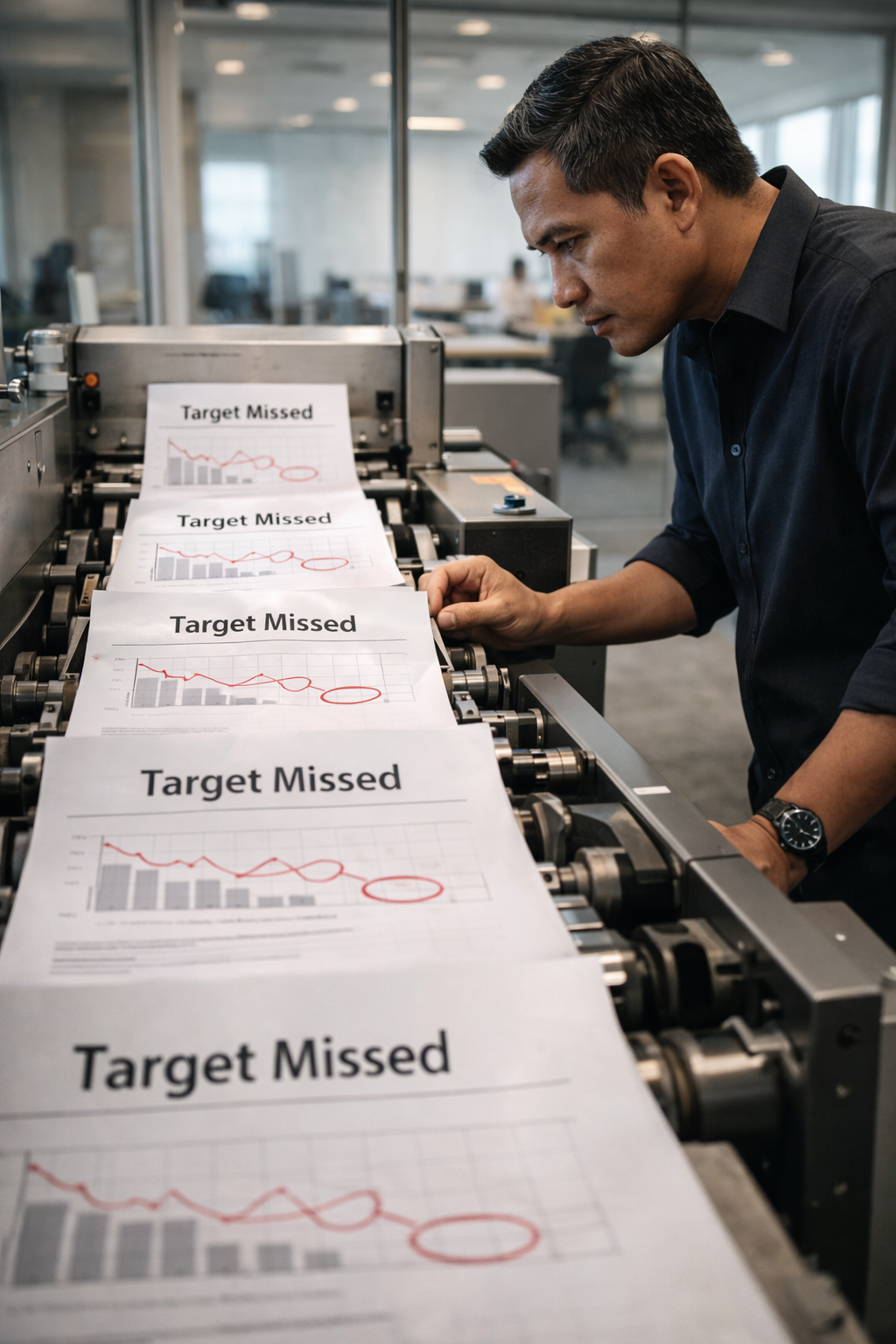







 Too many companies have untrained leaders that fail.