Leadership Trust Reboot

If there’s one leadership skill walking into 2025 with more power than strategy, more influence than charisma, and more weight than technical mastery, it’s trust.

Not the motivational-poster version.
Not the “trust me because of my title” version.
The earned, measurable, credibility-built-every-day kind of trust.

Today’s workforce doesn’t follow authority — it follows consistency. And in a world recovering from disruption, hybrid work confusion, and information overload, trust has become a leader’s greatest currency.

But here’s the twist:
Most leaders think they’re trusted.
Most teams quietly disagree.

Welcome to the leadership trust reboot.


1. Why Trust Is the New Leadership Superpower

In previous decades, competence was enough.
If you were good at the job, you were good for the job.

But hybrid work, digital overload, and rising employee expectations have changed the rules.
Organizations now rise and fall on credibility, not charisma.

Three global trends explain why trust has become the core leadership skill:

A. Employees now demand authenticity, not authority.

You can’t “manage” people into trusting you. They decide based on behavior.

B. Hybrid work requires leaders people believe — even when they aren’t physically present.

You can’t hide behind presence anymore. Leadership trust travels through screens.

C. Information is abundant — but trustworthy leaders are rare.

When people don’t know what to believe, they follow leaders who are believable.

According to a 2025 DDI Global Leadership Forecast, trustworthiness ranks as one of the top predictors of team performance and employee loyalty.
And in the Philippines, malasakit and transparency are no longer “nice-to-have”—they’re survival tools.


2. The Trust Gap: Leaders Think They’re Trusted. Teams Think Otherwise.

This is where it gets uncomfortable.

Surveys show that 82% of leaders believe they are trusted
…but only 48% of employees agree.

Why the gap?

Because trust isn’t built on speeches, strategies, or branding.
It’s built on small, daily, behavioral evidence:

  • Do you do what you say?
  • Do you explain why you make decisions?
  • Do you give feedback early — not when the damage is done?
  • Do you admit mistakes fast?
  • Do you show fairness, or do you play favorites?

Leaders often underestimate how much their teams observe — and how much silence erodes confidence.

The modern leadership standard is simple:
If it’s not consistent, it’s not credible.


3. What Credibility Means in 2025

Credibility used to be about expertise.
Today, it’s a balanced four-part equation:

1. Competence

Yes, leaders still need to know what they’re doing.
But competence evolves — and so must the leader.

2. Character

Integrity, fairness, humility. These aren’t soft skills.
They are trust accelerators.

3. Consistency

Predictable leadership creates psychological safety.
Chaotic leaders destroy it.

4. Communication

Not the “I explained it once” type.
The “I communicate clearly, often, transparently, and honestly” type.

Credibility is no longer a title.
It’s a track record.


4. The Filipino Advantage: Trust Is Cultural

Filipino workplaces operate on relational leadership.
We trust people who show malasakit, fairness, and sincerity.

But this cultural strength can backfire when leaders avoid difficult conversations or withhold feedback to “keep the peace.”

In 2025, the most effective Filipino leaders will be those who combine:

  • the heart of malasakit,
  • the clarity of transparent communication, and
  • the discipline of accountability.

This blend turns Filipino leadership into a global asset.


5. How Leaders Lose Trust Without Realizing It

Leaders rarely intend to break trust.
But these silent killers erode credibility fast:

  • Sugarcoating problems
  • Shifting decisions without explanation
  • Ignoring conflict
  • Delivering delayed or vague feedback
  • Overpromising to keep people happy
  • Inconsistency in discipline or expectations
  • Listening only when convenient
  • Leading with fear rather than clarity

In the hybrid setting, even slow response times can be interpreted as apathy or avoidance.

Trust doesn’t disappear instantly — it fades.
And by the time leaders notice, teams have already disengaged.


6. The Trust Reboot Framework (TRF)

A simple but powerful way to rebuild leadership credibility:

Step 1: Clarify Your Standards (What You Expect & What You Stand For)

When expectations are vague, credibility collapses.

Step 2: Communicate Decisions with Context

People don’t need to agree.
But they do need to understand the why.

Step 3: Create a Consistency Ritual

A weekly 15-minute check-in:

  • What decisions did I make this week?
  • Did I communicate them clearly?
  • Where was I inconsistent?

Consistency is built through habit, not hope.

Step 4: Practice Feedback Transparency

Replace annual performance reviews with ongoing feedback nudges.
Frequent, honest, and kind conversations increase trust.

Step 5: Admit Mistakes Faster

Teams don’t expect perfect leaders.
They want honest, accountable ones.


7. Case Example: The Credibility Comeback

A Filipino BPO team lead in Ortigas struggled with high attrition.
Exit interviews revealed a pattern:
“Hindi namin alam ano ba talaga ang expectations.”
“We get surprise feedback only when something goes wrong.”
“Leadership decisions feel hidden.”

The leader rebooted trust using simple practices:

  • weekly clarity updates
  • transparent reasoning behind decisions
  • shifting from corrective feedback to supportive check-ins
  • clear, consistent weekly priorities

Within 90 days:

  • attrition dropped
  • engagement rose
  • customer scores improved

Not because the leader became more skilled — but because the leader became more credible.


8. The ROI of Trust

Trust is not emotional fluff. It produces measurable results:

  • Higher engagement
  • Lower turnover
  • Faster execution
  • Better innovation
  • Stronger customer experience

Teams move quicker when they don’t waste energy wondering:
“Do I trust this person?”

Trust removes friction.
Credibility creates momentum.


9. Key Takeaways

  • Leadership trust is in crisis — and credibility is the new superpower.
  • Teams follow leaders who are consistent, transparent, and accountable.
  • Filipino leadership values, when paired with clarity and accountability, become globally competitive strengths.
  • Trust is not built once. It’s reinforced daily.
  • Credibility is the foundation of influence, culture, growth, and long-term leadership success.

If your organization needs leaders who are trusted, credible, and consistent — let’s build your trust-driven leadership program together.


Why Your Leadership Lid Is Holding You Back

If your organisation isn’t hitting its stride, maybe it isn’t the strategy. Maybe it’s you.
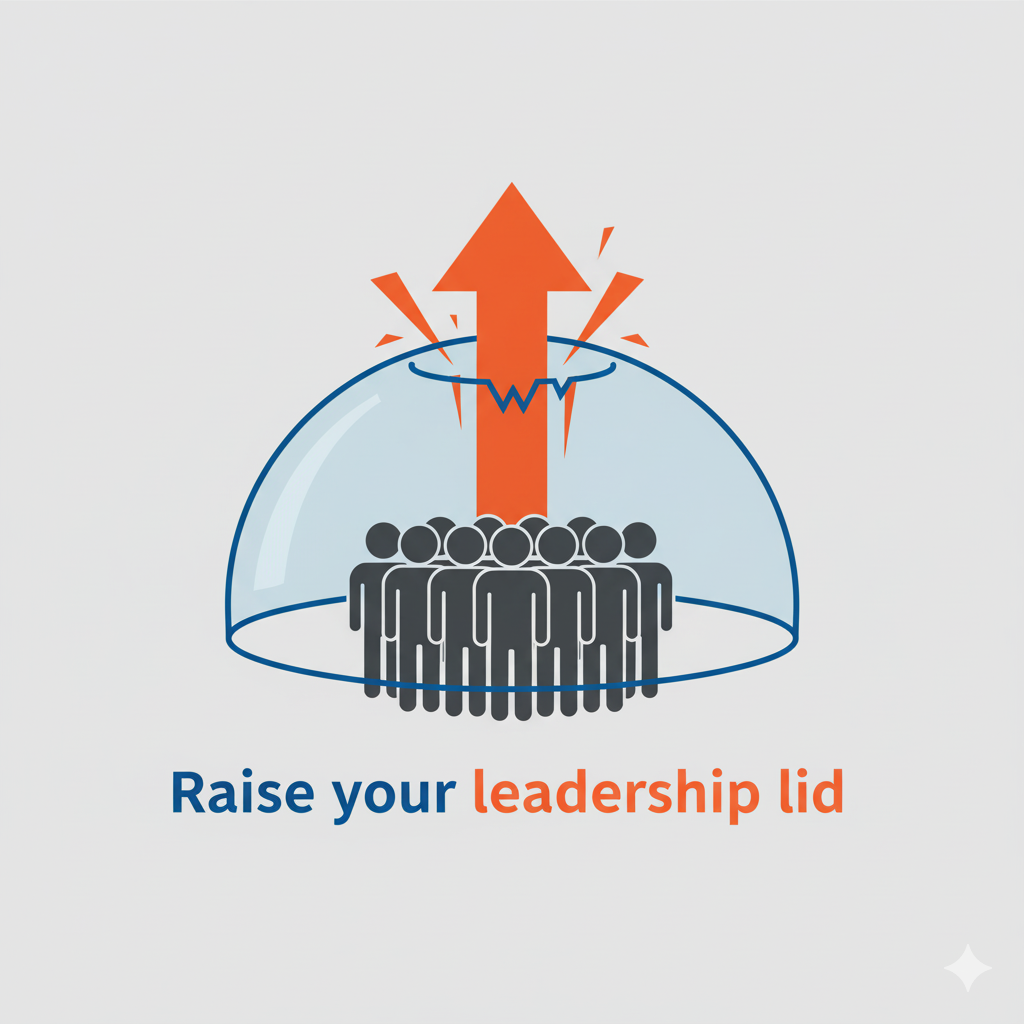
The first of John C. Maxwell’s “21 Irrefutable Laws of Leadership” is the Law of the Lid: your leadership ability is the “lid” that determines your level of effectiveness.

In short: no matter how great your team, your results won’t soar beyond your leadership ceiling. Especially in today’s fast‑shifting business environment (hello hybrid work, rapid tech change, DEI demands).

This article lays out how to spot your lid, boost it, and raise your team’s performance—especially for the Philippine market with global context.


The Case for Lifting the Lid

Why this matters now

Recent leadership‑development research tells us that organisations are demanding more than just “good managers” — they want leaders who can elevate capability, adaptability and trust. For example:

  • According to the DDI Worldwide Global Leadership Forecast 2025, one of the greatest barriers was insufficient leadership capacity to handle change and build trust. DDI
  • In the Philippines, HR and L&D trends show leadership development, up‑skilling, hybrid work models and digital‑ready leadership are now front‑and‑centre. peoplehum

So when Maxwell says your leadership lid matters, he’s not being dramatic—he’s pointing to what’s real: your ability to lead sets the ceiling for what your team or company can achieve. Or in other words: your ceiling becomes their ceiling.

What it looks like when the lid is low

Signs you (or your organisation) are operating under a low lid:

  • You set ambitious goals but the team can’t hit them — not due to resources, but due to leadership gap.
  • Your team complains about inconsistent direction, low morale, or unclear authority.
  • You’re good at your functional job—but leading people, change or growth? You struggle.
  • The business changes fast (market, tech, workforce) and you feel overwhelmed rather than ahead.

If you recognise these, you’re on solid ground: you’re ready to lift your lid.


How “Lid” Applies in the Filipino Business Context

In the Philippines, leadership culture has some differentiators: relational leadership, value of trust (pakikipagkapwa), and the necessity to lead across diverse teams (geographically, generationally).
In such environments:

  • A leader with a narrow lid can feel even more constrained because trust and influence are key.
  • Filipino organisations are shifting from “top‑down” to more agile, networked structures—so a leader who hasn’t upgraded their lid gets left behind.
  • With hybrid and remote work increasing here, leadership ability must now include remote‑team engagement, digital tools, culture maintenance. As one Philippine HR trend piece noted: “The shift to hybrid work is no longer just a temporary adjustment—it’s become a mainstay.”

Example: In a Manila‑based services firm, the team hit delivery targets, but morale and innovation were stalling. The team lead realised she was excellent at meeting deadlines, but mediocre at inspiring and developing her people. Her leadership lid was limiting team growth. Once she shifted to intentionally mentoring, delegating, and building trust, results improved.
Your lid might be invisible—but your people feel it.


Four Steps to Raise Your Leadership Lid

Here’s a pragmatic roadmap to lift your leadership ceiling.

Step 1: Know your current lid

  • Ask yourself: If I lost my title/position tomorrow, would my people still follow me?
  • Use multi‑source feedback: peer reviews, team surveys, 360‑feedback.
  • Map where your leadership falls short: is it vision‑setting, communication, people‑development, adaptability?
    Once you know your lid, you can act to raise it.

Step 2: Commit to leadership growth—not just management

Management is good; leadership is better. Raising your lid means shifting from “doing tasks” to “leading people and growth.”

Some actions:

  • Allocate time each week for leadership development (reading, coaching, reflection).
  • Pair your functional goals with leadership goals (e.g., “This month I will coach one direct report to own a project end‑to‑end”).
  • Embrace feedback and treat failures as leadership experiments—not just mistakes.

Step 3: Develop your core leadership skills

According to the research, some of the highest‑leverage leadership skills now include: trust‑building, adaptability, digital fluency, people development. O.C. Tanner+1
Focus on:

  • Vision & clarity: Communicate where you’re going, why it matters, how you’ll get there.
  • Empathy & relational skill: Especially in the Philippines, leading with care builds influence.
  • Execution & accountability: Set clear expectations, monitor progress, feed back.
  • Growth mind‑set: Yourself and your team—investing in up‑skilling, new roles, change.
  • Digital & hybrid competence: Leading hybrid or remote teams, using digital tools well.

Step 4: Raise the lid in your team and organisation

It’s not just your personal lid—your team’s lid matters too. Here’s how to raise it:

  • Identify emerging leaders: Delegate responsibility, allow mistakes, stretch capability.
  • Create leadership bench strength: Succession planning isn’t elbowing aside people; it’s building more lids. In the Philippines, the shift is toward “leadership ecosystems” rather than rigid pipelines.
  • Embed development culture: Make leadership growth part of performance reviews, not just technical targets.
  • Use data & feedback: Track leadership growth metrics, engagement, team health—not just KPIs.

Why Raising the Lid Drives Business Results

When you raise your leadership lid—and your team’s—the business sees tangible benefits:

  • Higher employee engagement and retention (because leadership shows up).
  • Better innovation and change adaptation (because people feel empowered).
  • Stronger bench strength—so when change hits, you’re ready.
  • Greater organisational impact—when leadership isn’t the constraint.

According to research by DDI, organisations that rated high leadership capacity had significantly better agility, bench strength, and performance outcomes. DDI In the Philippines, companies that invest in leadership development and hybrid‑work leadership see better retention and productivity.


Five Common Lid‑Raising Mistakes to Avoid

  1. Treating leadership as a “nice‑to‑have”. If leadership growth isn’t prioritised, you stagnate.
  2. Waiting until you’re “ready”. Leadership grows in action. Don’t hide behind “I’ll get training, then lead.”
  3. Focusing only on yourself. Your lid affects your team’s ceiling. Invest in others.
  4. Never delegating. If you hold all decisions, you cap your team’s lid.
  5. Ignoring context. In the Philippines, relational trust, hybrid models, digital tools matter. A global slide deck won’t cut it unless contextualised locally.

Your Action Plan for This Week

Since you’re a management consultant, digital marketer and trainer based in the Philippines, here are three tasks to raise your leadership lid right away:

  • Task A: Schedule a 30‑minute reflection: review your leadership feedback from last quarter. Identify your top two lid‑limits (e.g., public speaking, delegation).
  • Task B: Select one direct report or client manager and give them responsibility for a project end‑to‑end. Coach them, then step back. Monitor progress.
  • Task C: Launch a mini‑survey with your team: “On a scale of 1‑5, how clear am I about where we’re going?” Then share the results and act on one insight.

By acting this week, you’re not just reading about leadership—you’re raising your lid.


Takeaways

  • Your leadership ability sets the ceiling for your team’s performance: the lower your lid, the less you can achieve as a leader.
  • Leadership development trends in 2025 emphasise adaptability, trust and people growth—raising your lid is business‑critical.
  • In the Philippine context, relational leadership, hybrid capability and leadership ecosystems must be addressed to lift the lid.
  • Focus on your personal leadership growth, but also invest in raising the lid of others in your team or organization.
  • Moving beyond “managing tasks” to “leading people and growth” is the most reliable path to lifting your lid and delivering results.

Want more?

Ready to consistently raise your leadership lid? Subscribe to my weekly Leadership Growth Letter—insights, tools and Filipino‑context applications sent to your inbox.

Why Most Leadership Training Fails (and How Smart Leaders Quietly Fix It)

You know that feeling when you’ve just rolled out another “transformative” leadership training program, complete with breakout rooms, sticky notes, and a charismatically over-caffeinated facilitator—and three months later, absolutely nothing has changed? The metrics haven’t budged. The culture feels the same. And your “emerging leaders” are still sending calendar invites titled “sync on alignment opportunities.”

Welcome to the $366 billion global leadership training industry—where, according to McKinsey, nearly 75% of programs fail to deliver measurable results. It’s an uncomfortable truth, but one worth facing if you actually want to build better leaders instead of just better-looking PowerPoints.

Let’s get real: most leadership training doesn’t fail because people don’t care. It fails because the entire system is built backward—too much theory, too little humanity. The good news? The fix isn’t complicated. It just requires a smarter, more honest approach to developing leaders who actually lead.


I’ve been in this field long enough to watch hundreds of well-intentioned organizations spend six figures on leadership training that quietly evaporates the minute real work begins. You can almost hear the sound of budgets sighing. The trainers aren’t bad. The attendees aren’t lazy. The problem is structural—and it starts with a dangerous misunderstanding of what leadership training is supposed to do.

See, leadership isn’t something you learn; it’s something you practice. It’s a muscle, not a module. Yet companies still treat it like a compliance course you can check off after 2.5 days of icebreakers and self-assessments.

Here’s the reality: if your leadership training doesn’t translate into on-the-ground behavioral change, you’ve just created a very expensive group therapy session.

So let’s unpack why that happens—and what smart organizations (and the people who lead them) do differently.


1. They Start With the Wrong Question

Most companies start their leadership training by asking, “What skills do our managers need?” It sounds logical. It’s also wrong. The better question is: “What behaviors do we need to see more of?”

Skills can be taught; behaviors have to be shaped. The difference matters. Because when you focus on behaviors, you stop treating leadership like a technical skill and start treating it like a cultural signal.

Take Google’s famous Project Oxygen. When they tried to identify what makes a great manager, “technical expertise” ranked dead last. The top traits were things like coaching, communication, and empathy. None of those can be mastered in a single training session—but they can be modeled, reinforced, and rewarded.

That’s where most leadership training collapses. It tries to transfer knowledge when it should be shaping identity.

The fix? Design your programs backward. Start with the end behavior—what you want leaders to do differently—and then build the training experience around the conditions that make that behavior possible.

Because no one ever became a great leader by watching slides about “active listening.” They became one because someone actually listened to them.


2. They Forget That Learning Is Emotional, Not Intellectual

We love to say that leadership is about people, yet we design training that completely ignores how people actually learn. Leadership training that’s overly cognitive—heavy on frameworks, light on feelings—fails because it doesn’t reach the part of the brain where behavior changes live.

Research from the NeuroLeadership Institute shows that emotions drive long-term retention far more than data or logic. So when your program spends 80% of its time explaining leadership models instead of helping participants experience real emotional insight, you’re building short-term awareness, not long-term change.

The best leadership training makes people slightly uncomfortable—in a good way. It nudges them to confront their blind spots, not just catalog their strengths. It encourages reflection, storytelling, and vulnerability—not just strategy.

That’s why every leadership development session I design includes what I call “productive discomfort.” The moment where a participant realizes that the hardest person to lead is themselves. That’s when transformation actually starts.

Because no one ever changed because they understood leadership. They changed because they felt something powerful enough to act differently.


3. They Treat Leadership Training Like a Sprint, Not a Season

Another reason most programs fail? They’re built like events, not ecosystems. A two-day workshop, no matter how brilliant, is a spark—not a fire. And without sustained reinforcement, that spark goes cold fast.

According to a 2024 Deloitte study, skills learned in workshops decay by up to 75% within six weeks if not reinforced. That’s brutal—but predictable. Learning, like fitness, only sticks with consistent reps.

The smart leaders I work with don’t buy “programs.” They build systems. They integrate leadership training into the rhythm of business: team debriefs, one-on-one coaching, leadership circles, peer mentoring. They turn leadership into a practice, not a project.

Because leadership isn’t what you do once a quarter—it’s what you do when no one’s watching.

So if you want your leadership training to matter, stop calling it a “session.” Call it a season. Because transformation doesn’t happen in a workshop; it happens in the weeks that follow, when the workshop becomes a habit.


4. They Think Content Is King—When Context Is Everything

I can’t tell you how many times I’ve seen organizations buy “off-the-shelf” leadership content and then wonder why it doesn’t land. The issue isn’t the quality of the material—it’s the lack of relevance.

Your people don’t need another model. They need meaning.

When training isn’t anchored in the company’s actual context—its values, its culture, its pain points—it feels abstract. And adults don’t learn in abstractions. We learn in moments of connection.

That’s why the most effective leadership training programs are hyper-customized. They use real company stories. Real challenges. Real data. They don’t tell participants what “good leadership” looks like—they help them define what their leadership looks like inside their organization.

Because great leadership doesn’t come from theory. It comes from context, and the courage to act inside it.


5. They Train Leaders Without Engaging Their Managers

Here’s a fun statistic: According to Harvard Business Review, 60% of employees say their direct manager has more impact on their engagement than any other factor in the workplace.

Yet most leadership training programs are built for participants, not their managers. So after the training ends, participants go back to teams where no one reinforces the new mindset—and the old habits quietly win.

If you want your leadership training to stick, you have to train the system, not just the person. That means coaching the managers of your participants so they can support, model, and reward the new behaviors.

In one company I worked with, simply adding a 15-minute “leader check-in” every Friday (where managers discussed how they applied one insight from the training) increased retention of learned behaviors by 42%.

That’s not magic. That’s momentum.


6. They Forget That Leadership Is Contagious

Culture isn’t built by the CEO’s speech; it’s built by the small daily behaviors people imitate. Leadership training often fails because it treats leadership like a solo act instead of a social virus—something that spreads through observation and reinforcement.

When leaders at every level model curiosity, empathy, and accountability, others catch it. When they don’t, people catch that, too.

That’s why I always tell executives: don’t just attend leadership training. Embody it. The minute your team sees you taking notes, asking for feedback, or admitting a mistake, you’ve just multiplied the impact of your program tenfold.

Because leadership training isn’t about the few at the top—it’s about creating a critical mass of people who make great leadership normal.


7. They Don’t Measure What Matters

If you’re still evaluating leadership training based on participant satisfaction scores (“Loved the facilitator!”), you’re missing the point. The goal isn’t entertainment—it’s evolution.

Real leadership growth shows up in different data: employee retention, engagement, decision velocity, team trust. The organizations that truly benefit from leadership training are the ones that measure what happens after the workshop, not just inside it.

In one case, a client of mine measured success by tracking how often leaders initiated “career conversations” with their direct reports. Before training: 12%. After six months: 68%. That’s not anecdotal—that’s transformation.

So if you want to know whether your leadership training is working, stop asking people how they felt about it. Ask them what they’ve done differently because of it.


And here’s the kicker: when leadership training fails, it’s rarely because people didn’t care. It’s because no one bothered to make it stick. The smartest leaders—the ones who quietly fix the problem—don’t just run programs. They build systems that make leadership inevitable.

They don’t chase charisma; they cultivate consistency. They don’t just teach leadership; they live it.

So maybe the question isn’t “how do we make leadership training work?” Maybe it’s, “how do we make leadership inevitable?”

If you can answer that—if you can build a culture where leading well is just what people do—you won’t need to train leaders anymore. You’ll just have them.

And that’s when the real magic happens.


Because leadership isn’t taught. It’s caught.

So, if you’re ready to stop running programs and start shaping cultures, start small. Choose one behavior you want to see more of next quarter. Model it relentlessly. Reinforce it publicly. Measure it ruthlessly.

That’s where real leadership training begins—not in the classroom, but in the mirror.


Your turn:
What’s one leadership behavior your organization keeps talking about but rarely models? And what’s stopping you from being the first to live it?

That’s the kind of question every great leader asks—quietly, consistently, and without a slide deck in sight.


#LeadershipTraining #ExecutiveDevelopment #HRStrategy #LeadershipCulture #PeopleDevelopment #WorkplaceLearning #CoachingCulture #HRLeadership #LeadershipGrowth #OrganizationalChange #EmployeeEngagement #FutureOfWork #LeadershipMindset #ManagementDevelopment #HumanResources

The Law of Navigation in 2025: Steering Teams Through Uncertainty with Vision

Steering Without a Map

A recent Harvard Business Review study found that 70% of failed business initiatives collapse not because of poor execution, but because of poor direction. The strategy was wrong before the first step was taken.

That’s why John Maxwell’s Law of Navigation cuts straight to the heart of leadership: “Anyone can steer the ship, but it takes a leader to chart the course.”

In other words: management keeps the boat moving, but leadership decides whether you’re headed for safe harbors or stormy waters. And in 2025—with AI disruption, hybrid teams, and market volatility—leaders who can navigate, not just steer, are the ones people trust to follow.


The Problem: Too Many Leaders Are Just Steering

Let’s be blunt. Far too many leaders today are simply reacting. They “steer the ship” by responding to waves and winds—competitor moves, economic shocks, employee turnover—but they aren’t charting a course.

The result?

  • Teams confused about vision.
  • Companies shifting strategy every quarter.
  • Burnout from leaders who operate in constant crisis mode.

The Law of Navigation calls for something different: proactive leadership rooted in vision, foresight, and preparation.


The Law of Navigation Explained

Maxwell frames it simply: “Leaders who navigate do so by seeing more than others see, and seeing before others see.”

That means:

  • Leaders anticipate obstacles before they arrive.
  • They prepare contingencies while others are still celebrating early wins.
  • They know the difference between movement and progress.

Anyone can “steer” day to day. Navigators chart tomorrow.


Why Navigation Matters More in 2025

The modern business landscape is a stormy sea:

  1. AI and Automation: Technology is rewriting industries at breakneck speed. Navigators don’t just react to disruption—they plan for what’s coming next.
  2. Hybrid and Global Teams: Steering scattered teams without a clear course creates chaos. Navigators keep everyone aligned toward one destination.
  3. Economic Uncertainty: In volatile times, teams don’t look for managers—they look for captains with a compass.
  4. Talent Wars: The best employees don’t just want jobs. They want to follow leaders with vision and direction.

Bottom line: In 2025, navigation is not optional. It’s survival.


The Navigator’s Framework: 5 C’s of Strategic Leadership

Here’s a modern roadmap for applying the Law of Navigation:

1. Clarity – Define the Destination

  • Paint a vivid picture of where the team is headed.
  • Be specific: success isn’t “grow the business,” it’s “increase market share by 15% in the next 2 years.”
  • Stat: Teams with clear goals are 3.6x more engaged (Gallup, 2024).

2. Course – Map the Route

  • Break down the vision into achievable milestones.
  • Anticipate obstacles and plan alternatives.
  • Think of this as the GPS system for your organization.

3. Contingency – Plan for Storms

  • Navigators don’t just hope for smooth sailing. They ask, “What if the market dips? What if we lose key staff? What if AI reshapes our industry faster than expected?”
  • Contingency plans don’t show weakness; they prove foresight.

4. Communication – Align the Crew

  • Even the best chart is useless if the crew doesn’t understand it.
  • Navigators don’t just know the plan—they communicate it relentlessly until everyone owns it.
  • Keyword: transparent leadership communication.

5. Commitment – Stay the Course

  • Vision loses power without resilience.
  • Navigators know when to adjust course—but they don’t abandon the destination.

Case Example – Navigation in Action

Think about the pandemic.

  • Companies with navigators (leaders who anticipated challenges, pivoted to digital, supported teams remotely) not only survived—they grew.
  • Companies with steerers (leaders who reacted without direction) struggled with layoffs, morale crashes, and permanent reputational damage.

Lesson: When storms hit, the navigators are the ones people trust to follow.


Why Organizations Need Navigators, Not Just Managers

Here’s the leadership gap:

  • Managers focus on steering—the what and how.
  • Leaders focus on navigating—the why and where.

In 2025, organizations that fail to raise navigators risk:

  • Losing top talent to vision-driven competitors.
  • Wasting resources on misaligned priorities.
  • Falling behind in industries moving faster than ever.

According to McKinsey, companies with strong strategic leadership outperform peers by 2.1x in profitability.


Training Leaders to Navigate

Navigation is not instinct—it’s skill. And like all of Maxwell’s laws, it can be learned.

That’s why leadership development is critical:

  • Scenario planning workshops build foresight.
  • Coaching programs sharpen vision casting.
  • Team alignment training ensures leaders communicate plans effectively.

Investing in navigational leadership isn’t just training—it’s future-proofing.


Captains with a Compass

The Law of Navigation reminds us: leadership is more than activity—it’s direction.

Anyone can steer the ship for a while. But in 2025, when storms come without warning and the seas are rougher than ever, people don’t follow those who simply steer. They follow leaders who chart the course, anticipate the storms, and commit to the destination.

So, let me ask you:

👉 Are you just steering your team—or are you truly navigating them toward a future worth reaching?

#LawOfNavigation #Leadership2025 #JohnMaxwell #StrategicLeadership #VisionaryLeadership #LeadingThroughUncertainty

How to Master Adaptive Leadership in 2025 Without Losing Your Sanity

Here’s a sobering truth: leadership is no longer about knowing all the answers—it’s about surviving long enough to ask the right questions. The world of work in 2025 is one giant improv show, and adaptive leadership is the only way to keep the curtain from falling on your career. If you’re still clinging to the old “command-and-control” playbook, congratulations—you’re steering a horse-drawn carriage on the freeway. And the Teslas are honking.

Let’s set the stage with a story. Meet Daniel, a VP at a global logistics firm. He spent two decades mastering spreadsheets, processes, and efficiency hacks. Then came a supply chain crisis that made “pivot” the word of the year. His perfect plans crumbled overnight. His team panicked. Daniel had two options: double down on outdated control tactics or adapt. He chose the latter—ditching rigid planning sessions for collaborative problem-solving, empowering his people to experiment, and openly admitting when he didn’t know what was next. The result? Not just survival, but growth. Adaptive leadership turned a disaster into a training ground for resilience.

This is the essence of adaptive leadership: the ability to stay steady in chaos, shift strategies without losing sight of values, and lead people through challenges that don’t come with a user manual. Harvard’s Ron Heifetz (the godfather of adaptive leadership) put it bluntly: “The most common cause of leadership failure is treating adaptive challenges like technical problems.” Translation? You can’t duct-tape your way through systemic change.

Step 1: Ditch the Crystal Ball Stop pretending you can predict the future. You can’t. Adaptive leadership isn’t about clairvoyance—it’s about curiosity. A Deloitte report found that 92% of executives believe the ability to adapt is critical for organizational success, yet only 10% feel ready for it. That gap? It’s where careers go to die. Instead of forecasting endlessly, leaders must ask better questions, test hypotheses, and adjust in real time. Adaptive leaders are scientists, not fortune tellers.

Step 2: Get Comfortable Being Uncomfortable Here’s the dirty secret: adaptive leadership feels messy. You’ll look indecisive. You’ll say “I don’t know” more than you’d like. And yes, some will think you’ve lost your grip. But discomfort is where trust is built. When Daniel admitted uncertainty during the crisis, his team didn’t see weakness—they saw honesty. And honesty breeds loyalty. A PwC study revealed that 60% of employees say trust in leaders is the #1 factor in whether they’ll stay or quit. Spoiler: no one follows a robot pretending to have all the answers.

Step 3: Share the Stage Adaptive leadership kills the myth of the lone hero. The age of “superstar CEOs” solving everything with charisma is over. Today, resilience comes from collective intelligence. Research from McKinsey shows organizations with distributed decision-making are 33% more likely to outperform competitors. Translation: share the mic. Your team’s diversity of thought is your survival kit. Leadership development trainings help managers learn how to harness that collective genius instead of stifling it with ego.

Step 4: Fail Faster, Smarter, and Louder Failure used to be a dirty word. Now, it’s the tuition fee for innovation. Adaptive leaders don’t punish smart risks; they celebrate them. They don’t whisper about failures—they debrief them publicly so everyone learns. Remember Blockbuster? They failed quietly, and now Netflix is streaming their obituary. Don’t be Blockbuster. Adaptive leadership means creating a culture where experiments are welcomed, and lessons learned are shared openly. Leadership trainings give leaders the tools to turn failure into fuel, not fear.

Step 5: Hold Values, Not Strategies, Sacred Here’s the paradox: adaptive leadership isn’t about bending on everything. It’s about knowing what not to bend on. Values are the compass; strategies are the map. Maps change; compasses don’t. During Daniel’s supply chain crisis, he dropped half the policies he once swore by—but his commitment to integrity and transparency never wavered. That consistency built trust even when the path was uncertain. Adaptive leadership anchors people to purpose while navigating shifting terrain.

Step 6: Stop Managing, Start Coaching Adaptive leaders don’t micromanage—they coach. They ask questions, provide frameworks, and let teams find their own solutions. Think less “boss with a checklist,” more “coach with a playbook.” This is where leadership development trainings shine: they teach leaders how to move from task-obsessed managers to growth-obsessed mentors. It’s not softer leadership—it’s smarter leadership.

Step 7: Embrace the Marathon Mindset Adaptive leadership is not a sprint. It’s a marathon with surprise obstacles, sudden thunderstorms, and maybe a bear or two. Leaders who burn out trying to fix everything overnight don’t last. Those who pace themselves—who rest, reflect, and refuel—do. According to a Korn Ferry study, leaders with resilience training are 2.8 times more likely to deliver sustained performance. Adaptive leadership is less about heroics and more about endurance.

So where does this leave us? Adaptive leadership isn’t a trendy buzzword—it’s the leadership survival kit for 2025 and beyond. Leaders who can flex without snapping, admit what they don’t know, and rally people around shared values are the ones who will thrive. Those who can’t? Well, there’s always LinkedIn to announce your “career pivot.”

Here’s the kicker: you can’t stumble into adaptive leadership by accident. It takes practice. It takes frameworks. And it takes training. Leadership development trainings are where you build the muscles to adapt—not just for the next crisis, but for the career marathon ahead.

So ask yourself: are you leading adaptively, or are you just waiting for the next storm to blow you over?

Ready to stop pretending you can predict the future and start leading through it instead? Let’s talk about leadership development trainings that make adaptive leadership second nature.


#AdaptiveLeadership #LeadershipDevelopment #FutureOfWork #ExecutiveCoaching #LeadershipTraining #ChangeManagement #BusinessLeadership #ResilientLeadership #WorkplaceInnovation #LeadershipTrends2025 #LeadDifferently #EmotionalIntelligence #InclusiveLeadership #AgileLeadership #CorporateTraining

Shaping Future Leaders: The Power of Mentoring and Coaching in Successor Development

In the contemporary business world, the sustainability and growth of an organization largely depend on its ability to cultivate strong successors. A vital aspect of this process involves mentoring and coaching, which are instrumental in preparing the next generation of leaders. This article delves into how these practices can be effectively utilized to develop capable and confident successors.

Understanding the Role of Mentoring and Coaching

Mentoring and coaching, although sometimes used interchangeably, serve distinct purposes in professional development. Mentoring often involves a long-term relationship where a senior leader imparts wisdom, shares experiences, and guides a less experienced individual. Coaching, on the other hand, is usually more structured and short-term, focusing on specific development areas and performance improvement.

1. Identifying Potential Successors

The first step in successor development is identifying individuals with the potential to assume leadership roles. This involves assessing skills, attitudes, and aspirations. Once potential successors are identified, organizations can tailor mentoring and coaching programs to suit their specific needs.

2. Structured Mentoring Programs

Structured mentoring programs connect high-potential employees with experienced leaders within the organization. These programs can include regular meetings, shadowing opportunities, and guidance on career development. The mentor’s role is to provide insight, advice, and support as the mentee navigates their career path.

3. Goal-Oriented Coaching

Coaching focuses on developing specific competencies or addressing particular challenges. It is more immediate and practical compared to mentoring. Coaching sessions are typically goal-oriented, focusing on actionable steps that the mentee can take to improve their performance and prepare for leadership roles.

4. Developing Leadership Skills

Both mentoring and coaching play a crucial role in developing essential leadership skills. This includes strategic thinking, decision-making, emotional intelligence, conflict resolution, and effective communication. By working closely with mentors and coaches, successors can gain valuable insights and learn practical skills that are critical in leadership roles.

5. Building Networks and Relationships

Mentoring and coaching also facilitate the building of professional networks and relationships. Mentees get an opportunity to connect with senior leaders and other key stakeholders, which is beneficial for their future roles. These relationships can provide support, open up opportunities, and offer valuable resources throughout their careers.

6. Providing Feedback and Encouragement

Regular feedback is a cornerstone of effective mentoring and coaching. Constructive feedback helps individuals understand their strengths and areas for improvement. Encouragement from mentors and coaches can also boost confidence and motivation, essential for personal and professional growth.

7. Succession Planning Integration

Mentoring and coaching should be integrated into the broader succession planning strategy of the organization. This ensures that the development of potential successors is aligned with the organization’s future leadership needs and strategic goals.

8. Monitoring and Measuring Progress

The effectiveness of mentoring and coaching programs should be monitored and measured. This can be done through regular progress reviews, feedback from mentors and coaches, and assessing the development of key competencies in potential successors.

Challenges and Solutions

Implementing effective mentoring and coaching programs can be challenging. Obstacles such as time constraints, mismatched pairs, and a lack of engagement can hinder the process. To overcome these challenges, organizations need to ensure commitment from all parties involved, provide necessary resources, and regularly evaluate and refine their programs.

Mentoring and coaching are powerful tools in developing strong successors. They provide a platform for potential leaders to learn, grow, and prepare for the challenges of leadership. By investing in these practices, organizations can ensure a steady pipeline of capable leaders ready to take the helm and steer the organization towards success.


How could mentoring or coaching shape your journey towards becoming an effective leader in your organization?

On Ken Blanchard’s article – Coaching and Servant Leadership go hand in hand

Photo by cottonbro on Pexels.com

I never knew how to articulate the connection between servant leadership and coaching until I came across an article from Ken Blanchard. 

Come to think of it; coaching is indeed an integral part of servant leadership. Christ himself, the model for servant leadership, coached the twelve disciplines for a few years before giving them the “Great Commission” written in Matthew 28:19-20a

“Therefore go and make disciples of all nations, baptizing them in the name of the Father and of the Son and of the Holy Spirit, and teaching them to obey everything I have commanded you.”

The twelve disciples then continued to use servant leadership in the development of other disciples. Over 2,000 years later, Christianity has 32% of the world’s population. On the other hand, the authoritarian leadership of the Roman Empire no longer has a stronghold of the world. The once-great Roman Empire ceased to exist in the 5th Century AD.

Leadership needs to prepare new servant leaders. Having a sense of the long game is the only way any organization can survive the test of time. Authoritarian leadership, on the other hand, will eventually destroy the organization. Worse, an organization collapses after the autocratic leader leaves because the remaining leaders are not prepared to grow the organization.

I will keep saying that leaders do not build organizations. Great leaders develop great people and fellow leaders. Great people create great organizations. 

A powerfully embedded coaching program wrapped in a servant leadership culture can ensure organizational longevity in the long game of what we call “business.”

I encourage everyone to read Ken Blanchard’s article by clicking HERE:

Thank you and stay safe,

Jordan Imutan
jordan@imutan.com (email)
@jordanimutan (social media)