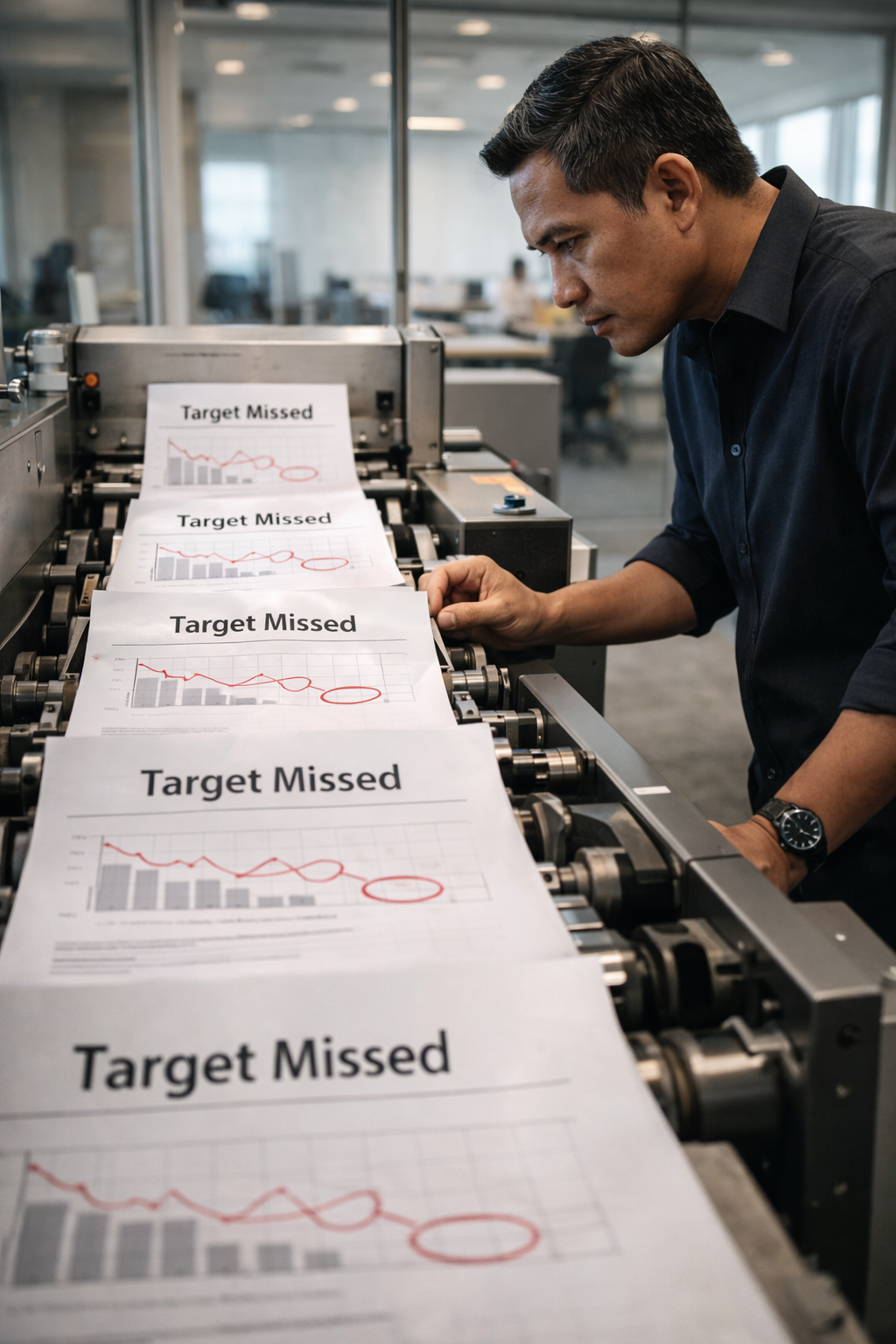
Your Company Isn’t Slow—Your Decisions Are Trapped in Manual Processes

Most leaders don’t describe their companies as slow. They describe them as busy.

Busy calendars. Busy inboxes. Busy teams. Busy days that somehow end with more unresolved issues than they started with. The company is moving, but it doesn’t always feel like it’s moving forward.

Here’s the uncomfortable truth many leaders eventually face: speed is not about how fast people work—it’s about how fast decisions travel through the organization.

Right now, in many growing companies, decisions are stuck. Not because leaders lack intelligence or courage, but because the systems meant to support decision-making are outdated, fragmented, and manual. Information arrives late. Data is incomplete. Context lives in different tools, different people, or different versions of the truth.

As a result, leaders hesitate. Teams wait. Opportunities expire. And everyone compensates by working harder instead of fixing the flow.

This is becoming one of the most expensive hidden problems in modern organizations.

The challenge is especially visible in mid-sized businesses. Startups move fast because they are small. Enterprises move fast because they have mature systems. Mid-sized companies often sit in the danger zone—too big for informal processes, too small to absorb inefficiency.

Decisions that should take minutes take days. Decisions that should be delegated end up escalated. Leaders become information hubs instead of strategic thinkers. Meetings multiply not because people enjoy them, but because clarity is missing.

This is the moment when companies feel “stuck in motion.”

The root cause is rarely people. It is almost always process.

Manual processes slow decision velocity in subtle but damaging ways. Data must be gathered before a decision can be made. Someone must pull it. Someone must clean it. Someone must interpret it. Someone must present it. Someone must approve it. Every step adds delay. Every handoff introduces friction.

By the time a decision reaches the right person, it is already outdated.

This is why leaders often rely on instinct under pressure. Not because data isn’t valuable, but because data arrives too late to be useful. When systems can’t keep up, judgment fills the gap.

Judgment matters—but it should be supported by clarity, not forced by chaos.

This is where AI-enabled systems quietly change the game.

AI, when applied properly, doesn’t replace leadership judgment. It accelerates it. It ensures that the right information arrives at the right time, in the right format, without human effort acting as the bottleneck.

Instead of asking, “Can someone prepare this for me?” leaders start asking, “What does the system already show?”

That shift is powerful.

Imagine operational data updating in real time instead of weekly reports. Imagine dashboards that highlight exceptions instead of flooding leaders with noise. Imagine approvals triggered automatically based on rules instead of follow-up emails. Imagine teams acting immediately because context is already available.

This is not futuristic. This is happening now in organizations that understand one simple idea: decision-making is a process, not an event.

When decision-making is treated as a process, it can be designed, optimized, and automated—at least in part. AI thrives in environments where rules exist, patterns repeat, and volume is high. That describes most operational decisions inside growing companies.

The strategic benefit is enormous. Faster decisions mean faster execution. Faster execution means better client experiences. Better experiences lead to growth that feels controlled instead of chaotic.

There is also a cultural impact leaders rarely anticipate. When decisions move quickly and predictably, trust improves. Teams feel empowered because they are not waiting for permission. Accountability becomes clearer because outcomes are visible. Frustration drops because ambiguity shrinks.

In contrast, slow decision systems create defensive behavior. People hoard information. They escalate unnecessarily. They wait instead of acting. Over time, this erodes initiative.

This is why many organizations feel less entrepreneurial as they grow, even when they hire smart people. The environment trains them to slow down.

AI-supported processes reverse this trend by restoring flow.

Another reason this topic is trending right now is economic pressure. Businesses are being forced to do more with less. Hiring freezes, tighter budgets, and margin pressure mean inefficiency is no longer tolerable. Leaders cannot afford decision delays that cost opportunities.

Speed has become a strategic differentiator.

But speed without structure leads to mistakes. Structure without speed leads to stagnation. The winning organizations build both—and they use automation as the connective tissue.

This does not require massive transformation. In fact, the most effective changes are often small but targeted. Automating data consolidation. Standardizing decision rules. Creating alerts instead of reports. Removing manual approval steps that no longer add value.

These changes compound quickly.

The biggest mistake leaders make is assuming they need to “go all in” on AI to benefit from it. In reality, the smartest approach is incremental and intentional. Fix the decision flows that hurt the most. Free leadership time where it matters most. Create visibility where confusion currently exists.

This is why an audit-driven approach works better than tool-driven adoption.

An AI Automation Audit focuses on how decisions currently move through the organization. Where does information originate? Where does it stall? Where do humans add value—and where are they simply acting as messengers?

Once those answers are clear, automation opportunities reveal themselves naturally.

The result is not just efficiency, but confidence. Leaders trust the system. Teams trust the process. The organization moves as one instead of pulling itself in different directions.

The companies embracing this shift are not louder or flashier. They are calmer. More decisive. More resilient. They don’t rush—but they also don’t wait.

So the leadership question worth asking now is simple but uncomfortable: how many of your company’s delays are actually design problems you’ve learned to tolerate?

Fixing them is not about technology hype. It is about respecting time, clarity, and momentum—the three resources no growing company can afford to waste.


If your organization feels busy but slow, the issue may not be people or priorities—it may be how decisions move through your systems. An AI Automation Audit helps uncover where manual processes are trapping information, delaying action, and pulling leaders into work they shouldn’t be doing. Fixing decision flow is one of the fastest ways to unlock clarity, speed, and sustainable growth.

#DecisionMaking #OperationalClarity #LeadershipSystems #BusinessEfficiency #AIAutomation

Why Scaling Feels Messy—and How Smart Leaders Are Fixing It Without Hiring More People

Yet for many founders and executives, growth feels less like momentum and more like friction. Meetings multiply. Decisions slow down. Teams complain about workload. Leaders feel pulled into everything. Systems that once “worked fine” suddenly feel fragile. Every new client adds pressure instead of profit.

Here’s the uncomfortable reality: most companies don’t break when they scale—they bend, creak, and exhaust themselves first.

The problem isn’t ambition. It’s architecture.

Most businesses are built to start, not to scale. Early on, flexibility is an advantage. People wear multiple hats. Decisions are quick. Communication is informal. Workflows live in people’s heads. This works—until it doesn’t.

As soon as complexity increases, those same strengths become liabilities. The organization becomes dependent on individuals instead of systems. Leaders become bottlenecks. Growth demands more effort instead of better structure.

This is the central idea leaders need to understand: scaling is not about doing more work—it’s about designing how work flows.

And right now, the companies scaling cleanly are not the ones hiring fastest. They are the ones redesigning their processes before chaos sets in.

Let’s talk about why scaling feels so hard, what most companies get wrong, and how AI-powered process automation is becoming the quiet advantage of organizations that grow without losing control.

One of the most common mistakes leaders make is confusing effort with effectiveness. When things start to feel stretched, the instinctive response is to add people, add meetings, or add layers of approval. It feels responsible. It feels decisive. It often makes the problem worse.

More people without clear processes don’t reduce chaos—they multiply it. Each new hire adds communication paths, handoffs, and dependencies. Without standardized workflows, work slows down instead of speeding up. Leaders spend more time coordinating instead of leading.

This is why many organizations reach a frustrating plateau. Revenue grows, but margins shrink. Headcount increases, but execution slows. Everyone is busy, yet progress feels fragile.

The real constraint is not talent. It’s process maturity.

Process maturity simply means this: work happens the same way every time, regardless of who is doing it. Tasks don’t rely on memory, heroics, or constant supervision. Information flows automatically to where it’s needed. Decisions are supported by visibility, not guesswork.

In immature systems, scale adds pressure. In mature systems, scale adds leverage.

AI enters this conversation not as a futuristic replacement for people, but as a force multiplier for well-designed processes. When paired with clear workflows, AI ensures consistency, speed, and reliability—three things growing organizations desperately need.

Consider a common scaling pain point: approvals. As teams grow, approvals increase. Documents, budgets, proposals, and requests pile up waiting for sign-off. Leaders feel involved but overwhelmed. Teams feel stuck. Work stalls.

With proper process design, approvals don’t need constant attention. Rules can be defined. Thresholds can be set. Exceptions can be flagged. Most decisions can flow automatically, escalating only when judgment is required. Leaders regain time without losing control.

The same principle applies to onboarding, reporting, client communication, internal updates, and operational tracking. These are not leadership problems. They are system design problems.

What’s driving urgency around this issue right now is a shift in how companies operate. Hybrid teams, remote work, global clients, and rising expectations have made informal processes unsustainable. You can no longer rely on “just asking” or “following up later.” Systems must carry the load.

This is why forward-thinking leaders are focusing less on tools and more on flow.

Flow means work moves forward without friction. No chasing. No duplication. No confusion about what happens next. When flow is strong, growth feels lighter. When flow is weak, growth feels exhausting.

AI-powered automation strengthens flow by removing manual handoffs. Information doesn’t wait for someone to copy it. Updates don’t depend on reminders. Reports don’t require assembly. Systems talk to each other. Work progresses quietly in the background.

Importantly, this does not remove accountability. It clarifies it.

One fear leaders often express is losing control if things become “too automated.” In reality, the opposite happens. Visibility improves. Exceptions stand out. Patterns emerge. Leaders move from reactive firefighting to proactive decision-making.

This is where scale becomes strategic instead of stressful.

There is also a leadership maturity shift involved here. Early-stage leadership is hands-on by necessity. Scaling leadership is architectural. It’s less about doing and more about designing. Leaders who fail to make this shift become the bottleneck holding growth back.

Good leaders manage people. Great leaders manage systems.

AI automation supports this evolution by making systems reliable. Processes no longer collapse when someone is absent. Knowledge isn’t trapped in one person’s inbox. The organization becomes resilient instead of fragile.

Another trending challenge reinforcing this shift is cost discipline. Hiring is expensive. Training takes time. Attrition is costly. Many organizations are realizing they cannot hire their way out of inefficiency anymore. Growth must come from leverage, not headcount.

This is where scalable processes pay dividends. When workflows are automated, teams can handle more volume without burning out. Growth becomes modular instead of chaotic.

There’s also a cultural benefit leaders often overlook. When processes are clear and supported by automation, people feel safer. Expectations are predictable. Workload feels fairer. Confusion drops. Trust increases.

Chaos erodes culture faster than any policy ever could.

The question then becomes: where do you start?

Most organizations try to solve this by buying tools. CRMs, project management platforms, dashboards, AI subscriptions. Tools are useful—but without process clarity, they become expensive clutter.

This is why a structured audit is the smartest first move.

An AI Automation Audit does not begin with technology. It begins with mapping reality. How does work actually move today? Where does it slow down? Where do people intervene manually? Where does information get stuck? Which steps follow rules and which require judgment?

Once this is visible, automation opportunities become obvious. Leaders can see which processes should be standardized, which should be simplified, and which should be automated.

The goal is not automation everywhere. The goal is automation where it creates leverage.

The companies getting this right are not louder about it. They don’t announce massive transformations. They quietly redesign workflows, reclaim leadership time, and scale without adding unnecessary complexity.

Their advantage compounds. While others struggle with coordination and burnout, these organizations move faster with fewer people. They adapt more easily. They lead with confidence instead of exhaustion.

The truth is, scaling will always bring pressure. But pressure does not have to turn into chaos. With the right systems, growth becomes manageable—even enjoyable.

So the real leadership question is this: are you building a company that depends on effort, or one that depends on design?


If your organization is growing but feels harder to manage instead of easier, it may be time to redesign how work flows. An AI Automation Audit helps identify where processes are breaking under scale and where automation can restore clarity, speed, and control—without adding headcount or complexity. The fastest path to sustainable growth is fixing the system, not pushing the people harder.

#ScalingSmart #OperationalStrategy #LeadershipSystems #BusinessGrowth #AIAutomation

Hyper-Personalization with AI: The Future of Sales & Marketing That Actually Converts

Why Generic is Dead in 2025

Let’s be blunt: generic content is dead.
In 2015, you could post “Just listed!” with a blurry house photo or “Happy Monday!” with a stock image and still get some traction. But in 2025? That’s background noise.

People don’t scroll LinkedIn or Instagram hoping to see the same templated posts they’ve already ignored ten times today. They’re looking for something that feels like it was written for them.

And that’s exactly where hyper-personalization comes in.

With AI, personalization has evolved from inserting a first name in an email (“Hey Jordan!”) to creating entire content journeys so tailored that prospects feel like you’re reading their minds. Done right, hyper-personalization makes your audience stop scrolling, pay attention, and—most importantly—take action.

The agents, marketers, and sellers who understand this shift will own the next decade. The rest? They’ll keep shouting into the void, wondering why no one is listening.


What Exactly is Hyper-Personalization?

At its core, hyper-personalization is creating marketing messages so specific and tailored that every prospect feels like the content was designed just for them.

It’s not just about segmentation anymore (“this ad is for women in their 30s in Quezon City”). It’s about real-time relevance—understanding behaviors, preferences, and intent to deliver content that resonates on a one-to-one level.

Think of it this way:

  • Personalization 1.0 = Using someone’s first name in an email.
  • Personalization 2.0 = Recommending products “similar to what you bought.”
  • Hyper-Personalization 3.0 = AI analyzing behavior, timing, and context to serve the exact message that moves someone closer to buying, at the exact moment they’re most likely to respond.

It’s the difference between saying:
👉 “Here’s a list of properties for sale.”
vs.
👉 “Here’s a 2-bedroom condo in Makati, under ₱6M, near your office, with a floor plan that matches the unit you saved last week.”

Which one do you think gets the click?


Why AI Makes Hyper-Personalization Possible

For years, marketers dreamed about one-to-one marketing, but it was impossible at scale. No human team could write thousands of unique posts, emails, and captions every day.

AI changes that.

Here’s how:

  1. Data Processing at Scale
    AI tools can crunch data faster than any human—analyzing search history, clicks, demographics, and behavior to uncover patterns invisible to the naked eye.
  2. Predictive Lead Scoring
    Instead of wasting time on cold leads, AI can rank prospects by likelihood to convert. Imagine focusing only on the top 20% of leads that generate 80% of your revenue.
  3. Content Generation in Seconds
    With the right prompts, AI can generate 10 variations of a caption, 5 versions of a sales email, or a tailored LinkedIn post in minutes. That means you’re no longer stuck with “one-size-fits-all” messaging.
  4. Real-Time Adaptation
    Hyper-personalization isn’t static. AI can adapt messaging based on what your audience does right now—commenting on a post, clicking a link, or watching a video.
  5. Cost-Effective Scaling
    Instead of hiring a small army of content creators, agents, or assistants, AI lets even a solo entrepreneur produce content at enterprise-level output.

Real-World Applications: Hyper-Personalization in Action

1. Real Estate Agents

Traditional post:
“New listing in Quezon City! 3BR house for ₱15M. DM for details.”

Hyper-personalized AI-powered post:
“Looking for a 3BR home in QC with parking space for two cars? This house is near [School Name] and within walking distance of [Mall Name]. Perfect for families who want convenience + security. See the virtual tour here.”

See the difference? The second post doesn’t sound like it’s for “everyone.” It sounds like it’s for me. That’s why hyper-personalized posts convert casual scrollers into booked viewings.


2. Network Marketers

Traditional message:
“Hi! I’d like to share this amazing opportunity with you. Let’s talk!”

Hyper-personalized AI-powered message:
“Hey Maria, I noticed you’ve been posting about wanting more time with your kids. I help parents like you build flexible side incomes without sacrificing family time. Want me to send you a simple 3-step guide?”

Again, one is spam. The other is relevance at scale.


3. Social Media Sellers

Traditional post:
“SALE! Buy 1 Take 1 Lipstick this weekend!”

Hyper-personalized AI-powered post:
“Hey beauty lovers in Manila 💄 Did you know 72% of Filipinas prefer nude shades for everyday wear? Our top-selling nude lipstick is now Buy 1 Take 1—this weekend only.”

It speaks directly to behavior, preference, and urgency. That’s what gets clicks and conversions.


The Business Impact of Hyper-Personalization

Why does this matter for you as an agent, network marketer, or seller? Simple:

  1. Higher Conversion Rates
    Studies show personalized content can lift conversion rates by 10–20%. Hyper-personalization takes that even further.
  2. Stronger Authority & Trust
    When your audience feels understood, they see you as the expert who “gets them.” That’s authority you can’t buy with ads.
  3. More Efficient Selling
    AI lets you stop wasting time on “spray and pray” tactics. You spend less effort chasing cold leads and more time closing warm ones.
  4. Sustainable Growth
    Unlike viral hacks that fade, hyper-personalization is a long-term strategy. It builds real relationships that lead to referrals and repeat business.

How to Get Started with AI-Powered Hyper-Personalization

If this sounds overwhelming, relax. You don’t need a PhD in data science to start. Here’s a simple roadmap:

  1. Know Your Audience’s Core Problems
    Start with the top 3 questions or struggles your clients always ask. Example for real estate: “How do I find affordable financing?”
  2. Use AI to Expand Ideas
    Feed these problems into AI tools and generate content in multiple formats—posts, captions, emails, scripts.
  3. Test & Tweak
    Don’t rely on guesses. Post, measure, refine. AI thrives on feedback loops.
  4. Repurpose Content
    One hyper-personalized idea can become a LinkedIn post, a carousel, a TikTok script, and an email. Multiply your reach without multiplying your work.
  5. Balance AI + Human Touch
    Remember: AI handles scale. You handle empathy, authenticity, and closing the sale. It’s not AI vs. you. It’s AI + you.

The Future: Early Adopters Win

Here’s the truth: hyper-personalization is not “coming soon.” It’s already here. The only question is whether you’ll be an early adopter—or wait until your competitors own the space.

Look back at history:

  • Early adopters of email marketing dominated inboxes.
  • Early adopters of social media dominated feeds.
  • Early adopters of video dominated attention.

Now, the next frontier is AI-powered hyper-personalization. And like all previous waves, those who hesitate will be left playing catch-up.


Your Move

If you’re still posting generic content, you’re invisible.

Your audience wants content that feels like it was written for them. AI makes it possible to deliver that—at scale, without burnout. Hyper-personalization isn’t just the future of sales and marketing. It’s the present reality.

So the question is:
👉 Will you be the agent, marketer, or seller who adapts and wins?
👉 Or the one who keeps posting “Happy Monday!” into the void?

The choice is yours.


💡 Want to learn how to apply this to your business?
DM me “Training” and I’ll show you step by step how to use AI for hyper-personalized content that attracts leads, builds authority, and drives sales.

How the AI Study Companion Became the Smartest Teacher You’ll Ever Have (and the Only One Who Works 24/7)

Remember when using ChatGPT was considered cheating? A digital shortcut. The easy way out. Well, surprise: the AI that once threatened to dismantle learning is now redesigning it from the ground up—and it’s wearing a new badge: AI study companion.

No more copy-paste assignments or last-minute prompts. Today’s generative AI tools are smarter, more intuitive, and designed to do something far more radical than regurgitate answers—they prompt deeper thinking. Imagine having a tutor who knows your pace, style, and gaps, available whenever inspiration (or panic) strikes.

Let me tell you about Emma. Mid-career marketer. Brilliant strategist. Horrible test taker. When her company launched a leadership upskilling program, she panicked. Data analytics? Machine learning fundamentals? Her brain said nope. But instead of spiraling, she logged into her company’s new AI learning platform—equipped with a built-in AI study companion.

Emma didn’t just binge-watch videos. Her AI assistant quizzed her. Asked Socratic-style questions. Suggested study breaks when her focus dipped. Nudged her to revisit weak spots. Generated bite-sized summaries after long sessions. It wasn’t passive consumption. It was active learning. And it worked. Within six weeks, she not only passed her certification—she crushed it.

That’s the power of an AI study companion: personalized learning without the burnout, pressure, or beige training manuals.

Here’s how it’s quietly becoming the new standard.

  1. From Copy Machine to Cognitive Coach
    Early generative AI use was like photocopying Wikipedia. Today, it’s evolving into something more nuanced. Tools like ChatGPT’s new “Study Mode” or Khanmigo don’t just deliver answers—they challenge your logic. They ask you to explain back. To think. This isn’t cheating. It’s coaching. According to OpenAI, students using guided AI prompts retain 40% more information than those reading static text.
  2. Microlearning Meets Micro-Coaching
    The average human attention span has officially dipped below that of a goldfish. Enter microlearning: short, targeted lessons tailored to specific objectives. With AI study companions, these aren’t just pre-recorded snippets—they’re interactive, evolving based on your performance. You trip on regression analysis? Your AI shifts gears, gives examples, quizzes you again tomorrow. It’s accountability, not just access.
  3. Learning Styles Are Finally Being Heard
    Visual learner? Text-based? Need to talk things through? Your AI study companion doesn’t care—it adapts. These tools leverage NLP and machine learning to detect your preferences and shift formats accordingly. Studies show AI-personalized content boosts knowledge retention by 65% compared to traditional e-learning.
  4. The Ultimate Feedback Loop
    Human tutors can only give so much feedback. AI doesn’t sleep. It tracks your confidence, compares your performance trends, and delivers instant suggestions. Emma’s tool highlighted patterns she wasn’t even aware of—like her tendency to skim definitions but spend extra time on use cases. That insight reshaped how she approached learning entirely.
  5. 24/7 Learning Without Burnout
    AI study companions are always on, but they’re not relentless. Smart tools like StudyBuddyAI or ScribeSense detect cognitive fatigue, recommend break intervals, and even gamify progress to keep you engaged. It’s like having a coach who’s part psychologist, part strategist, and part cheerleader.
  6. From Individual Learning to Scalable Intelligence
    Now imagine Emma’s whole team learning like this. Company-wide rollouts of AI study platforms allow organizations to align upskilling with real-time needs. Tools collect anonymized learning data, highlight knowledge gaps across departments, and inform future training initiatives. It’s not just smart learning—it’s strategic workforce development.
  7. From Human vs. AI to Human + AI
    AI study companions aren’t replacing teachers—they’re amplifying them. Educators and L&D leaders now spend less time grading and more time mentoring. AI takes the rote. Humans bring the nuance. In pilot programs, institutions using AI-enhanced learning reported 30% more instructor-student interaction.

Look, this isn’t the future of learning. It’s the present—just unevenly distributed. While some teams still drown in PDFs and compliance videos, others are using AI study companions to reimagine what learning can be: curious, personal, empowering.

Emma didn’t just pass a test. She discovered a new way to learn. One that fit her schedule, her brain, and her ambition.

So here’s the question: Will your next learning moment be dictated by old systems—or powered by a 24/7 AI coach who actually listens?

Let us help you build that learning ecosystem. Your Emma is waiting.

#AIStudyCompanion #LifelongLearning #AIEducation #LearningTech #AITrainingTools #UpskillingRevolution #Microlearning #AdaptiveLearning #DigitalLearningTools #FutureOfWork #AIinEdTech #SmarterLearning #EdTech2025 #AIEnabledLearning #StudyMode

Supercharge Your Talent Engine: Tech Integrations for Thriving Development

Greetings, fellow architects of the future workforce! The wind of change is around us, carrying whispers of digital revolution and demands for agility. Today, the question isn’t just “How do we train our talent?” but “How do we empower them to navigate the uncharted territories of tomorrow?” Fear not for within our grasp lies a potent toolkit: technology. Not a monstrous beast to tame, but a versatile partner ready to propel our L&D programs to new heights. Let’s shed the cloak of skepticism and embrace the transformative potential of tech integrations.

1. Personalized Learning Pathways: Crafting Individual Masterpieces

Imagine a world where training programs are as unique as fingerprints. Sarah, the data virtuoso, embarks on an AI-curated odyssey into advanced analytics, while Michael, the marketing maestro, hones his social media acumen through bite-sized microlearning modules. Gone are the days of one-size-fits-all rigidity; personalization reigns supreme. Tech allows us to craft individualized learning pathways, tailored to each employee’s skills, aspirations, and career goals. This isn’t just about efficiency; it’s about igniting the intrinsic motivation that fuels peak performance. A 2020 LinkedIn report underscores this, revealing that 58% of employees crave organizations that invest in bespoke learning and development. It’s an investment in loyalty, engagement, and a future teeming with potential.

2. Microlearning: Bite-Sized Knowledge Nuggets for Busy Brains

Attention spans flit like fireflies; they’re ill-suited for hour-long lectures that resemble medieval torture chambers. Enter microlearning – the delectable tapas of the knowledge buffet. Bite-sized modules, bursting with information, delivered through engaging mediums like videos, infographics, and quizzes, fit seamlessly into even the most hectic schedules. A study by the Association for Talent Development (ATD) reveals a compelling truth: microlearning boosts knowledge retention by a staggering 25% compared to traditional methods. No more glazed eyes and stifled yawns; watch as engagement soars and your workforce embraces learning with newfound enthusiasm.

3. VR/AR: Immersing Yourself in the Learning Landscape

Remember that dream you harbored, where mastering coding involved epic lightsaber duels in a cyberpunk metaverse? Well, pinch yourselves, because immersive technologies are making it a reality. VR and AR experiences transport employees to simulated work environments, where they can hone skills, face challenges in a safe space, and emerge, prepared to conquer the real world. According to a 2020 PWC report, a staggering 72% of organizations implementing VR for training witnessed a surge in employee performance. Forget passive lectures; let our talent wield virtual lightsabers against simulated dragons, and watch their confidence and abilities soar!

4. Social Learning: Unleashing the Wisdom of the Crowd

Humans are, at their core, social creatures. Learning thrives not in isolation, but in the vibrant exchange of ideas. Tech integrations like online forums, collaborative wikis, and peer-to-peer mentoring platforms weave a tapestry of shared knowledge. Imagine Sarah, the data whiz, sharing her analytical prowess with Michael, who, in turn, returns the favor by demystifying the art of viral social media campaigns. Suddenly, learning transcends information absorption; it becomes a dynamic co-creation of knowledge, fostering a community of engaged learners. A 2019 study by Towards Human Resource Excellence echoes this truth, revealing that organizations with robust social learning cultures boast a 50% increase in employee engagement. The wisdom of the crowd, harnessed through the power of technology, becomes the engine of collective development.

5. Data-Driven Decisions: Banishing the Gut Feeling, Embracing Insights

We’ve all relied on intuition, that nebulous gut feeling, to guide our training initiatives. But let’s face it, it’s as dependable as a weatherman on Mars. Enter learning analytics, the data-driven oracle of the L&D realm. These tech-powered tools track everything from course completion rates to knowledge retention, offering a crystal-clear picture of what’s working and what needs refinement. Imagine identifying skill gaps, tailoring content to real-time feedback, and measuring the tangible impact of your programs on business outcomes. L&D transforms from a cost center to a strategic investment, yielding a quantifiable return on every learning dollar. A 2021 SHRM report found that organizations utilizing data-driven learning analytics witnessed a 24% boost in employee productivity and a 21% reduction in training costs. Numbers that sing, wouldn’t you agree?

6. AI-Powered Coaching: Unlocking Potential with Personalized Mentorship

Imagine Sarah, struggling with a data analysis challenge, receiving real-time feedback and guidance from an AI-powered coach that adapts to her learning style and pace. This isn’t science fiction; it’s a reality fueled by advances in AI. These virtual mentors analyze individual strengths and weaknesses, offering personalized advice, suggesting relevant learning resources, and providing constant encouragement. A 2023 report by Forbes revealed that 78% of HR professionals believe AI-powered coaching will become a mainstream L&D tool within the next three years. It’s not about replacing human mentors; it’s about democratizing access to coaching, ensuring every employee has a tireless, personalized guide on their learning journey.

7. Gamification: Turning Learning into a Winning Spree

Remember the thrill of conquering levels in that addictive mobile game? Gamification harnesses that innate human desire for achievement and applies it to learning. Leaderboards, badges, points, and even virtual rewards transform learning into a captivating adventure. A 2020 study by Brandon Hall Group found that gamified learning experiences boost engagement by 80% and knowledge retention by 70%. Forget dull textbooks; let our talent slay skill dragons, unlock new levels of expertise, and watch their knowledge soar like pixelated heroes.

8. Mobile Learning: Learning When and Where It Suits You

Commuting in the subway, waiting for a client call, snuggled in bed at midnight – these are no longer learning black holes. Mobile learning platforms bring knowledge to the palm of your hand, allowing employees to learn whenever and wherever their busy lives permit. A 2022 SHRM report revealed that 74% of organizations are investing in mobile learning initiatives, recognizing its power to boost accessibility and cater to diverse learning styles. Let our talent learn during lunch breaks, conquer knowledge challenges between errands, and watch their skillsets evolve even as they navigate the bustling world.

9. Predictive Analytics: Identifying Skill Gaps Before They Become Chasms

Imagine anticipating future skill needs with the clairvoyance of Nostradamus. Predictive analytics, powered by AI and big data, does just that. It analyzes internal data, industry trends, and external forecasts to identify potential skill gaps before they become gaping chasms. This allows us to proactively develop targeted training programs, ensuring our workforce stays ahead of the curve and equipped to face future challenges. A 2023 report by Gartner predicts that 75% of HR organizations will be utilizing predictive analytics for talent development by 2025. We don’t simply react to change; we become the architects of a future-proof workforce.

10. Building a Collaborative Ecosystem: Where Innovation Thrives

Technology is a powerful tool, but it’s just one piece of the puzzle. To truly build a thriving talent landscape, we must foster a collaborative ecosystem where technology amplifies our best efforts, personalization unlocks individual potential, and collaboration fuels collective growth. This means involving our employees in the tech integration process, encouraging them to experiment, share their feedback, and co-create learning experiences that resonate with them. Remember, colleagues, we are not isolated islands in the vast sea of human capital development; we are a collaborative force, building a collective future of thriving talent.

Embracing the Tectonic Shift

The landscape of work is undergoing a seismic shift, and our role, as talent architects, is to be the proactive navigators, not the reactive passengers. By embracing tech integrations, personalization, and collaboration, we equip our workforce with the agility and adaptability to thrive in this dynamic environment. Let’s build a learning ecosystem where technology doesn’t replace, but amplifies; where data guides, but intuition thrives; and where learning becomes a collaborative odyssey, propelling our talent, and our organizations, towards a brighter future.