A chair will not stand if one or more legs are missing. A Servant leader will not lead effectively if one or more of the legs are missing.
Leg 1: The Heart of a Leader
Genuine Servant leadership starts from the heart. “Above all else, guard your heart, for everything you do flows from it.” Proverbs 4:23 NIV. Everything we do flows from our hearts. The way we treat others is a reflection of our hearts. Our empathy flows from our hearts.
Leaders that have fallen in history are leaders without a heart. These are leaders driven by greed, self-centeredness, arrogance. These eventually lead to their downfall. The bigger the ego, the higher the fall.
Protect your heart from pride and fear. Pride blinds leaders into thinking that they know everything. It makes them stop listening to outside views and advice. Prideful leaders end up judging an idea based on the person saying it instead of its merit. Prideful leaders don’t even bother asking for the views of people several layers below them. That is unfortunate since these people are the ones closest to the ground. Our rank and file better understand clients and markets than the corporate suits sitting in their executive offices.
Fear, on the other hand, distorts the reality of the leader. Fear of losing his seat will cause a leader to make the wrong decisions. Fear of looking silly in the public’s eyes will make a leader please the people instead of doing what is right. Fear fuels arrogance.
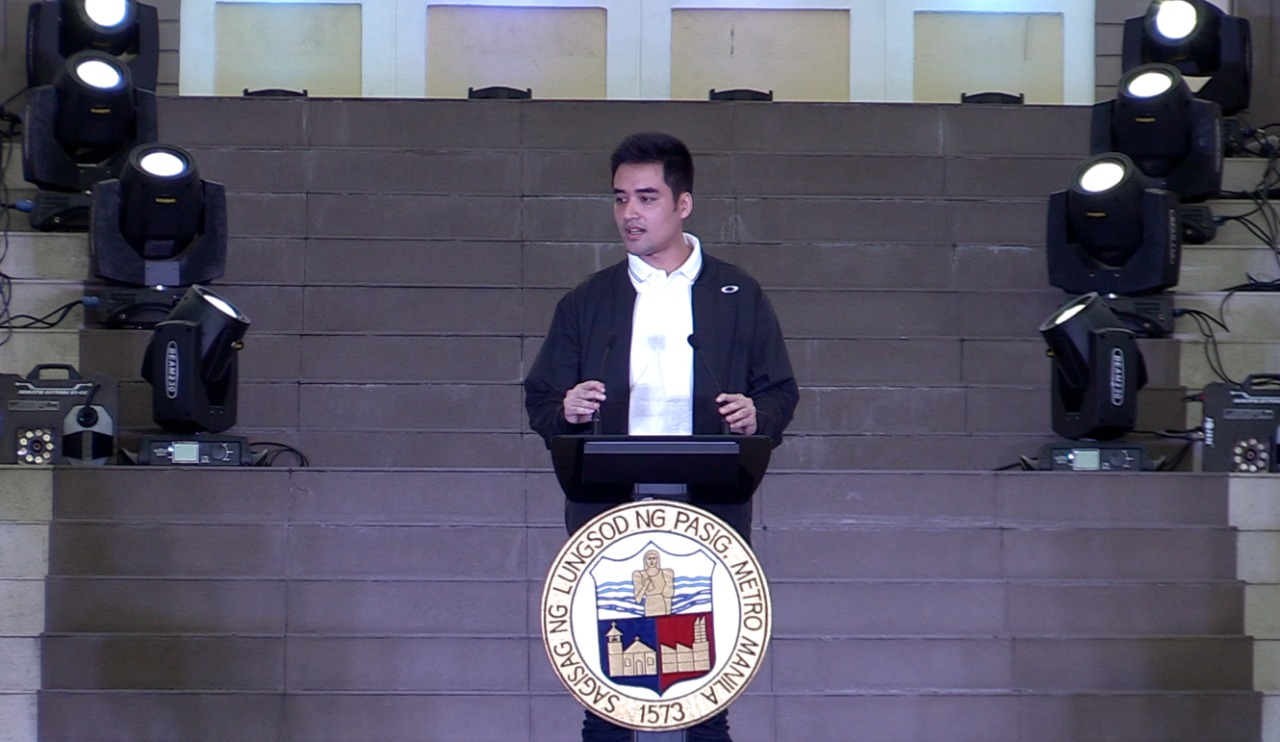
I am not ashamed to say that I admire our Pasig City Major Vico Sotto. Ask any of Pasig’s residents; they will attest that he is a Leader with a heart. Mayor Vico is a walking, talking example of a true Servant Leader. A Leader with a big heart to serve his followers.
Leg 2: The Mind of a Leader
Servant leadership has a cerebral aspect to it. A great leader can craft a clear, concise vision that is bigger than the company they lead. They draw an image that paints a picture of a better society. The company they are responsible for is only a player in the mission for this greater good.
In this mission, the Servant leaders identify the values their employees need to exhibit. The leadership of the company then exemplifies these values. These values are part of the screening process for new hires. These values are part of the leadership appraisal process.
Servant Leaders are clear about their purpose, their reason for being. They embrace their purpose and live up to it. They also understand that employees also have a reason for being.
Leg 3: The Behavior of a Leader
Psychological safety is a significant concern of a Servant leader. They understand that their behavior affects the way people behave. Establishing psychological safety in the workplace encourages others to voice out their ideas. People are not afraid to make a mistake. Employees have the confidence to debate topics with higher-ups without fear of reprisal.
It does not matter what a leader says; it’s his behavior that counts. You hear stories of leaders saying that their people are their most important asset yet fail to behave accordingly. When times get tough, the first budget they cut is the training budget. Stories about loyal employees devoting years of their life to the company but not recognized or rewarded are commonplace. Instead, it’s the employees that suck up to management that climbs the corporate ladder.
Servant leaders spend 80% of their time developing people, selecting the right people, providing constructive feedback. They don’t spend 80% of their time criticizing their staff, micromanaging their leaders. They don’t bring down people; they bring out the best in them. Servant leaders do not pass or fail people. Servant leaders help people excel.
Servant leaders understand that they cannot build great companies on their own. It’s arrogance for a leader to say he drove a company to success. A great leader develops great people. It’s great people that build great companies.
Leg 4: The Habits of a Leader
Servant leaders make a consistent, courageous decision. They have the habit of sticking to what’s right and not what’s popular. A Servant leader has formed the correct habits from the first three legs. They don’t have to think about being empathetic or not; They are automatically empathetic. It’s second nature to them.
It is typical for them to ask questions when they do not understand something. They don’t have to hesitate for fear of looking fooling. Servant leaders are fueled with humility day-in, day-out.
Servant leaders are the same at home, in the office, with friends, with strangers. They are genuine. Their values do not change even in the heat of problems. The Vision of a Servant Leader is always top of mind.
A Servant leader’s gaze is always on the greater good. They are reliable. They are consistent.
This is a prelude article to a four-part series I will be writing. The next article will be called ‘The four building blocks of servant leadership.’ Before we dive into the four building blocks of servant leadership let us first talk about the stages of growth. It is a simple framework I learned after working with a McKinsey consultant a few years ago.
In a nutshell, when we learn something new, we have to go through four basic steps or stages. The first two stages fall under the responsibility of the person teaching us. The last two stages are our accountability.
The first stage is when we are ‘unconsciously unskilled’ of the new competency we are learning. For example, we are learning how to drive for the very first time. As you enter the vehicle with your instructor, you don’t know what you don’t know. Also, you do not possess the necessary driving skills at this point.
In the second stage, we become ‘consciously unskilled’ of driving. We start to learn the fundamentals of driving. We learn how to start the engine, safely change lanes, keep our distance from the car in front of us, park, and so on. We are now knowledgeable of what it takes to drive safely. However, we are not yet skilled drivers. This is where the responsibility of the teacher ends. From here onward, the student is now accountable for the next two stages.
The student now makes a choice or a mind-shift. The student makes a decision to practice the skill or forget about it. This is the same case in mentoring. Students can learn what it needs to be a great and effective leader or they just don’t bother. Dave Jones, my former direct manager, used to say ‘you can lead a horse to water but you cannot force it to drink.’
The choice to practice the knowledge acquired helps the student develop the new skill. Thus, the third step. The student is now ‘consciously skilled.’ The student has driving know-how and made the choice to hone the skill through practice.
One day the student will reach the final stage ‘unconsciously skilled.’ He no longer has to think about the skill. It has become muscle memory. It’s the same again in leadership development.
For instance, great leaders are great listeners. In the beginning, the leader would have to consciously keep his opinion to himself and let the people in the room share their thoughts. It is always good practice for the highest-ranking person in the room to speak last. This is contrary to a leader’s instinct. They are usually in a hurry to discuss or resolve the issue at hand. They are the first to speak. When this happens, most of the people will either agree with the leader or just keep their opinions to themselves. This is definitely not a collaborative or healthy environment.
I had the privilege to work with a great leader that allows the people in the room to voice their opinions first. Faisal Sakkaf showed everyone that their view is welcomed and respected. Speaking last also gave Faisal the opportunity to hear a possible gem or two from the group. Possibly, there is an idea that comes out of the discussion that is better than his original view. He can then recalibrate his views as the discussion ensues.
Think back about leadership lessons you learned or read about in the past. How far in, the four stages, did you bring the skill? Were you persistent enough to push it through the third and fourth stages?
If you do not have a properly communicated clear vision, then what do you have? How do you lead others without a vision. A secret vision does not count. A vision that stays in the executive boardroom does not mean a thing.
A vision crafted for hanging on hallways and staircases does not count. Those are simply. decors. These are visions so generic they might as well be drafted by a grade school student. Wait, maybe a grade school student can articulate it better. A seventh-grade student must be able to comprehend your vision. If they cannot, then it’s just a show of your range of vocabulary. A true vision is clear, self-explanatory, easily understood, easily recalled, and compelling.
A true vision is never self-serving. A true vision is written for the greater good of society. The company merely works to help achieve that greater good. That’s their mission. Disney’s vision ‘To make people happy’ is meant for the greater good of people outside the company. It’s not to be the biggest, the brightest, the grandest. Such vision statements are self-serving. Such vision is driven by the pride of its leadership. There is humility in a true vision statement.
“To create a better every day life for the many people.” is Ikeas vision. They did not write to be the biggest furniture company in the world. It was bout about themselves. Other companies can participate in the vision “to create a better every day life for the many people.” Ikea sees itself as a company that has joined the movement.
“Empower every person and every organization on the planet to achieve more.” is Microsoft’s vision. Similar to Ikea, the vision has is not about the company. It’s about helping others to achieve more. They are participants in a movement.
The list goes on. None of these visions is self-serving. “Bring inspiration and innovation to every athlete in the world.” Nike. “To accelerate the world’s transition to sustainable energy.” Tesla “To be a company that inspires and fulfills your curiosity.” Sony “To give people the power to share and make the world more open and connected.” Facebook “A just world without poverty.” Oxfam
A true vision drives employees to the greater good. A true vision helps employees understand why and how their work matters. They are able to connect their work to the greater good.
Going to work for companies like these give meaning to an employee’s life. They are proud to work for these companies. There is a sense of fulfillment, a sense of purpose. There is a sense of satisfaction.
I had the chance to work with many companies back in the Philippines. Many have visions that are mere words written on walls. There are companies that have no vision at all. Then, there are those whose vision is to be the biggest company in their industry. Such companies are driven purely by profits. They only care about their shareholders. These companies do not even invest in the development of their people. It was seen as an unnecessary cost.
You can tell if companies, like these, do not have a clear compelling vision. Ask their HR Manager about their attrition rates. They will have a higher than the normal number of people leaving the company than industry standards.
You cannot blame the employees for leaving. Who would want to work for a company whose sole focus is raising shareholder value? If you are not a shareholder then why should that matter to you? Leaders often forget that it’s great people that build great companies. However, great people are drawn by great vision. Teamwork is harnessed by a great vision. They are driven by a worthy purpose.
What is your vision? Is your vision written for the greater good? Is your vision easy to recall? Is your vision easy to understand? If your vision compelling?
“Success is indeed a team sport. Failure, you can pretty much do it on your own.” as one of my favorite quotations goes. Great Leaders know this by heart more than mediocre ones.
Yes, a leader sometimes claims that the success of the company was from their leadership. Yes, there may be merit in some of this. However, they cannot steer a company to succeed without a crew to support them. Even their executive assistant helps in this quest. A good EA would be guarding the time of the leader with tenacity. They make sure that the leader maximizes the use of their time. They keep out distractions and time-wasting people.
You would need a great marketing team to execute your vision and brand message. A good finance team helps manage funds in good times and bad. A good sales team brings in revenue to fuel growth. Even the driver plays a key role. He ensures you arrive safely at your meetings on time.
The biggest lie about success is the self-proclaimed self-made millionaires. There is no such thing as a self-made man or woman. We are social beings, and we need people around us. We need people to support our goals. We need people to rally behind us.
Another danger of self-professed self-made people is the outcome of their retirement. Through the years, they lead from a center of power. The center being themselves. The company is likely to collapse after they leave. A void will be left behind. No one was groomed to take over the helm.
Great leaders, on the other hand, understand that business is a long game. They look at business far beyond their tenure in the company. Japanese businessmen have this view of their companies. They understand that not taking the time to develop other leaders in the organization will have a detrimental effect when they leave.
Great leaders understand that there are no real winners or losers in the business. Companies are either ahead or behind in the long game. New players will come join the game. Other companies may leave the game. Even the most established companies fall behind without good leadership. Take IBM, once an unstoppable force in front of the pack, whose leader turned arrogant. Today they are behind in their game.
Great leaders like Bill Gates early in his career made sure that employee and leadership development is at the core of their business. I had the opportunity to work with managers of Microsoft Middle-East. It was fascinating to know that they even have metrics on learning. Knowledge sharing was also part of the culture. Team members need to write a ‘white paper’ of projects they complete and share it in a central knowledge base repository.
Contrary to the claims of some leaders, leaders don’t build great companies. I beg to disagree. If you observe companies that have succeeded through generations of leadership succession, they had one very important thing going for them. They understand that great leaders develop great people. Great people build great companies. There is no other way to truly thrive in the long game of what we call ‘business.’
One, of many admirable traits of our Pasig City Mayor, is that he is not afraid to go against traditional political decision-making. Mayor Vico Sotto dares to push through on decisions that he feels are for the good of his Pasiguenos.
There were instances where he was criticized for his stand. He was criticized for being the first City to implement the Universal Healthcare law. Many of his peers were afraid of the repercussions of supporting such a law. All his colleagues are still undecided or are against the law. Mayor Vico pushed through for Pasig City. He is working to make medical services affordable for Pasiguenos.
He also aligned the City budget to accommodate a record 13,000 scholars. He required traffic enforcers to attend professional development programs. He is fighting to clean the deeply rooted corruption in the local government.
The City of Pasig was popular for its corruption. You can trace this back to the previous leadership. Corruption was instituted as a family business by the previous city Mayor. Mayor Vico dared to run against a 27-year political dynasty.
Leaders must choose between what is right and what is popular. Leaders must choose between what is legal and what is ethical. Leaders must choose between personal gain and service to others. Leaders must choose between short-term gains and long-term benefits. Leaders must choose between pushing their ideas and listening to others. Leaders much choose between dictatorship and meritocracy. Leaders must choose between talking and listening to others. Leaders must choose between ego and humility.
We all know what good leaders need to chose. However, decisions are difficult to make most of the time. However, leaders are placed in a position of influence to make those tough decisions. Leaders are placed in their position to make the right decisions.
The decisions they make will establish the legacy they leave behind. The decisions they make will clarify how people will see them. The people they are leading will see them as servant leaders or not.
It is not up to the leaders to say that they made the correct decisions or not. It’s the people around them that make that judgment.
It takes courage to do the right thing. When you do the right thing, it inspires others to do the right thing. It’s hard to stand up against outside pressures, from internal politics. You can get in trouble. It takes relationships we foster that give us the courage to do the right thing. Courage is external and comes from the support we feel from others. Courage sparks courage.
Finding your purpose is one module in my workshop that provides a deep insight for the participants. For most, it is similar to a “wow” moment. A moment of realization. Most of us know we have a purpose. But, we cannot articulate it. We have a feeling of what it is. We just cannot put it down into words.
So here, I wrote an article on how to identify and live your purpose. I hope you find this useful.
Step 1. Identify your purpose.
“And we know that for those who love God all things work together for good, for those who are called according to his purpose.” Romans 8:28
Every single one of us has a purpose in life. We exist for a reason. We are not born to wander around aimlessly. Knowing our purpose gives us a reason for being, a reason to wake up in the morning energized. Knowing our purpose helps us make decisions. Knowing our purpose helps us prioritize our life. The problem is that most of us do not know our purpose in life.
We cannot live a life of purpose if we do not know what our purpose for existence is. If you are interested in knowing your purpose in life, let me walk you through a few steps that will help crystallize it.
Get a blank piece of paper and a pen. You may also use the digital pad that comes with your smartphone.
Activity 1:
Think back in your life and come up with three happy moments. Moments that you will never forget. Moments that put a smile on your face as you recall it. Write these three events down on your piece of paper or smartphone.
You can refer to the template below:
Activity 2:
Read your three stories carefully and choose the best one. The one event that tops the other two. Cross out the other two from your list.
Activity 3:
Think of 3-5 nouns that best describes that moment. You can refer to the list of nouns below for assistance. You can come up with nouns that are not listed.
Activity 4:
Think of 3-5 verbs that best describes that moment. You can refer to the list of verbs below for assistance. You can come up with verbs that are not listed.
Activity 5:
Narrow your noun selection and chose two. Cross out the rest.
Activity 6:
Narrow your verb selection and chose two. Cross out the rest.
Activity 7:
Carefully look at the two sets of verbs and nouns. See which combination of one verb (first) and one noun (second) best resonates with you. A verb+noun combination you can connect with. I was able to articulate mine three years ago. It is Igniting Potentials. When I look back on my life, I notice that I always feel energized running workshops, having talks, and coaching. I believe that we all have great potentials. It is just that we sometimes need help to bring them out and nurture them.
Activity 8:
On a scale of 1-10, with one being the lowest and ten the highest, how does your purpose score? If your score is lower than eight, then keep tuning it. An accurate purpose statement needs to score anywhere from 8 to 10. An accurate purpose statement should give you the chills and excite you.
Step 2. Craft a concise Just Cause or Vision
“Where there is no vision, the people perish” Proverbs 29:18
I discovered the best way to craft a just cause or a compelling vision from Simon Sinek’s book “The Infinite Game”. Allow me to share it..
Everyone has a vision or a mission statement. But we lack a standard definition of those terms, using the same words in different ways. This leads to more confusion than cohesion, both internally with our people and externally with our stakeholders.
So let’s throw out the words and start over. Words must be simple to be understandable. They must be understood to be repeatable. And if they are repeatable then they will spread.
In our founder Simon Sinek’s upcoming book, The Infinite Game, we put forward a new term: advancing a Just Cause.
A Just Cause is linked to our WHY, our noble purpose for being. Our WHY comes from our past—it is our origin story and it is who we are. Our Just Cause is our WHY projected into the future. It describes a future state in which our WHY has been realized. It is a forward-looking statement that is so inspiring and compelling that people are willing to sacrifice to see that vision advanced.
There are five criteria to have a Just Cause. It must be 1) for something, 2) inclusive, 3) service-oriented, 4) resilient, and 5) idealistic.
For Something
It serves as a positive and specific vision of the future.
While being against something may be effective in rallying people, it doesn’t inspire and it won’t last. A Just Cause is what you stand for rather than what you stand against.
Inclusive
It is open to all those who wish to contribute.
A Just Cause attracts people from diverse skillsets. Too often visions and missions are tied to a specific product or activity. If your stated purpose is about technology or sales, for example, then it is mostly designed for engineers or salespeople. Everyone else who is not an engineer or salesperson may feel like or even be treated as, second-class citizens. A Just Cause inspires all to make their worthwhile contributions and feel valued for it.
Service-Oriented
The primary benefit of the cause has to go to those other than you, the contributors.
For example, if you go to your boss for career advice, the expectation is that the advice you receive will benefit your career. If your boss gives you advice that benefits their self-interests, they are not service-oriented. This extends to organizations, leaders, and investors. The products and services an organization develops must be designed to primarily benefit their customers, not the company itself. If you are a leader, your leadership has to benefit the people in your span of care. And, if you are an investor, the investments you make have to benefit the company with which you are investing. Of course, you can expect a return on your investment, but it must be of secondary benefit. The primary benefactor of the investment is the recipient, not the investor.
Resilient
Be able to endure political, technological, and cultural change.
Again, if you define your Just Cause based upon the prevalence of particular technology or a specific product and there is a market change, your Just Cause will not last.
Idealistic
Big, bold, and ultimately unachievable.
It’s not about becoming the biggest, the best, or number one. It’s not about reaching some arbitrary revenue target, even if it is huge. It is about pursuing something infinite—for all intents and purposes, you will not ever attain it. It is, indeed, a vision and not a goal. And as you make progress toward that better future state you imagine, you will be able to feel and measure your momentum. A Just Cause is an ideal. It is something so noble that we would be willing to devote our lives and careers toward advancing it. And, when our careers are over, the Just Cause can live on and serve to inspire further progress; that can be our legacy.
Most people and organizations do not write good vision or mission statements, not because they are bad people, but because we do not yet have a standard definition or guidelines. We are hoping that this framework helps you cast a Just Cause that inspires people for the long run. And, remember, it is the leader’s job to ensure people feel a part of something—not that they simply have a part in something. Inspire your people, and they will inspire you.
“For to everyone who has will more be given, and he will have an abundance. But from the one who has not, even what he has will be taken away. “Matthew 25:29
We all have strengths and areas for improvement. There are two actions that we need to take for both. Strengths are skills or competencies that come naturally. Are you good at solving problems? Are you good at speaking in front of dozens of people? Are you good at remembering things? Are you good at building something?
If you did not have to worry about money, what positive things would you be doing? What strengths will you be using?
List these down. The objective with strengths is to keep improving them. If you are good at writing, then continue building that skill. If you are good at public speaking then continue studying the skill and keep practicing it. If you are good at problem-solving then keep looking for problems to solve.
On the flip side, what skills do you need to improve on? We are all born with areas for improvement just like we are born with strengths. Improving our areas for improvement has a limit. Areas of improvement can seldom turn into a massive strength. There are two approaches you can take to address them.
If the area for improvement does not hinder your purpose and your Just Cause, you can probably set it aside for now.
If the area for improvement is important for your purpose or just cause, you need to develop it to the best of your ability. You can then augment it. You can partner with someone who happens to have your area for improvement as their strength. If you’re not good at finance, try to understand the basics then get someone good at it. We are not perfect human beings that can be good at everything. There is no such thing. Having the humility to embrace both strengths and weakness is at the core of what makes leaders great.
Step 4. Seek the best use of time
“Look carefully then how you walk, not as unwise but as wise, making the best use of the time because the days are evil. Therefore do not be foolish, but understand what the will of the Lord is.” Ephesians 5:15-17
Looking busy does not mean you are busy and productive. Not every meeting needs to be attended. Not every task needs to be personally completed.
There is a simple check when you are doing your day-to-day work. Always ask yourself ‘Is this the best use of my time?’ Of course, you need to qualify that question. Is this the best use of my time concerning my purpose and just cause? If the answer is yes then proceed. If no, then find a better use of your time.
The enemy of productive life is saying ‘yes to everything. Not everything is important. Knowing your purpose and your just cause will help you filter the tasks you need to do. It clears out all the unnecessary weeds in your task list.
Step 5. Focus on Results
“For I know the plans I have for you,” declares the LORD, “plans to prosper you and not to harm you, plans to give you hope and a future.” Jeremiah 29:11
I had an interesting staff back when I was the head of the IT Support function for a local bank. Every time I asked him the status of the Domain server upgrade project assigned to him, he would always reply with the steps he is taking. He replied that he is currently reading the relevant technical books, the upgrade software CD he requested from Microsoft, the hardware upgrade he requested from purchasing, and so on. He would always show the effort he was putting into the project. He was so focused on his effort.
At the end of the day, it is about results. Was the domain server upgraded? Yes or no? However, this particular employee was more focused on the effort he needs to put in. This is not a special case. I have worked with employees and managers alike with the same thinking.
This is an all too common response in todays corporate world. People would defend their lack of progress by pointing to their efforts. Employees hiding behind the number of hours they spent working on a task. The people that move ahead of others are the ones focusing on results. They understand that it’s the result that counts.
Successful leaders focus on results. For instance, creating a work environment that fosters psychological safety results in a more cohesive team. This results in team members having the courage to try new things. This results in employees having each other’s backs. They know that their colleagues will not backstab them. They know that their leaders have their backs.
Keep your eye on the results of your effort when living your purpose. Feel free to adjust your plans and actions depending on the result (or lack of) of your actions. Review your results given your purpose and just cause.
Thank you.
Stay safe,
Jordan Imutan www.servantleadersph.com Let us build a Nation of Servant Leaders from all walks of life. +63.917.518-3554
“Do you ever win in marriage? Do you win in parenting? Do you win in life? Do you win in business?” asked Simon Sinek in his book The Infinite Game.
Simon is one of the best Leadership gurus out there. He provides an interesting framework. I thought about it and how it applies to life. It is true that you never really win in marriage or business. Yet, most of us go through life as if there are winners and losers. We see life through the lens of winning or losing. We look at our careers and leadership approach in the same manner. We look at business in the same way.
A majority of businesses have a short game mindset. The majority of the companies view performance in terms of quarterly earnings. Leaders look at a business from an annual revenue perspective. Leaders sacrifice long term gains for short term benefits.
Great leaders on the other hand look at the business from a long game point of view. They look at their business way beyond their tenure. The best companies plan and execute with the view of the next 20,30 or even 50 year. They build resilient companies.
If you think about business from a long game perspective, you will realize that there are no real winners and losers. What we have are companies that are ahead or behind others.
Companies claim that they want to the biggest in their industry. Okay, the biggest according to what set of metrics? Do all companies in the industry subscribe to the same metric? Even if they do, when a company wins then what’s next?
Maintaining the number one position is harder than reaching it. New players will always come around to dislodge these short game minded corporations. Netflix dislodge giant Blockbusters. Amazon dislodged the biggest brick and mortar bookstores. There are no real winners in business.
New companies can come into the game to play. Companies that run out of resources and willingness to play drop out of the game. The game will continue regardless of who’s playing.
Playing the long game provides leaders a better perspective. Leaders can plan for the long game while playing the short game. The short game is played only to understand your journey in the long game. They provide leaders with speed and distance traveled.
Great leaders go after a cause bigger than their company. A cause that is so profound that there are other companies and leaders rallying behind it. Leaders that look at the long game makes sure that their company survives long after they retire. They do not build a company culture around them and their personality. They create a culture that develops other leaders that will continue to grow their business. A culture of collaboration and teamwork. A culture of service and trust.
Life is the same. We don’t win in life. We join the living. While we are at it, we should be doing our best to play our long game until we die. We play the short game by establishing personal goals and try meeting them. Goals that are carefully crafted to help a cause bigger than our life. A cause that benefits others and not ourselves.
When we pass away, life goes on. It’s better to live life with the view of the long game. A view beyond our brief years of existence. A view of building a legacy that will continue beyond our lifetime. A life of service to our families, love ones, colleagues, customers, and others.
How would you want to be remembered? Have you made a positive impact on your family well beyond your stay on earth? Have you made a positive impact on the people you encountered in life? Did you use your life in service of others?
Stay safe, Jordan Imutan
Let’s build a Nation of Servant Leaders from all walks of life.
Hundreds of work environments are what the millennials call “toxic”. It has been baffling me for over twenty years. I have experienced this personally as I consulted with several companies. Of course, these come in varying degrees of toxicity depending on the leadership of the function. Depending on where it starts, the toxicity can cover the entire company or just an isolated department.
I spent a few days thinking about this topic. I came up with at least five pitfalls that result from a toxic work environment. This article is not to blame the source of the toxicity. Chances are, most leaders are not aware of the culture they are creating. Of course, there are a few of them that are aware but don’t care. These leaders are driven by numbers no matter what the cost. They want to shine in front of their superiors.
Most of the time employees are placed in a position of leadership but are not properly equipped. It’s like promoting your best salesperson to be a sales manager. A few months into the job, he starts failing to be a good manager. A few months later, we start criticizing him for not being a good manager. A year later, he quits.
We failed to provide him the tool to be a great leader. We lost a good salesman, and we damaged the position of the sales manager. If we do not learn from our mistakes then we are bound to repeat them. We will continue promoting people to leadership roles and not equip them. We may get a few naturally talented leaders now and then. However, in most cases, they will not know how to lead their team. They do not know what they do not know.
The following are potential results of a toxic work environment.
Fearful employees instead of respectful team members
We create a work environment driven by fear. It’s not a healthy and sustainable environment. Leaders need to earn respect. Employees that respect their leaders would do anything for the company even without being asked.
There was an instance years ago when this particular company had a demanding CFO. He would shout and embarrass his staff resulting in a very high department turnover. He would go further and demean employees from other departments. He acted like he was higher than the CEO. He acted like he had power across the entire organization.
One day, an employee from another department was walking into their gorgeous office in BGC. As she usually does, she had her bag in her left hand, and the other hand was holding her favorite coffee tumbler.
That day would be different from the previous days she reported to work. As she walked past the main entrance to the office, the CFO met her in the hallway. On each side of the hallway were cubicles of employees. They had an open space set-up.
Even before she could greet him with a gentle ‘good morning’, the CFO shouted at the top of his voice. They were earshot of every single one of the eighty-four employees. The CFO was blaming her for an inaccurate report submitted to their regional office. The employee stood in shock as the CFO continued to verbally attack her. The CFO even went to the extent of attacking her character. A few minutes after the unrelenting attack, the CFO left and stormed into his office.
The office staff rushed over and tried to console the victimized employee. She was devastated and embarrassed. She was in tears. A few minutes later, they all realized that she was in shock and could not move. They called the office nurse to take a look at her. The office nurse accompanied her to a nearby hospital. She was in such a shock that the hospital nurse had to gently pry off her fingers from the tumbler she was holding.
The next day, the truth came out. She was not at fault for the report. She was blamed unfairly and humiliated. As we expected, she resigned after a few days.
2. Employees feel like they toil instead of enjoying their work
I worked briefly for the IT function of a manufacturer of local electric fans early in my career. I was still very new in the field at the time. At first, I did not notice that most of the employees were waiting for 5 pm and salary days. It went on every single working day.
One day, over lunch, I got into talking with a Systems Analyst that joined the company a year before I did. I was less than three months at the time. I was still all fired up to work. Joel, the systems analyst, seemed happier on break times than on his actual working hours. It was common in most of the other departments.
I asked him how his work was. He said that it was okay and it pays for the bills. That sentence got stuck in my mind for a few months. As time went by, I started to understand why Joel said what he said.
Managerial positions went to employees favored by the executives. The people they promoted were not great leaders. They were just great at sucking up to the executives. A few were placed in management roles based on their relationship. If they had the skills of a good leader, that would not have been too bad.
Since these leaders did not get their posts because of their leadership skills, they imitated what they saw from other leaders going up the ladder. They also placed people they favored into management positions. The cycle never ends. It’s the employees that suffer because the senior executives did not correctly select nor train their leaders.
It’s the employees that suffer due to poor leadership. At the end of the day, they feel that their work is simply a toil they have to get through. Employees were not trained. Training was viewed as an optional expense. Employees felt no sense of purpose nor fulfillment. The attrition rate was about 70% a year.
3. Employees are lost instead of driven by a Vision
People need a purpose to drive them. They need a vision to rally behind. In the absence of purpose, the job just seems like another boring job. Employees do not feel that their job is a means to a greater good. They do not feel that their job is helping the company reach its Vision. There is simply no purpose for their job and the company.
There is this family-owned retail company I know of that has a vague Vision. The business was started as an idea by the founder and gradually grew to a reasonable size. However, as it kept growing, the attrition rate was holding steady at a high percentage.
When you ask them about their vision, it’s to be the biggest company in their industry. That’s it. It’s not even a unique and compelling vision. For one, it’s self-serving. Visions are bigger than the company. Visions are designed for the greater good. The company only plays a role in achieving that greater good.
Since their vision is self-serving, the employees could care less about the Vision. They would quietly say, it’s not their company anyway. They cannot link their personal purpose to the vision of the company. Often, they would say, ‘So what if the company is growing. Only the owners are benefiting’ The Vision has no meaning to them. The company might as well not have a vision statement.
4. Compliance instead of loyalty
I had the opportunity to become the Quality Manager for a Bank. One of the functions of the Quality Manager is to audit functions and employees. Together with a team of five other process auditors, we would schedule the audit of various functions of the Bank.
It was interesting to note that employees comply with company processes not because they know it’s the right thing to do. They would comply simply because the company expects them to. Their leaders remind them to comply with policies.
Their leaders do not take the time to explain that adhering to the policies benefits them and the customers. The policy is there to protect them. The policy is showing them the boundaries that should not be crossed. It’s much easier for an untrained leader to just bark ‘follow the rules or else.’
What they don’t realize is that loyal employees will not intentionally break policies. They know it’s for their protection and the customers. They don’t break or bend policies out of loyalty to the organization.
5. Selfishness instead of teamwork
Back when I was in the IT field for a large bank, I was assigned to an important project. We were in charge of migrating the Bank systems at the branches. We can only do this after banking hours. Since branches cannot go down during working hours, we need to plan this well. The hardware and software were delivered to the branch in the late afternoon. We would unpack them and remove all existing hardware.
Our team then positions the new hardware, test runs the new Banking system, connects to the mainframe at head office, and tests everything. After the hardware is ready, a second-team comes in to train the users.
By midnight, when everything was re-tested, we would pack up the old hardware. We label them properly and send them to our warehouse for storage.
We were converting 4–5 branches a night every night for the next few months. This was hard work. The coordination needs to be impeccable.
Right after the last branch was migrated, the team took a rest and reported to work around noontime the following day. As we reported to work, our Division head congratulated us. One of our team members decided to report to work early. He personally reported the accomplishment to our VP. The interesting part was that he exaggerated his contribution to the project. Since there was nobody else in the room with him, nobody corrected his story.
Throughout the project, this particular team member had the least contribution. He would not deliver his tasks and we ended up reassigning them to someone else. He was simply a bystander. However, he was smart and quick enough to take more credit than was due to him.
It’s unfortunate that in those days, our leaders only listened to the first messenger of the news. They had not given enough thought and insight to what he heard. The VP did not bother to validate the story. As expected, this demotivated the people who worked hard for the project. Credit was sucked by someone else simply because he could get away with it. Our VP, not knowing better, allowed him to get away with it.
Let’s not allow ‘toxic’ work environments to kill the motivation and drive of our loyal employees. Let’s make sure we develop the people we put in leadership roles. Let’s make sure that they understand that true leadership is not about lording others. True leadership is about leading, serving, and developing our people. We need to provide them the tools necessary to grow the business and service our customers.
Going back to our cause. Let us build a nation of servant leaders from all walks of life. If we can accomplish this then our companies, our organizations, our society, our government would be in better hands.
Stay safe,
Jordan Imutan “Let us build a Nation of Servant Leaders from all walks of life.” www.servantleadersph.com jordan@imutan.com +63.917.5183554
Leaders help build confidence. They do not just demand it.
Corporate life is a team sport. As a team sport, we need to trust one another. We need to be able to sleep at night knowing that someone has our back. We are not worried that someone from the team will stab you in the back. We are not concerned that a team member will sneak into the office of an executive and bad-mouth you. We are not worried that the friend you have lunch with will not run over to the boss to announce a completed project and take the credit from you.
Team members, from any sport, need to be able to trust each other completely. They should also be able to help out each other when needed. Having the confidence that the team will help you when times get rough is so amazing. You also know that when you struggle, your colleagues will not throw you under the bus. It goes both ways. There is great satisfaction in helping others in the team.
However, you cannot lend a helping hand if you do not have the confidence to help. You cannot help others if you are uncertain about your skills and knowledge. You cannot fake confidence. You will find it hard to reach out if you are not confident that you can pull your team member to safety.
It is the responsibility of our leadership to make sure that our teams are confident about themselves and their abilities. How can leaders help build their team’s confidence? Leaders need to invest in developing their team members’ competencies.
Good leadership sets up development programs for their team. They make sure that their team’s skills are regularly honed. An extra step that good leadership takes is systematically mentoring the future leaders of the company. They don’t leave the mentorship to chance. It is not only done as a reflex or as needed. Mentoring is not just lip service. They have a clear leadership development goal for each high potential they have under their wing.
It will result in a combination of structured and unstructured approaches to their mentee’s leadership development. Structured, meaning they have a specific competency goal to achieve. This goal is supported by a clear development program and review mechanism. Unstructured, meaning they provide carefully crafted feedback as needed. This productive feedback is discussed on a personal basis. New assignments given to these high potential mentees are also supported by a development program. Leaders provide resources for the learning curve.
I had a senior manager in Far East Bank from my previous career that practiced this approach. Every time one of his direct reports got a new assignment, Mr. Rick San Juan would assign them two tasks.
The first task is an eight-week technical learning program. This allowed his direct report to understand the processes of the new function. They were also able to understand the current situation of the department.
The second task, parallel to the first one, is an eight-week coaching program with him. He would set a fixed date/time for 90 minutes a week every week. This would go on for the next eight weeks. At the end of the eight weeks, his direct reports are confident and able to perform their new assignment.
Only when employees are confident about their skills will they be able to voluntarily reach out to struggling team members. They also understand their capabilities and limitations. Their self-confidence is so high that they are not bothered when they seek help.
Only when you have a group of people bonding together as a team and glued by self-confidence will they perform at higher levels of performance.
My knowledge of the world and life has gradually changed. The world as I saw it in my 20’s, 30’s, 40’s are now more insightful. Growing up was not a walk in the park for me. Dozens of curveballs were thrown my way and I did not even have a proper glove to catch them.
This second lock-down has given me time to assess how I view life. I wrote down the lessons I learned along the way. I hope that these lessons are similar to yours if you are around my age. I hope that these lessons help the millennial readers in their quest for a meaningful life. I hope that my children also benefit from this and recalibrate the way they live their life.
The following lessons are not listed in any particular order.
1. Opportunities come from God through the people around you. Growing up without a proper college degree was a challenge only to a certain degree. As I look back, a pattern emerges as I assessed the opportunities that opened up on my road to maturity.
When my dad left us and my mom kicked me out of our home at 18, it was a friend who took me in at 2 am. It was not easy for my friend to convince his controller father. Butch had to plead with his father to allow me to stay with them even for just a short while.
A few months later, a generous lawyer by the name of Atty. Antonio V. Agcaoili created a job for me even if he did not have an opening in his prestigious law firm. Atty. Agcaoili paid me to photocopy legal documents for the other lawyers in his firm. There was no job opening since it was the lawyer’s secretary’s job to do the copying. Atty. Agcaoili graciously created a job for someone he just met.
Years later, working for a Bank abroad, I was regularly promoted to a position where I did not know anything about. My direct manager and COO David Jones would always say I can always learn the technicalities of the work. He also gave me the time and resources to learn the ropes of my new role. He personally walked me through the major processes of the new function I am managing. He also advised me whom to reach out to for more technical details.
The CEO of a diversified retail company in the country gave me the opportunity to do my training and consulting work for one of his companies after meeting him twice. He is a remarkable Christian who grew his company from one to over a dozen businesses in less than 18 years.
There are still dozens of instances of opportunities presented by God through the people around me. The lesson? Be transparent and kind to the people around you. Who knows? They may be the source of your next opportunity.
2. Count your blessings. Growing up I was allergic to nay-sayers or negative-minded people. They would always rant and complain about life. If you ask them what they are doing about it, the answer is ‘nothing.’ Life is already very challenging for me growing up. I did not want to get burdened by the negative thinking of these people. As the saying goes misery loves company.
When faced with difficulties, we always have two choices. Do we complain about it? Do we count our blessings and take it that it’s another blessing in disguise?
We do not have full control over the events of our lives. However, we have full control of how we will respond to it.
3. Value true friends. I often hear others bragging that they have a lot of friends. It’s an interesting point of view. Do you really want to have a lot of friends? Do they really consider you as a friend? Friendship is an unwritten agreement from both parties to be there for each other through thick and thin.
I may not be as lucky as these people with lots of friends. In fact, I am lucky because I have a lot of acquaintances and a few really great friends. Friends that stick with me through the best and worst of times. Friends that I can count on. Friends drop by just to hand you a BFF Shake Shake fries from McDonald’s. Friends pray with you in times of challenges. Friends that laugh and have meals with you. Friends that reply to your messages.
For the rest. Well, they are acquaintances. Some of my good acquaintances show up now and then. Other acquaintances, you meet once and never see or hear from again.
4. Stay optimistic. Optimism is not the denial of reality. It is okay to acknowledge that times are hard. However, believe that the future will be better. Optimism is anchored in hope. Hope for a better future. Hope chosen over fear is optimism.
The source of hope is faith. It is our faith in our God that He will never forsake us.
Be optimistic regardless of your situation. Stay hopeful and have faith in God.
5. Always be kind. Huge egos and pride are the enemies of kindness. Sometimes, we allow our egos to get the better of us. Sometimes, in order for us to prove we are right, we run over others to prove they are wrong. At times, it’s even done publicly. In our quest to be right, the public has to see that someone else was wrong.
What we don’t see is the repercussion of our actions. The humiliated victim will start to fear expressing ideas and suggestions. They begin fearing the possibility of being publicly ridiculed for a question or a mistake. Respect is unfortunately replaced by fear.
Others who witnessed the event or even heard about it will start fearing for their reputations as well. After all, who wants to be at the center of a public verbal beating.
God has given us the ability to chose. Do we chose to be right and show others that someone else was wrong? Do we chose to be kind and possibly correct the situation in private. The correction can be done in a private setting. A gentle tone and a clear intention for development will go a long way. Respect is not replaced by fear. Actually, respect grows exponentially. Ideas are also shared more freely next time
Being kind is a choice.
6. Create memories. After hitting my 50’s I came to realize that as we grow older the memories I have become more important. Recalling them makes my heart smile.
When I see Facebook memories popping-up in my timeline, I recall the day the picture was taken. I get a sensation of what I felt that day. I get to go back in time, if only for a few seconds. A photo of my family in Thailand, a photo of my son taking up archery six years ago, a photo of my son dancing while eating his Ramen.
Sometimes, I get a LinkedIn message from colleagues in my past corporate life. They would reminisce about the old days when we worked together for the same department. When I see my photos in a suit with the other executives of NCB, it makes me recall my discomfort. I was never comfortable in a suit. I also got a bit nervous talking to our CEO and CFO in those days.
7. Share your story. Our lives are made up of stories. We are made up of good stories and the lessons we learned from not-so-good stories. It is in our DNA to share and listen to stories. Stories were the only way of passing on historical events and knowledge in the old days. This eventually became hardwired in us through the years.
It is our duty to share our stores with others. We need to pass on the lessons we learned so they would benefit from it as well. There is nothing more powerful than a lesson shared in the form of a story. Lessons that are embedded in a story have a tendency to stick. They are recalled even after years pass by.
I always make sure to wrap my workshop lessons in stories. The participants may not recall everything I talked about but they will definitely recall the stories.
Share your stories with your loved ones and your friends. That’s our simple way of leaving behind bits and pieces of our legacy.
8. Build up, people. It does not matter if you are a leader, a manager, a husband, wife, colleague, father, child. It is our duty to build up others. The wider our influence, the more meaningful this responsibility gets.
Going back to Atty. Agcaoili. I tried to look for him upon returning to the Philippines after working 20 years abroad. I searched for him on LinkedIn. I did not find him. I found his son Atty. Agcaoili Jr. instead. I copied the office phone number and called his son.
It was unfortunate that lung cancer has taken his Dad in his 50’s. I shared with his son what his dad has done for me. I told him that I was truly grateful for his father’s kindness. His father was instrumental in helping me build my life. Atty. Agcaoili Jr was thankful.
His son was surprised that hundreds of people called in or visited their office after his father died. Literally, hundreds of people owe his father a debt of gratitude for the kindness he extended to them. His father made sure to build up the lives of his employees. He even went to the extent of helping build up the lives of people outside the firm. That is a legacy that his family will always remember him for.
9. Ask questions if you don’t know the answer. A brief video clip of the famous author Simon Sinek was hilariously compelling. It’s titled ‘Be the idiot’. I recommend that you search and watch it on YouTube.
The lesson is that it’s okay not to know everything. It is okay to ask questions. It is okay to be an idiot. If people put you down for asking, do not mind them. You were silly only for 30 seconds. If you had not asked, you would have been silly for the rest of your life. You would not have known the answer to your question.
The former CEO of NCB hails from Harvard. He was the youngest CEO of the Bank. I was at a Microsoft presentation with him years ago. We also had several other Vice Presidents in the same room. Half an hour into the technical presentation of Microsoft executives, Abdulkarim our CEO, stood up. He politely asked a question to the Microsoft executive leading the presentation.
“What do you mean by Domain Server?” Abdulkarim asked. The Microsoft executive, sporting a blue suit, paused his slides. It took him a few seconds to process the question of our CEO. He then proceeded to explain what a Domain Server is in layman’s terms. As I glanced around the room, it was clear that most of the VP’s had the same question in mind. However, none of them took the risk of looking silly by asking a question. They all nodded throughout the presentation pretending they understood every single detail that came out of the presenter’s mouth.
After the workshop, I thanked Abdulkarim in private for asking the question. I mentioned that clearly, it was a question in everyone’s mind that nobody dared to ask.
Abdulkarim, in his steady slow voice, said that while he was studying at Harvard one thing he learned was that nobody knows everything. There was no shame in asking a question. Before you ask a question, you are silly for not knowing the answer. After you get the answer, you are not silly anymore. If you do not ask a question because your pride prohibits you then you are silly for the rest of your life.
Go ahead. Ask questions for things you don’t know. It does not matter what people think.
If you have questions regarding anything I shared here, go ahead and feel free to reach out to me.









 Too many companies have untrained leaders that fail.