
You hired smart people.
People who were good at their jobs. Reliable. Hardworking. The kind of employees you trust. So when you promoted them into management roles, it made sense.
And yet—something started to break.
Decisions slowed down. Problems kept getting escalated. Meetings became longer but less useful. And somehow, despite having more “leaders,” you ended up doing more of the thinking yourself.
Sound familiar?
Most companies assume this is a people problem.
“It’s a training issue.”
“They need more experience.”
“They’re just not ready.”
That’s the easy answer.
But it’s usually the wrong one.
Because what you’re seeing is not a leadership problem. It’s a system problem.
And until you fix the system, no amount of training will save you.
Let’s be honest.
Most managers are not trained to think.
They are trained to report.
From the start of their careers, employees are rewarded for accuracy, compliance, and execution. Do the task. Follow the process. Escalate issues.
So when they become managers, they don’t magically shift into decision-makers.
They carry the same behavior into a bigger role.
They report better.
They escalate faster.
They avoid risk more carefully.
And then leadership wonders why nothing moves unless they step in.
It’s not that your managers don’t want to lead.
They just don’t know how to operate differently.
Here’s where it gets uncomfortable.
If every decision still goes through you…
You are not just the leader.
You are the system.
And the system is telling your managers one clear message:
“Don’t decide. Just ask.”
So they do.
Every time they escalate, they are not being lazy.
They are being consistent with how the organization works.
This is why most leadership training fails.
You send your managers to a workshop.
They learn about delegation, communication, decision-making.
For a moment, everything looks promising.
Then they go back to work.
And nothing changes.
Because the environment they return to does not require them to apply what they learned.
No structure.
No reinforcement.
No expectation of changed behavior.
Just more slides. More notes. More “good insights.”
Training without application is just entertainment.
And companies spend thousands on it every year.
Now imagine a different approach.
Instead of focusing on what managers know, you focus on what managers do every day.
Small actions. Repeated daily.
Not a full-day training. Not a once-a-month seminar.
Short, focused leadership moments.
Clear expectations.
Immediate application.
Because leadership is not learned in theory.
It is built through repetition.
Think about it this way.
If you wanted someone to get physically stronger, would you send them to a one-day fitness seminar?
Of course not.
You’d have them exercise regularly.
Same principle.
Leadership is a muscle.
And most companies are trying to build it through lectures instead of practice.
This is where micro-learning changes the game.
Not because it’s trendy.
But because it matches how behavior actually changes.
Instead of overwhelming your managers with information, you give them small, focused lessons.
Every day.
Something they can apply immediately.
Something tied to real work.
For example:
Instead of teaching “decision-making frameworks” in theory…
You give them one simple rule for the day:
“If a problem comes to you, propose a solution before escalating.”
Now they have to think.
Now they have to engage.
Now they start building the habit.
Over time, these small shifts compound.
Managers begin to:
• Make decisions faster
• Take ownership of problems
• Communicate more clearly
• Reduce dependency on leadership
Not because they attended a seminar.
But because the system required them to behave differently.
And here’s the part most leaders miss.
You don’t need more training.
You need more application.
Because knowledge is not your bottleneck.
Behavior is.
If your managers are not stepping up, don’t ask:
“What else should we teach them?”
Ask instead:
“What in our system is preventing them from acting like leaders?”
That’s where the real work is.
Let’s make this practical.
If you want to start shifting your organization, begin with three simple changes:
1. Stop accepting problem-only escalations
If someone brings you an issue, ask:
“What do you recommend?”
This forces thinking.
At first, they’ll struggle. That’s normal.
Keep asking.
Consistency builds behavior.
2. Define what “good leadership” looks like daily
Not in theory. Not in values posters.
But in actions.
What should a manager do today that proves they are leading?
Make it clear. Make it visible.
3. Build repetition into the system
One lesson. One action. Every day.
Not optional.
Not “if they have time.”
Because if it’s optional, it won’t happen.
This is how real leadership development works.
Not through inspiration.
But through structure.
And here’s the truth most companies don’t want to hear:
Your organization is perfectly designed to produce the results you are getting.
If managers keep escalating…
If decisions are slow…
If you are the bottleneck…
That’s not accidental.
That’s the system working exactly as it was designed.
So you have a choice.
You can keep investing in more training, hoping something sticks.
Or you can redesign the system so leadership becomes unavoidable.
Because when the system changes…
Behavior follows.
And when behavior changes…
Results finally move.
So the next time you feel frustrated with your managers, pause for a second.
And ask yourself:
Are they really the problem…
or are they just responding exactly the way your system trained them to?
Related Reading: Systems Over Personalities
- Your Company Didn’t Miss Its Targets. It Followed Your Design. This article argues that every organization is perfectly designed to get the results it is currently achieving. When a company misses its targets, the natural reaction is to blame the people involved or look for individual failures. However, the author posits that the failure is usually a logical outcome of the existing workflows, incentives, and structures. To change the output, leaders must be willing to dismantle and redesign the underlying system rather than just pressuring the team. True progress comes from shifting the focus from “who failed” to “what in our design allowed this to happen.”
- Your Managers Aren’t Slow. They’re Waiting for Permission. Slow execution is often misdiagnosed as a lack of urgency or competence in middle management. This post explains that “slowness” is actually a rational survival strategy in systems where authority is vague or decisions are constantly second-guessed. When managers feel that taking initiative carries high personal risk but low systemic support, they learn that the safest move is to wait for a green light from the top. The author suggests that “speed” is a design outcome created by explicit authority and clear ownership.
- The “Invisible” CEO: Building a Startup Structure That Doesn’t Break When You Step Away Many leaders unintentionally become the ultimate bottleneck by acting as the “hero” who solves every problem. This article outlines the transition from being a problem solver to being a system architect. It emphasizes that solving a single problem only helps once, whereas designing a system to handle that category of problem helps the company forever. By creating accountability maps and clear processes, a leader ensures the organization functions autonomously.
- Why Everything Works—Until You’re Not Around If a business pauses or struggles the moment a leader steps away, it indicates a design problem rather than a people problem. This piece explores how work often depends on a leader’s personal memory and availability instead of documented rules and standards. The author challenges leaders to stop asking “Why do they need me?” and start asking “Why does this require me at all?” This mindset shift allows the system to remain resilient and steady even in the leader’s absence.
- Why Most Leadership Training Fails (and How Smart Leaders Quietly Fix It) This article critiques the common practice of treating leadership development as a one-off event rather than a systemic ecosystem. Training fails when it tries to change individual behavior without addressing the environment that those individuals operate within daily. Smart leaders focus on building “leadership-inevitable” cultures where the environment itself cultivates consistency and growth. The goal is to design a system where leading well is simply the default path of least resistance.



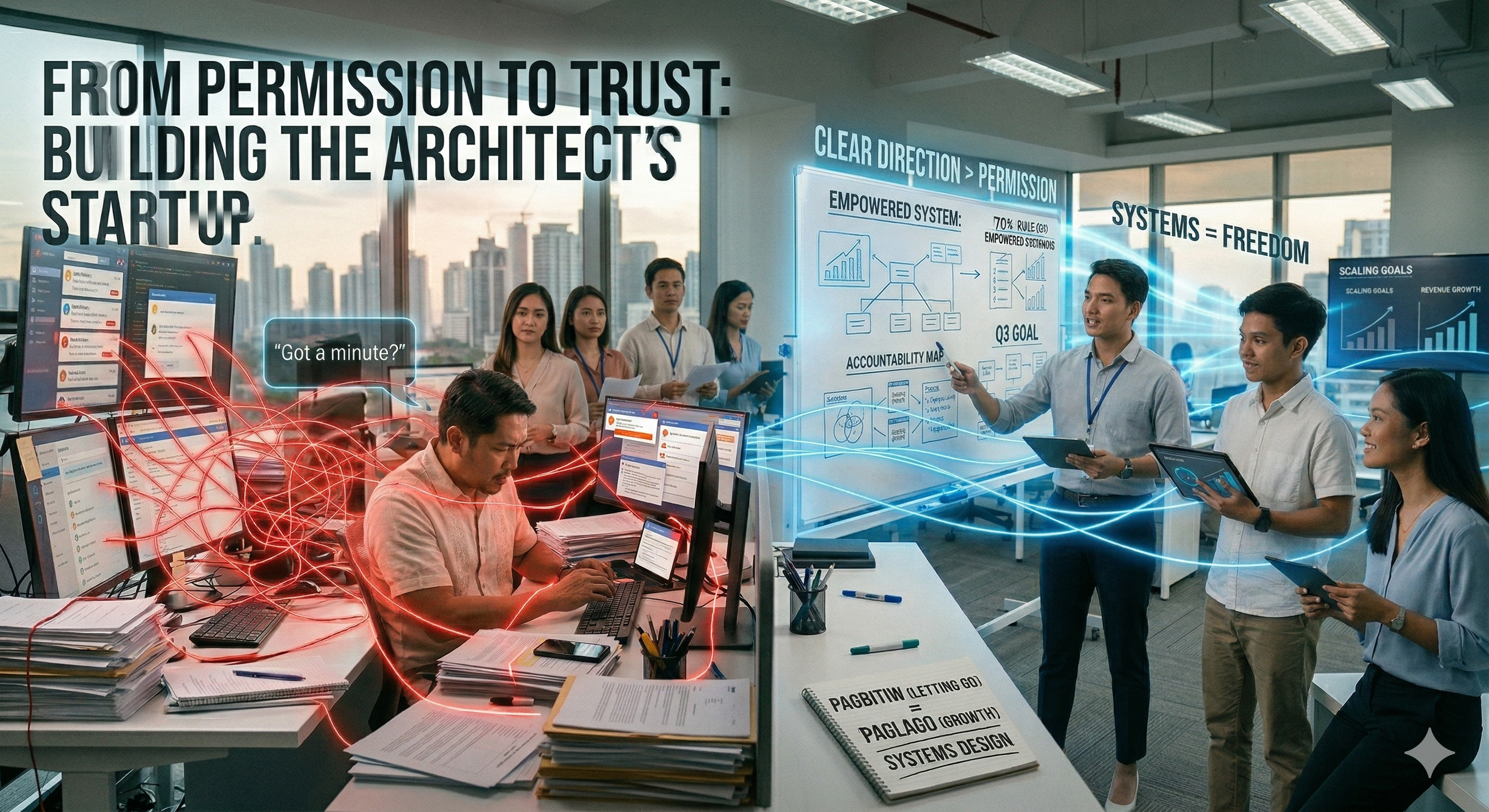





 Too many companies have untrained leaders that fail.